
Loading...
Implementing a new concept of restoration
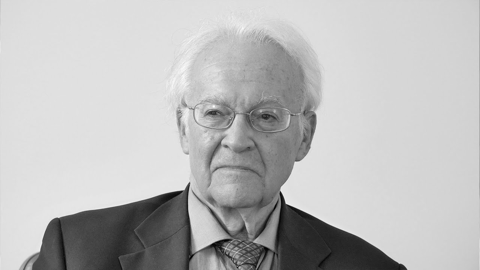
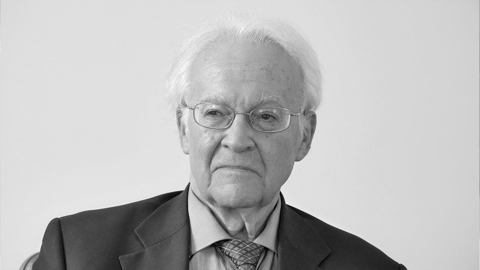
Matías Díaz Padrón, Technical Advisor and Head of the Department of Conservation of Flemish Painting and the Northern Schools up to 1700, 1970-2005Implementing a new concept of restoration
Matías Díaz Padrón, Technical Advisor and Head of the Department of Conservation of Flemish Painting and the Northern Schools up to 1700, 1970-2005
A curator has a dual task looming ahead, the responsibility of conserving works of art. They oversee the restoration of works of art and at the same time they must identify works and know their authors. At the restoration workshops there were a number of elderly gentlemen, memorable characters, men who warranted respect, but in a way they were old-fashioned in that they considered that the most important thing when it came to restoring works was reintegration. In other words, they typically competed with the original painter. I had a difficult time applying my new approach, whereby conserving a work of art consisted of touching it as little as possible or nothing at all if required. I found many a problem in that department.
I don't remember the name but one of the most prominent heads of a department finished restoring the Antonello de Messina we have here, a commission by Xavier de Salas, later to become the director, he was a director of mine here together with Don Diego. He was entrusted with the restoration and he proudly wanted us to see his work and I went there with Xavier de Salas. So he commented, "Let's see if you can tell where the angels' tears are and which ones are mine." In other words, in order to balance out the composition he had added two or three tears. His idea of restoration meant embellishing the work. To me that was heresy, I tried to prevent it. Don Xavier took me aside and said, "Quiet, when he leaves or retires we'll fix this." That mentality was common, that of the restorer who had to embellish a work of art. That was a period of disappointments, from then on, as you can imagine, I had to struggle against that. I also had to fight for them to get the hemming right, sometimes it was harmful, to the point that they broke the wooden frames. Those were difficult times, I was at a crossroads both in technical terms and in terms of the history of art.
Technical Advisor of the Museo del Prado, he joined as a conservator for the Department of Flemish and Dutch Painting. He is also a Professor of Modern and Contemporary Art History at both the Universidad Complutense and Universidad Autónoma de Madrid.
Interview recorded on June 11, 2018
Interview index
9 / 14-
Learning from people with huge personalities -
The Civil War. Two positions at the Prado Museum -
Discord between Sánchez Cantón and the Marquis of Lozoya -
The Royal Trust of the 1960s. Bonds with the Academy -
I'm a contrarian -
A Museum of paintings and sculptures -
1961. Creation of the Restoration Institute at the Casón del Buen Retiro -
What you learn from seeing the insides of works of art -
Implementing a new concept of restoration -
17th century Flemish painting -
Three of all the attributions -
The work of art. A piece of our history -
The satisfaction of work well done vs. emotion -
A scientific mind
- Collective
- Conservator
- Chronology
- 1970-1980
- RDF
- RDF
Collective
Conservator
Theme
--
Voces del Prado