
Loading...
The work of art. A piece of our history
Matías Díaz Padrón, Technical Advisor and Head of the Department of Conservation of Flemish Painting and the Northern Schools up to 1700, 1970-2005The work of art. A piece of our history
Matías Díaz Padrón, Technical Advisor and Head of the Department of Conservation of Flemish Painting and the Northern Schools up to 1700, 1970-2005
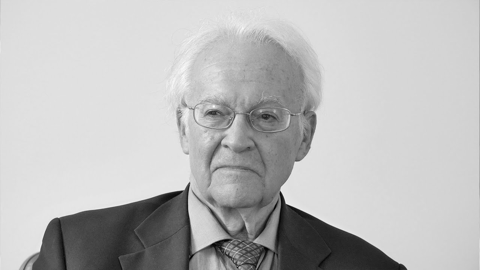
The Museum is the nation, it's the State, just like the Royal Palace or the Cathedral of Madrid. It's not ours. That's why sometimes people say, "Such and such work, which isn't worth much, why didn't they sell it to get something better?," you hear that sometimes. There are American museums that do that, they sell a painting, they do it quite often, to buy one that's better. Even works that are mediocre, we've received many works from thousands of places that are mediocre works. It's better to keep still, we're not sure, they don't belong to us and if a decision is made it must be made by the government. There was once this idea, the possibility of selling works from the Prado to buy weapons. That would be an outrage, they are pieces of our history and that value, it is often said that it's something money cannot buy. Anything can happen in life. You've got to save the works above anything else.
I am very careful in that regard, so careful that I'll tell you something that not everyone sees the same way, I am against the generosity of loaning works of art, because they suffer when being moved, there has been a lot of movement in recent times, here and there, to display works so that they can be seen at brilliant exhibitions. They feel it is an obligation to take works far away so that people can see them, and they take them to Australia, to Japan. I do not favour shifting works around that way. First of all because I think it is inadequate and secondly, it is done for political rather than academic reasons, because precisely today it is easy to travel, airfare to or from Tokyo, Moscow or Berlin is not so expensive, the argument that we're taking works out for the Berliners to see them, and setting up a fancy show—I don't like it. If they want to see them, tell them to come here. I am not against exhibitions but you've got to be very careful about it, knowing which pictures you can loan and which ones can never leave. The pictures have their shrine right here, you come here if you want to see them, it's so easy to do. I once proposed that there were works that should not be moved, among other things because they are very sensitive, on wood, don't touch them. Something exceptional may happen—keep it that way. I've seen people about to cry because they came to see the Majas by Goya only to find that they're not here. Someone from Japan, from Russia, from Austria, the only time they're coming to Spain and they get that unpleasant surprise. It's sad. And then there's the safety issues. Regarding the procedure, I'm against sending works on planes if it can be avoided. It takes longer by boat—no worry. On a ship things are much safer. Send the pictures on a ship, because it's unlikely anything will happen, and if something does happen you can always put the painting in something that floats. A ship is 99% safe. By plane it's different, I remember a discussion where they told me, "It hasn't happened yet." And I said, "So we have to wait for it to happen?" It gives me the shivers, but I'm also thinking about people. If you can avoid it, all the better.
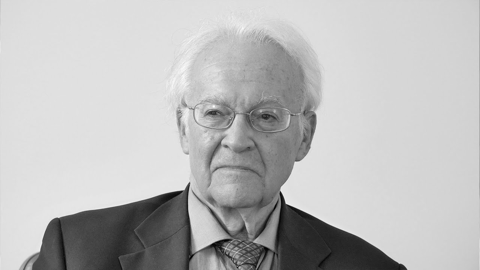
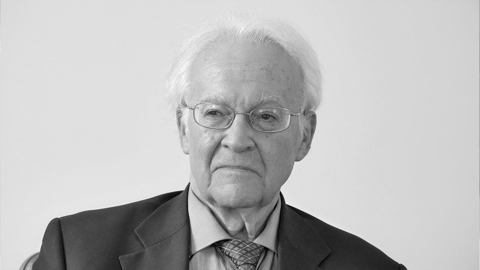
Technical Advisor of the Museo del Prado, he joined as a conservator for the Department of Flemish and Dutch Painting. He is also a Professor of Modern and Contemporary Art History at both the Universidad Complutense and Universidad Autónoma de Madrid.
Interview recorded on June 11, 2018
Interview index
12 / 14-
Learning from people with huge personalities -
The Civil War. Two positions at the Prado Museum -
Discord between Sánchez Cantón and the Marquis of Lozoya -
The Royal Trust of the 1960s. Bonds with the Academy -
I'm a contrarian -
A Museum of paintings and sculptures -
1961. Creation of the Restoration Institute at the Casón del Buen Retiro -
What you learn from seeing the insides of works of art -
Implementing a new concept of restoration -
17th century Flemish painting -
Three of all the attributions -
The work of art. A piece of our history -
The satisfaction of work well done vs. emotion -
A scientific mind
- Included in themes
- The public of the Prado Museum
- Collective
- Conservator
- Chronology
- 1930-1940
- RDF
- RDF
Collective
Conservator
Theme
--
Voces del Prado