
Loading...
The Civil War. Two positions at the Prado Museum
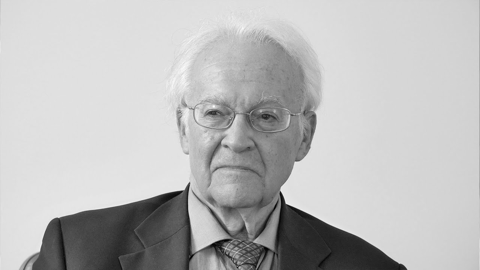
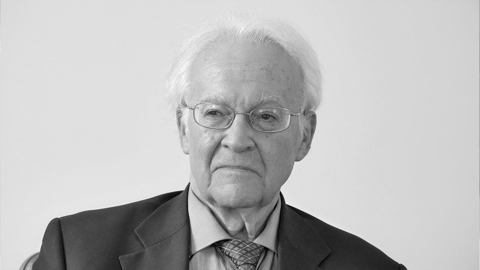
Matías Díaz Padrón, Technical Advisor and Head of the Department of Conservation of Flemish Painting and the Northern Schools up to 1700, 1970-2005The Civil War. Two positions at the Prado Museum
Matías Díaz Padrón, Technical Advisor and Head of the Department of Conservation of Flemish Painting and the Northern Schools up to 1700, 1970-2005
There is a fact we're all aware of, the effort to take out and salvage the works at the Prado Museum, specifically there were other works of art outside the Prado, the collections of Spain, from other museums and works belonging to the Church. There was a movement seeking to move the works from the Prado Museum, to take them away from Madrid, a very dangerous place. Regarding safety there were two positions. One of them favoured taking them away from the site where the fighting was taking place, there was a rationale to doing this. The other one argued in favour of doing the contrary, not moving them, storing them instead in a safe place. This is the key to everything. Both of these possibilities are valid and in different countries at war one option or the other has been taken. In our case, at the Prado, when the works were moved, they were stored at deposits. Naturally removed from the walls, to know what to do in a situation of war, the Academic Committee, which was in charge during the Republic, this being a fact that is often neglected, and Sánchez Cantón was on the Committee, determined that the best choice was to store them at the Bank of Spain, which provided greater security, even if bombs fell from above. I saw it and was surprised at the imposing security it provides. At the time when I saw it I was surprised, it is truly astonishing. In other words, no matter how many bombs were dropped, that is an imposing security vault that was truly convincing when I saw it. That was the inclination for Julio and the Committee, but the politicians did the opposite, deciding that the works from the Prado would travel with them. So then, not in a sudden manner but slowly, the works were taken to Valencia, we know about that journey, and then they would travel north, with a tendency to take them out of Spain. What was the reason for taking them out of Spain? Some say because they would be safer in France, we really don't know, others say that they would have undergone the same fate as the gold that was taken to Moscow. There may be some other reason, obviously we don't know. Now the people who took care of it acted like heroes, people acted regardless of any political ideals. It wasn't done immediately, it was a slow process, unfolding month after month. The works were subject to a few hazards, and knowing the condition of many of those works it was reckless to take them on the road, subjecting works of art to vibrations. Boards or canvases, moving on the road, the paint can flake up and bits come off. For instance if you X-ray Adam's leg you can see that lots of little bits are missing, the works really suffered on that journey. Despite the widespread idea of it being considered a heroic fact, from a conservative or even a liberal standpoint, or whatever label you wish to attach to those in charge during a war, they see all that movement as salvaging the works, but I don't view it that way. Because the works that were left behind, not only at the Prado, but stored away at other entities, even the church of San Francisco el Grande, at private collections where they did a good job of storing them away and works from other museums in Madrid. All those works, even those of the House of Alba, are intact.
Technical Advisor of the Museo del Prado, he joined as a conservator for the Department of Flemish and Dutch Painting. He is also a Professor of Modern and Contemporary Art History at both the Universidad Complutense and Universidad Autónoma de Madrid.
Interview recorded on June 11, 2018
Interview index
2 / 14-
Learning from people with huge personalities -
The Civil War. Two positions at the Prado Museum -
Discord between Sánchez Cantón and the Marquis of Lozoya -
The Royal Trust of the 1960s. Bonds with the Academy -
I'm a contrarian -
A Museum of paintings and sculptures -
1961. Creation of the Restoration Institute at the Casón del Buen Retiro -
What you learn from seeing the insides of works of art -
Implementing a new concept of restoration -
17th century Flemish painting -
Three of all the attributions -
The work of art. A piece of our history -
The satisfaction of work well done vs. emotion -
A scientific mind
- Included in themes
- A crucial chapter: The Spanish Civil War
- Collective
- Conservator
- Chronology
- 1930-1940
- RDF
- RDF
Collective
Conservator
Theme
--
Voces del Prado