
Loading...
17th century Flemish painting
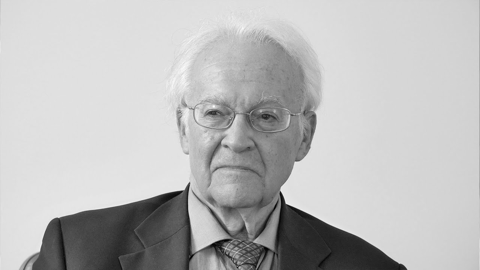
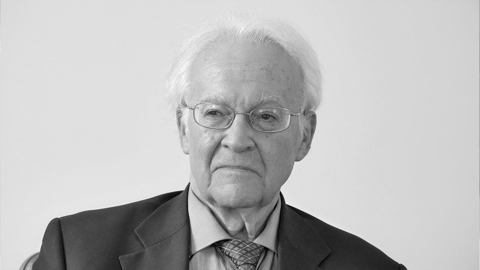
Matías Díaz Padrón, Technical Advisor and Head of the Department of Conservation of Flemish Painting and the Northern Schools up to 1700, 1970-200517th century Flemish painting
Matías Díaz Padrón, Technical Advisor and Head of the Department of Conservation of Flemish Painting and the Northern Schools up to 1700, 1970-2005
While working on my research my mission was 17th century Flemish painting at the Prado Museum, in the days of Rubens. I was able to get the job done, there is a catalogue from 1975, a catalogue raisonné, a critical catalogue. There were obstacles too, but it was published in two volumes when Diego Angulo was the director. A critical catalogue or catalogue raisonné identifies works, documents them, the external history, as completely as possible. That was the first catalogue done at the Prado Museum, a scientific catalogue raisonné, and none like it were done afterwards. We had to include the Spanish, Italian and French schools, etc., done by other colleagues of mine. People took me as being absent-minded and once Diego Angulo told me, "Being as absent-minded as you are it's surprising how you finished the job." After all this, many studies and papers on works at the Prado followed, research that has all added up. That's why when someone says, "You wrote, you researched...," actually it's not that, it's discovering a work of art that you can shed some light on for others to see. Of course that's very hard to do. Nobody can imagine all that goes into these works, it takes thirty, forty or fifty years, to gather up all the lose threads and make a decision. Over 400 or 500 eminently scientific articles. Me speciality is arid, unpleasant scientific research. Art always welcomes charm, literature, poetry. What I do is arid, bedrock research where I switch from one work to the next. In the 1975 catalogue of the Prado Museum, in the 17th century paintings I think there were over 40 or 50 rectifications, you understand it consists of tracing back their origins from the moment when they were bought, following from 17th century inventories to the present, to now. After all that tracing it does not mean that all the works are genuine, many are not and are misguided right at the source. I can show you many works kept at the Prado Museum, documented in the 17th century with the wrong name, already back in the 17th century.
Technical Advisor of the Museo del Prado, he joined as a conservator for the Department of Flemish and Dutch Painting. He is also a Professor of Modern and Contemporary Art History at both the Universidad Complutense and Universidad Autónoma de Madrid.
Interview recorded on June 11, 2018
Interview index
10 / 14-
Learning from people with huge personalities -
The Civil War. Two positions at the Prado Museum -
Discord between Sánchez Cantón and the Marquis of Lozoya -
The Royal Trust of the 1960s. Bonds with the Academy -
I'm a contrarian -
A Museum of paintings and sculptures -
1961. Creation of the Restoration Institute at the Casón del Buen Retiro -
What you learn from seeing the insides of works of art -
Implementing a new concept of restoration -
17th century Flemish painting -
Three of all the attributions -
The work of art. A piece of our history -
The satisfaction of work well done vs. emotion -
A scientific mind
- Collective
- Conservator
- Chronology
- 1970-1980
- RDF
- RDF
Collective
Conservator
Theme
--
Voces del Prado