formularioRDF
The itinerary <em>TITULORECORRIDO</em> has been successfully created. Now you can add in works from the Collection browser
<em>TITULOOBRA</em> added to <em>TITULORECORRIDO</em> itinerary

Exhibition

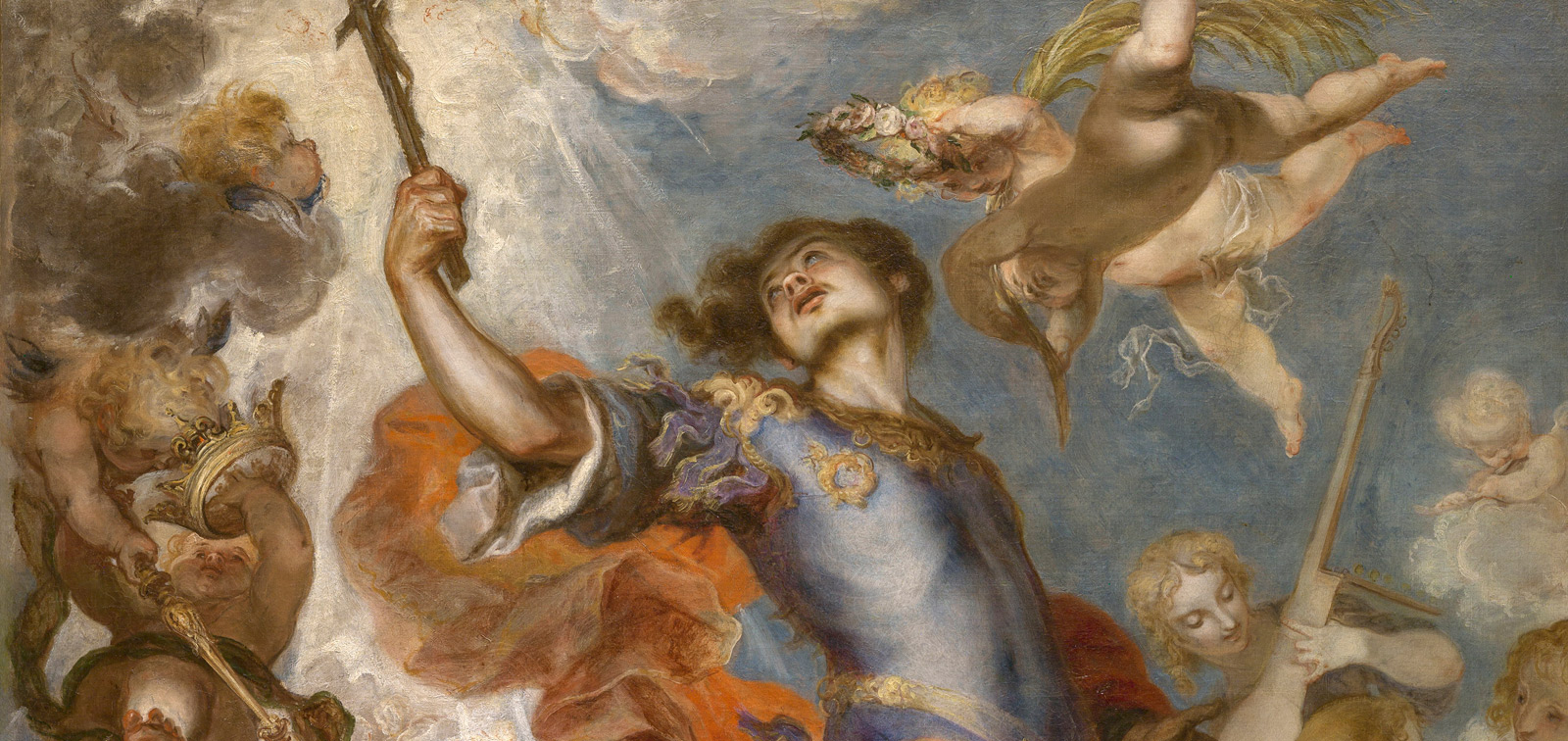
Herrera the Younger. The Absolute Baroque

Museo Nacional del Prado. Madrid 4/25/2023 - 7/30/2023

According to Miguel Falomir, director of the Museo del Prado: “Without any exaggeration it can be said that this exhibition offers us a totally new Herrera the Younger”. Curated by Benito Navarrete, senior professor of art history at the Universidad Complutense de Madrid, Herrera the Younger. The Absolute Baroque allows for a presentation of the numerous facets that make Herrera a complete artist, as a painter, draughtsman, engraver, set designer, creative architect and designer. This survey, the first to be devoted to the artist by the Museo del Prado thanks to generous loans from international private collections and public institutions, provides a unique opportunity to reassess Herrera’s oeuvre and to appreciate the extent of his influence on painters of his generation, such as Juan Carreño de Miranda and Francisco Rizi. It also draws attention to the importance of his subsequent influence, not just as a painter and draughtsman but as a “creative architect”, which is an essential aspect of his activities for an understanding of his true dimension and the scope of his work.

The exhibition highlights the fundamental importance of the artist’s time in Italy with newly attributed works that reconstruct his output as a graphic artist, which was previously confused due to a group of drawings attributed to Pier Francesco Cittadini in the Louvre, the Nationalmuseum, Stockholm, and the Getty Museum, Los Angeles, which have been essential for a reconstruction of Herrera’s Roman period, of which nothing was previously known. The exhibition also draws attention to Herrera’s fame as a painter of large-scale frescoes, the influence of his training in Seville with his father, Francisco de Herrera the Elder, and his polemical relationship with Bartolomé Esteban Murillo, some of whose commissions he succeeded in securing, as well as his activities as a draughtsman and the artist who introduced the estípite or inverted, obelix-shaped pilaster into Spanish altarpiece design.

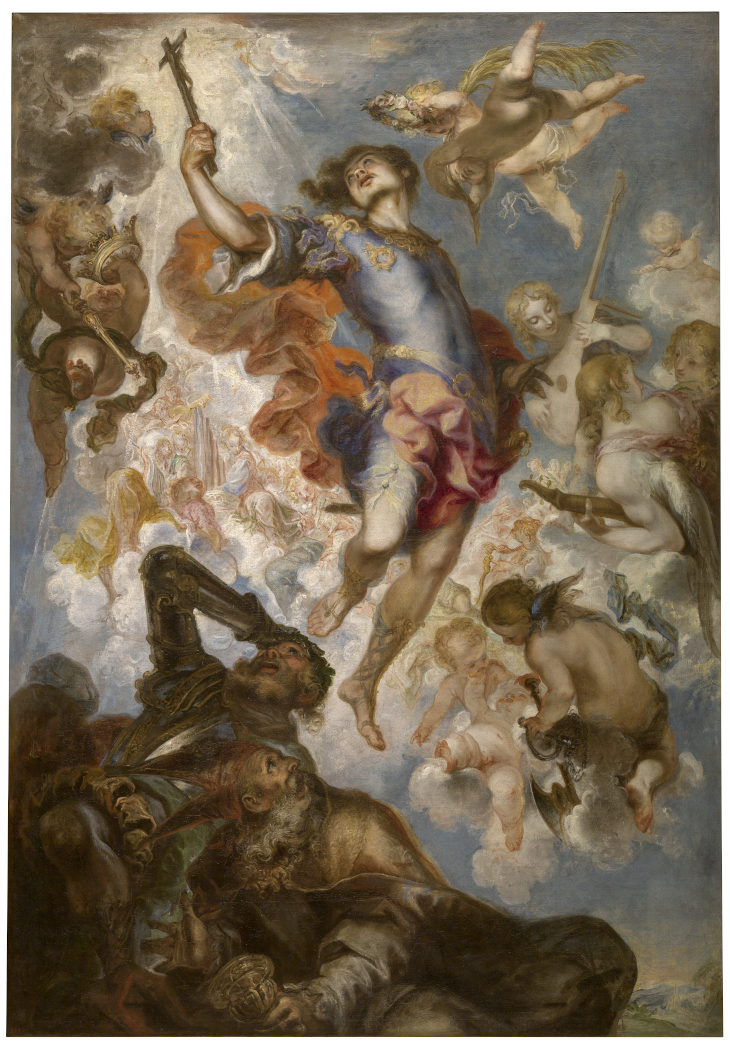
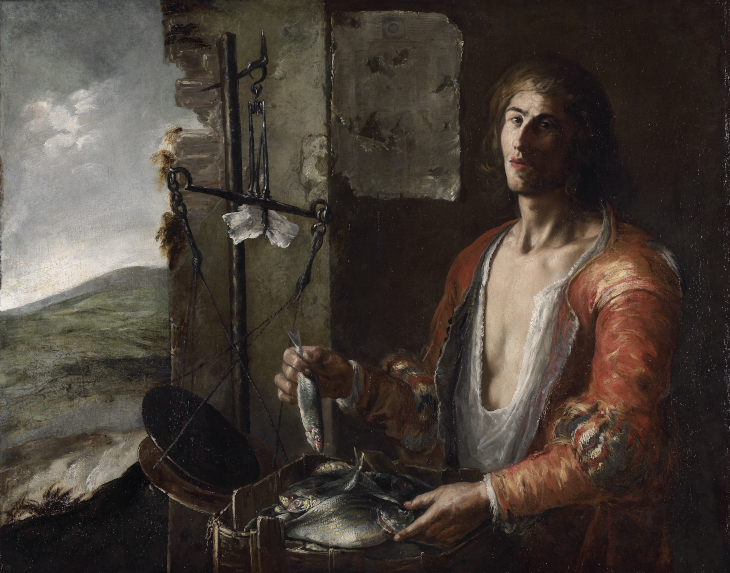
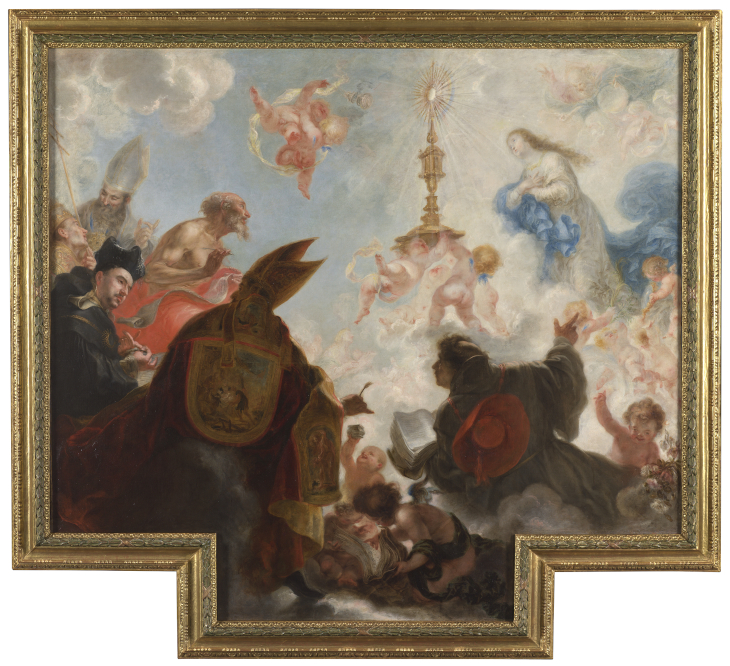
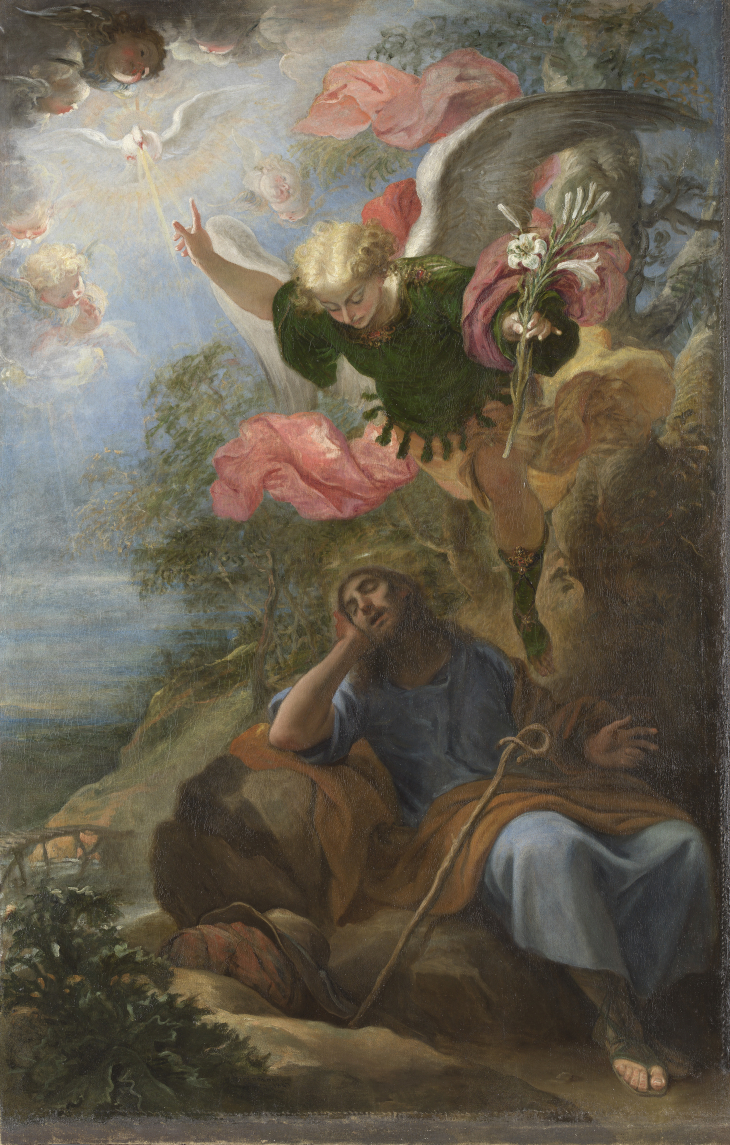
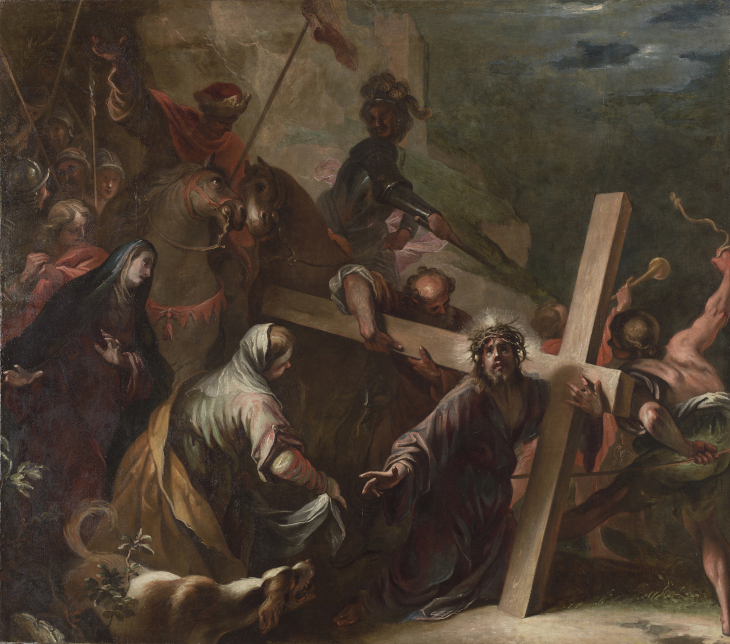
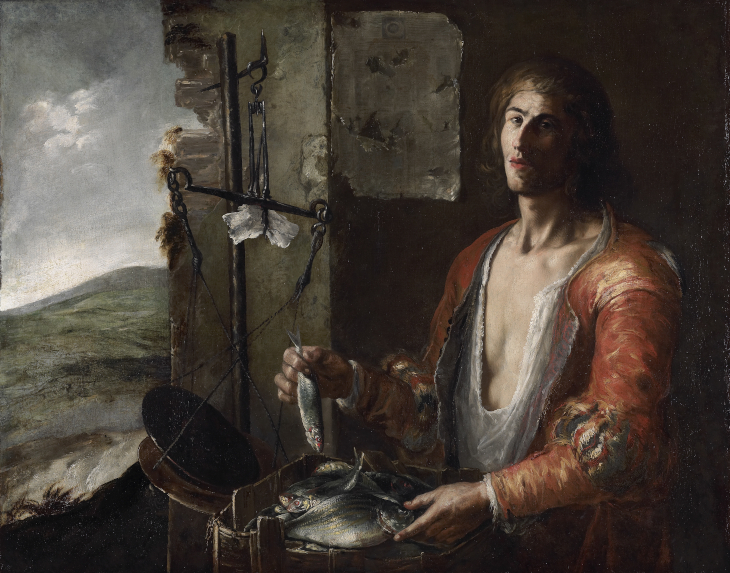
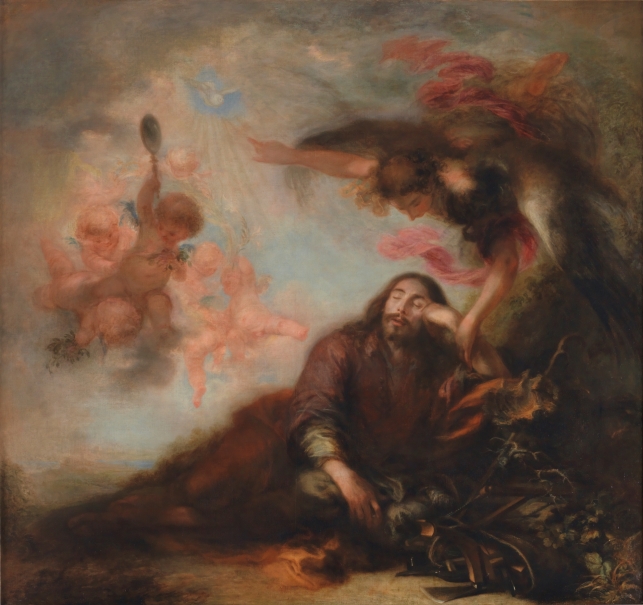
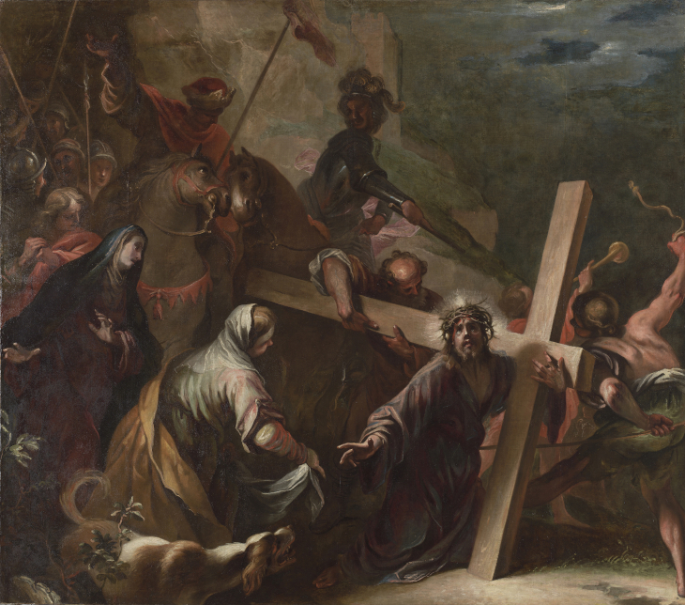
Herrera the Younger. The Absolute Baroque at the Museo del Prado reunites the artist’s greatest works: The Triumph of the Sacrament of the Eucharist loaned by the Sacramental Archconfraternity of the church of the Sagrario in Seville; The Dream of Saint Joseph from the church in Aldeavieja (Ávila), which has involved the near rescue of the painting, as with Christ on the Route to Calvary loaned by the Museo Cerralbo (Madrid) for the first time, a monumental work that was damaged by fire in 1872 when in the church of the Colegio de Santo Tomás and which has now been completely restored, regaining its former splendour. New research presented in the exhibition includes the attribution to Herrera of the painting Fish Seller, loaned by the National Gallery of Canada, Ottawa, on the basis of technical analyses which reveal analogies with The Triumph of Saint Hermenegild. It was also one of the works that brought Herrera fame in Rome around 1650, where he became known as Il spagnolo degli pexe [The Spaniard of the fish].

Another new identification is a drawing in the British Museum which Herrera gave to the tribunal of the Inquisition in Seville and is the basis for his painting of the auto-da-fé held in the Plaza de San Francisco in April 1660. It was previously attributed to Velázquez and thought to depict an auto-da-fé in the Plaza Mayor in Madrid. The drawing in the exhibition is referred to in a contract of 1660 in which Herrera is described, during Murillo’s lifetime, as the most famous painter in Seville.

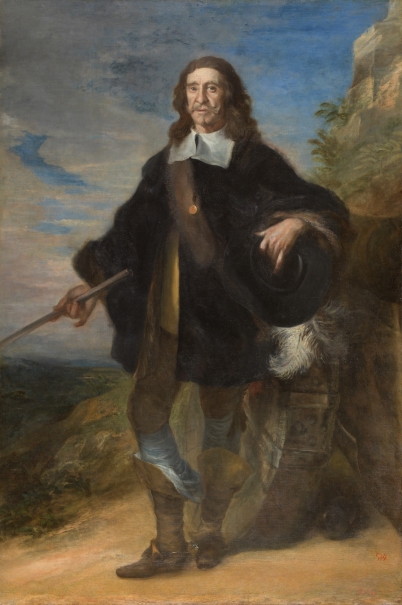
Finally, the exhibition and the more than four years of research undertaken for it have allowed the Museo del Prado’s own holdings of the artist’s work to be studied. This has led to the definitive attribution to Herrera of Portrait of an Artillery General, previously attributed to Francisco Rizi. It can now be titled Portrait of an Artillery General (Diego de Quiroga Fajardo?), a knight of the Order of Calatrava in Naples. Technical studies undertaken at the Prado show that the portrait is painted on the same length of canvas as Herrera’s Saint Peter from the commission executed for the Augustinian Recollects in Madrid. The exhibition can thus be seen as offering a unique opportunity to study the collections of the Museo del Prado following the restoration sponsored by Fundación Iberdrola España of Herrera’s paintings that were set into the dome of the above-mentioned Augustinian Recollect church in Madrid, now occupied by the National Library.

Nothing has survived of Herrera’s important activities as a fresco painter, the aspect of his work that brought him the most prestige and which led on to significant commissions culminating in his appointment as Painter to the King and Master of the Royal Works.

The Museo Nacional del Prado is dedicating this exhibition to Plácido Arango, former president of its Royal Board of Trustees and a great art lover. His favourite painter was in fact Herrera the Younger, whose splendid Dream of Saint Joseph, included in the exhibition, he donated to the Museum.

Curator:
Benito Navarrete, Senior Professor of Art History, Universidad Complutense de Madrid.

Access

Room C . Jerónimos

RDF

RDF

Sponsored by:
Fundación de Amigos del Museo del Prado
With the collaboration of:
Ayuntamiento de Madrid

Exhibition

The exhibition

The exhibition
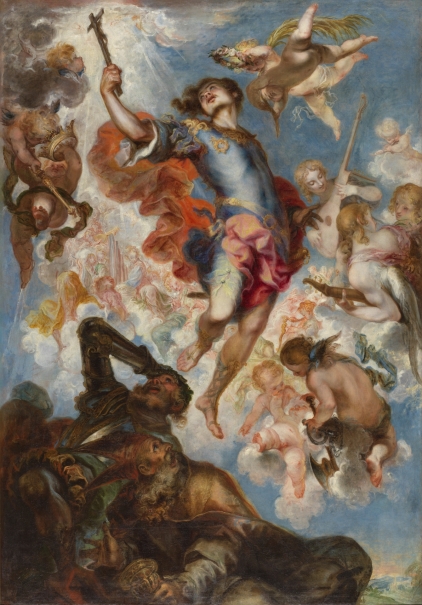
The Triumph of Saint Hermenegild
Francisco de Herrera the Younger
Oil on canvas
1654
Madrid, Museo Nacional del Prado

Francisco de Herrera the Younger (Seville, 1627–Madrid, 1685) is one of the least known artists of the Spanish Golden Age despite being renowned in his lifetime as a painter, draughtsman, engraver, architect, theatrical designer and engineer. He was also a notable fresco painter, but that aspect of his activities is now completely unknown as none of his mural projects have survived. Herrera trained in Seville, probably with his father, the painter Francisco de Herrera the Elder. In the early 18th century the writer on art Antonio Palomino described him as polemical, valiant and gallant, with a lively wit and an awareness of his own worth. Palomino’s observation that Herrera was greatly envied was also made by contemporaries of the painter such as the priest and scholar Fernando de la Torre Farfán and the canon of Seville cathedral Francisco Barrientos. The time Herrera spent in Rome was crucial for his formation as it was there that he assimilated the Baroque language of Bernini and Pietro da Cortona. His subsequent arrival in Madrid had a galvanising effect on local artists of his generation, such as Francisco Rizi, Juan Carreño de Miranda and Claudio Coello. Similarly, his activity in Seville is essential for an understanding of the evolution of Murillo, whom Herrera may have ousted from some projects, as documentary sources suggest. Herrera’s importance lies in his ability to reinterpret the magnificence and propaganda characteristic of the Baroque through an ingenious fusion of the arts and his particular interpretation of the “absolute Baroque” that he learned in Italy. For that alone and for his subsequent influence Herrera deserves the place of honour he has been denied in Spanish art history. The present exhibition aims to rectify that neglect by presenting the finest examples of his work, many of them specially restored for this occasion and shown here from a new perspective.

1. Apprentice to Francisco de Herrera the Elder

A recurrent feature of Herrera the Younger’s work is the influence of his father, which is evident during his apprenticeship as an engraver in the use he made of his pictorial models. Ultimately, however, Herrera distanced himself considerably from his father in his approach to colour. During his time in the family studio Herrera the Elder embarked on one of his most important commissions, the altarpiece for the Colegio de San Basilio in the Casa de la Misericordia in Seville. We now know that these paintings were not paid for until 1647, money that Herrera the Elder claimed when he had already moved to Madrid and which he entrusted his brother Juan de Herrera to collect, probably mistrusting his own son. This seems to suggest a poor relationship between father and son, which is confirmed by their biographers. That same year and without his father being present, Herrera the Younger married Juana de Medina y Auriolis in Seville. They were divorced a few months later and after he returned the dowry and household goods she brought to the marriage, Herrera left by himself for Rome to complete his training in one of the city’s academies and seek his fortune.

2. The Roman Period

2. The Roman Period
Fish Seller
Francisco de Herrera the Younger
Oil on canvas
c. 1650
Ottawa, National Gallery of Canada. Purchased 1926

Herrera was in Italy from 1648 to 1653. During that time he produced a series of prints of decorative cartouches now in the library of the Spanish national church of Santa Maria in Monserrato degli Spagnoli. Together with this graphic evidence, paintings by the artist are documented in the collection of the canon Giovan Carlo Vallone, archivist of the church of Santa Maria ad Martyres (the Pantheon) and academician of the Virtuosi, and that of Paolo Giordano Orsini, 2nd Duke of Bracciano, academician of San Luca and a friend of Bernini. In both collections Herrera’s works are described as still lifes of fish and the artist is identified as “il Spagnolo”, confirming Palomino’s statement that in Italy Herrera was referred to as “Il Spagnolo de gli pexe” [the Spaniard of the fish].

During this period Herrera should be associated with what are now termed the painters of the dissenso: a varied community who survived in Rome on the chance of securing commissions from picture dealers, who prioritized colour in their work and who above all practised drawing as a learning method at private academies. It is in the latter discipline that this exhibition is able to offer one of its most fundamental contributions as it reconstructs all Herrera the Younger’s Roman graphic output based on the identification of a group of drawings previously attributed to the circle of the Milanese painter Pier Francesco Cittadini who was active in Bologna and Rome. These sheets are essential for an understanding of Herrera’s formation and creative process and they reappear in some of the forms and the details of figures in his subsequent paintings, such as The Triumph of Saint Hermenegild and The Dream of Saint Joseph in the Prado.

3. “Spain’s Finest Apelles”

3. “Spain’s Finest Apelles”
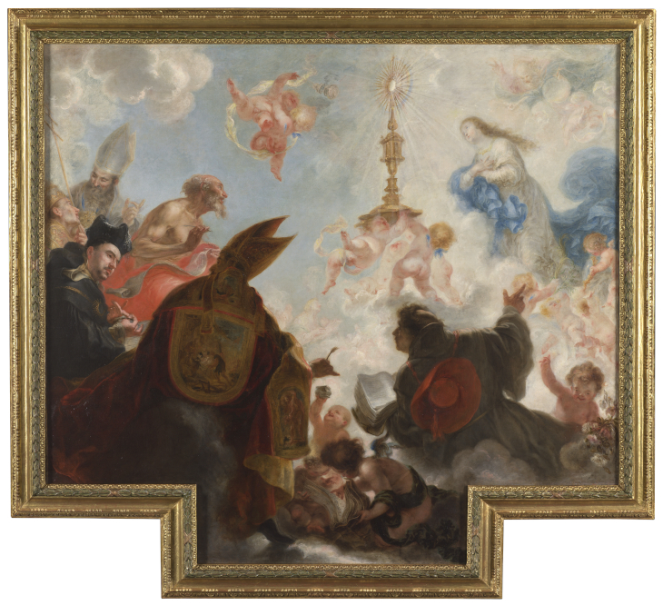
The Triumph of the Sacrament of the Eucharist
Francisco de Herrera the Younger
Oil on canvas
1656
Seville, Archicofradía Sacramental del Sagrario de la S. I. Catedral de Sevilla

Following his Italian years, Herrera is documented in Madrid in 1654 in relation to the commission from Juan Chumacero de Sotomayor, a former ambassador to the Vatican, for the principal altarpiece of the Barefoot Carmelite church in the Spanish capital. Herrera’s Triumph of Saint Hermenegild made a powerful impression on his contemporaries, generating both praise and envy. So great was its success that in a characteristic display of vanity, the artist said that “the painting should be greeted with trumpets and cymbals”. This declaration not only conveys his particular personality but also his approach to painting: a reflection of magnificence and Baroque triumphalism in line with the art of Pietro da Cortona and Bernini’s “bel composto”. The prestige Herrera achieved with this work was confirmed by subsequent commissions and recorded in contemporary sources, which compared him with the celebrated ancient Greek painter Apelles. He acquired equal fame in Seville during the time he lived there, from 1655 to 1660, where he undertook important commissions for paintings such as The Triumph of the Sacrament of the Eucharist and The Ecstasy of Saint Francis, both for the cathedral. In those projects Herrera pursued a direction both different and innovative in relation to Murillo, resulting in two works in which colour and the dramatic use of shadow emphasise their theatricality.

4. A Painter at Court. Prestige and Clients

4. A Painter at Court. Prestige and Clients
The Dream of Saint Joseph
Francisco de Herrera the Younger
Oil on canvas
1662
Aldeavieja (Ávila), parroquia de San Sebastián

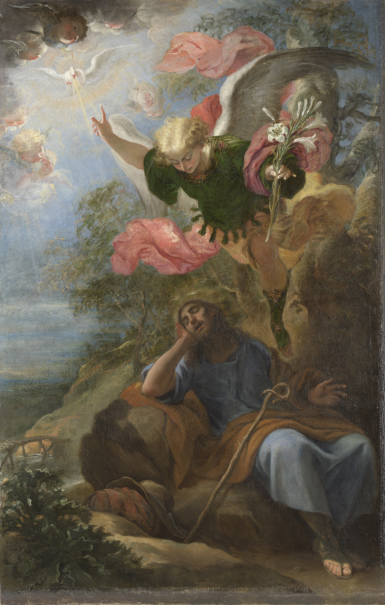
Herrera returned to Madrid in 1660 or 1661 through the mediation of two of his most important supporters: the designer and maker of altarpieces Sebastián de Benavente and the painter and sculptor Sebastián de Herrera Barnuevo. The Prado’s Dream of Saint Joseph, painted for the top section of the altarpiece in the chapel of Saint Joseph in the church of the Colegio de Santo Tomás, marked his definitive acceptance at court and the start of his professional ascent in that context. Nonetheless, it was in fresco painting that Herrera earned his greatest fame and recognition after he completed the project for the decoration of the dome of the church of Nuestra Señora de Atocha. The support of other powerful patrons was also fundamental for his career at court, including the Queen Regent Mariana of Austria, don Juan José of Austria for whom he also executed frescoes, and the Marquis del Carpio who collected his work. Among the circle of intellectuals who further promoted Herrera was his friend Pedro Calderón de la Barca who, following the artist’s appointment in 1677 as Master of Works of Royal Building Projects, wrote a text in praise of painters who mastered geometry, architectureand perspective.

Patronage of Luis García de Cerecedo and María Antonia de Herrera

In 1653 the horse dealer Luis García de Cerecedo paid for the foundation of his funerary chapel in the church of San Sebastián in his native town of Aldeavieja (Ávila), commissioning the design of the principal altarpiece from Sebastián de Benavente. In 1661 Benavente entrusted his friend Francisco de Herrera the Younger with the execution of the altarpiece’s principal canvas, The Dream of Saint Joseph. Cerecedo also fulfilled the request of his deceased wife, María Antonia de Herrera, who had bequeathed a significant sum for the execution of the principal altarpiece in the church of Nuestra Señora del Cubillo, also in Aldeavieja. The altarpiece was to be dedicated to the Virgin, for whom she had professed particular devotion. Herrera was commissioned to execute those paintings, indicating the renown of an artist now also in demand from private clients. Painted after 1665, they reveal the evolution of his style.

Both The Dream of Saint Joseph and the paintings for Nuestra Señora del Cubillo have been specially restored for this exhibition, providing keyinformation on the artist’s creative process.

5. “Of a nature extremely ardent and voracious”.Herrera the Draughtsman

5. “Of a nature extremely ardent and voracious”.Herrera the Draughtsman
Christ on the Route to Calvary
Francisco de Herrera the Younger
Oil on canvas
c. 1676-77
Madrid, Museo Cerralbo

Herrera the Younger saw drawing as the origin of all his activities and the basis of his art. It was his father, another extremely gifted draughtsman, who instructed him in the medium and also in engraving. Herrera’s surviving drawings are essential for an understanding of his creative process and provide exceptional evidence for knowledge of the different facets of his work as an oil and fresco painter, an engraver and a designer of altarpieces and temporary architectural structures, funerary monuments, tapestries, letters patent of nobility and luxury objects. Together with lost compositions known from other sources, all these works demonstrate his powers of invention and are more than sufficient to justify the words of Juan de Tejada, a canon of Seville cathedral, regarding the artist’s abilities and diligent application to his work, which resulted in him “achieving more and of better quality than others in twice the time”. Above all, however, Herrera’s graphic work is essential for understanding the ideas proposed in this exhibition regarding the fusion of the arts and the concept of the “total” artist, without which the Baroque is not fully comprehensible.

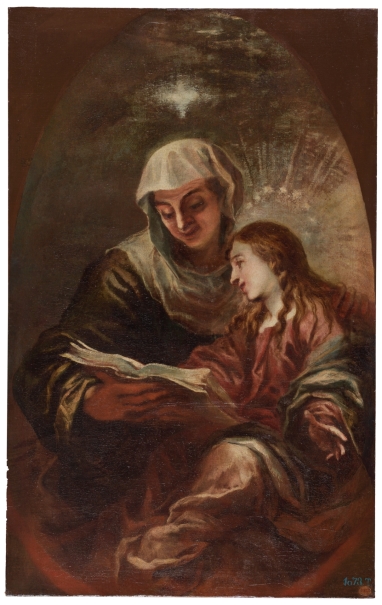
Paintings for the Augustinian Recollects in Madrid

Herrera executed a series of paintings for the dome and crossing arches of the conventual church of San Agustín in Madrid, a building that occupied the site of the present-day National Library of Spain. Numbering eight in total, the paintings were probably set into the interior sections of the dome, the majority depicting Doctors of the Church and Augustinian saints. The earliest writers to refer to them, including Father Antonio Conca in 1793, described them as fresco paintings. They are in fact monumental compositions on canvas devised to be seen di sotto in sù and executed with a dynamic line and dragged brushstroke typical of Herrera’s technique as a fresco painter. Their recent restoration has reinstated the correct chromatic range and made it easier to appreciate their original oval format, which corresponded to the location for which they were painted.

6. Public celebrations and ceremonies

Herrera the Younger is known to have produced drawings for processional cars, the commemorative celebrations of the Immaculate Conception and allegories of the city of Seville. He also drew autos-da-fé; images that again recorded events, but terrible and dramatic ones. In 1673, shortly after his appointment as painter to Queen Mariana of Austria, Herrera is documented as designing and constructing the funerary monument to her daughter, the Empress Margaret Teresa of Austria. A temporary structure to be installed in the chapel in the Alcázar, this was a work in which drawing would have played a key role. Sadly, no visual record of it has survived.

Celebrations of the new cult of Saint Ferdinand

The papal brief Sanctissimus Dominus was promulgated by Clement X in 1671, authorising churches in the realms of the Spanish monarchy to pray for Ferdinand III “the Saint”, who died in Seville in 1252. It inspired the Chapter of Seville cathedral to organise celebrations to mark this new devotional cult. These events were recorded in a book written by Fernando de la Torre Farfán and illustrated with high quality engravings in a project involving Murillo, Luisa and Lucas de Valdés, Matías de Arteaga and Herrera the Younger. The latter designed the composition of The Allegory of the Triumph of Saint Ferdinand, engraved by Arteaga, and also designed and engraved the Dedication to Charles II. The fame and prestige achieved by Herrera, who was by now also fully established at court, led to the further commission to design a large silver urn to house the remains of Saint Ferdinand and to present a proposal for the new altarpiece of the Virgin of the Kings in which it would be housed. Queen Mariana of Austria’s firm support for the artist with regard to this undertaking is evident in the fact that she had no hesitation in marking his drawings, which were sent from Seville to the court, in order to ensure that they were the ones selected by the members of the Chapter entrusted with judging the project.

Herrera the Theatrical Designer

Francisco de Herrera the Younger designed the sets for Los celos hacen estrellas by Juan Vélez de Guevara, a zarzuela (lyric drama) with music by Juan Hidalgo first performed by Antonio Escamilla’s company on 2 February 1673 in the Golden Hall of the Alcázar in Madrid to celebrate the 38th birthday of the Queen Regent Mariana of Austria. A remarkable testament to Herrera’s contribution to the project survives in the form of the manuscript of the work, the subject of an exceptional loan to this exhibition by the Österreichische Nationalbibliothek in Vienna. It is housed in that institution as it was sent to the Viennese court of Margaret Theresa of Austria, sister of Charles II of Spain and a devoted theatrical enthusiast. Sadly, the empress died before the book reached her. The text and images that accompany it constitute a unique source of information on Golden Age theatre, documenting the earliest zarzuela performed in Spain. Based on Ovid’s Metamorphoses, the plot revolves around Jupiter’s love for the nymph Io while music plays a key part in the unfolding of the narrative due to the influence of Italian opera.

The illustration to the opening prologue shows the proscenium archof the theatre designed in 1649 by the royal architect Alonso Carbonel for Philip IV’s marriage to Mariana. The pigments used for the washes of the different scene changes have survived surprisingly well, as have the gold tones of the carved wooden ceiling of the Golden Hall where the play was performed,its colour giving the room its name.

7. Creative architecture

Herrera the Younger’s occupations included architecture, a profession he was equipped to exercise due to his extensive knowledge of mathematics and geometry acquired from the military officer, engineer and mathematician Francisco Ruesta. Herrera maintained that the great painters had been architects, as he stated in the report he addressed to Charles II arguing for the establishment of an academy of mathematics. According to Herrera, “by uniting lines to drawing [painters] have achieved the maximum perfection.” He distinguished between creative architects and practical ones who lacked significant intellectual interests. Herrera rejected the separation of the arts as he considered that architecture, sculpture and painting took the form of “three joined circles”.

As an architect, Herrera introduced the estípite or tapered pilaster into Spanish altarpiece design (the example in the church of Nuestra Señora de la Almudena, Madrid), in addition to promoting the use of Solomonic columns within a giant order (altarpiece for the church of the hospital of Nuestra Señora de Montserrat, Madrid). This explains the importance of his activities as anarchitect and his referential status among his contemporaries, who proposed him as director of the academy of Spanish artists in Rome in 1680. That same year Herrera produced the designs for the ground plan of the basilica of El Pilar in Zaragoza, his greatest success as a creative architect but also his maximum source of frustration due to problems with the building’s foundations. Teodoro Ardemans, Herrera’s pupil and defender, nonetheless singled out his knowledge of the mathematical arts and honoured the figure of his master, “whose memory deserves to be respected and treated with veneration.”

Artworks

1
The Founders of the Monastic Orders accepting their Rule from Saint Basil

Francisco de Herrera the Elder

Oil on canvas

c. 1639–47

Paris, Musée du Louvre. Département des Peintures

2
The Tears of Saint Peter

Francisco de Herrera the Younger

Oil on canvas

c. 1654–60

Madrid, Museo de la Real Academia de Bellas Artes de San Fernando

3
Study for the Apostle Peter / Study for the Apostle Saint Judas Taddeo

Francisco de Herrera the Elder

Grey ink wash

c. 1639–45

Hamburg, Hamburger Kunsthalle, Kupferstichkabinett

4
The Archangel Michael

Francisco de Herrera the Younger

Black chalk, pen and grey-brown ink

c. 1640–47

Hamburg, Hamburger Kunsthalle, Kupferstichkabinett

5
Cherub with foliate decoration

Francisco de Herrera the Elder

Black chalk, pen and grey-brown ink

c. 1640–45

Hamburg, Hamburger Kunsthalle, Kupferstichkabinett

6
Cherub with foliate decoration

Francisco de Herrera the Younger

Pen and grey-brown ink

c. 1645–50

Florence, Gabinetto Disegni e Stampe degli Uffizi

7
Saint Sebastian attended by Saint Irene

Francisco de Herrera the Younger

Black chalk and grey ink wash

c. 1649–53.

Paris, Musée du Louvre, Département des Arts graphiques

8
The Virgin and Child / The Virgin and Child

Francisco de Herrera the Younger

Black chalk, pen and grey-brown ink wash

c. 1649–53

Paris, Musée du Louvre, Département des Arts graphiques

9
The Holy Family with the Infant Saint John the Baptist

Francisco de Herrera the Younger

Black chalk, pen and grey-brown ink wash

c. 1649–53

Stockholm, Nationalmuseum

10
The Assumption of the Virgin (recto) / The Return from Egypt (verso)

Francisco de Herrera the Younger

Black chalk, pen and grey-brown ink wash (recto); black chalk and grey ink wash (verso)

c. 1653

Private collection

11
The Assumption of the Virgin

Francisco de Herrera the Younger

Black chalk, pen and grey-brown ink wash

c. 1653

Los Angeles, The J. Paul Getty Museum

Fish Seller
12
Fish Seller

Francisco de Herrera the Younger

Oil on canvas

c. 1650

Ottawa, National Gallery of Canada. Purchased 1926

13
The Descent from the Cross (recto) / Apollo flaying Marsyas (verso)

Francisco de Herrera the Younger

Black chalk and grey-brown ink wash (recto); black chalk, pen and grey-brown ink wash (verso)

c. 1649–53

Paris, Musée du Louvre, Département des Arts graphiques

14
Apollo flaying Marsyas (recto) / The Rest on the Flight into Egypt (verso)

Francisco de Herrera the Younger

Black chalk, pen and grey-brown ink wash

c. 1649–53

Stockholm, Nationalmuseum

15
The Rest on the Flight into Egypt (recto) / Christ and the Apostles (verso)

Francisco de Herrera the Younger

Black chalk, pen and grey-brown ink wash (recto); black chalk (verso)

c. 1649–53

Paris, Musée du Louvre, Département des Arts graphiques

16
Ornamental cartouches

Francisco de Herrera the Younger

Intaglio print

1649

Rome, Fondo de códices de la biblioteca contigua al archivo de la Embajada de España ante la Santa Sede

The Triumph of the Sacrament of the Eucharist
18
The Triumph of the Sacrament of the Eucharist

Francisco de Herrera the Younger

Oil on canvas

1656

Seville, Archicofradía Sacramental del Sagrario de la S. I. Catedral de Sevilla

19
David with the Head of Goliath

Francisco de Herrera the Younger

Oil on canvas

c. 1665–69

Charles et Patricia Bailly

21
The Baptism of Queen Candace’s Eunuch

Francisco de Herrera the Younger

Oil on canvas

c. 1670

Parroquia de San Pedro de Mendigorría (Navarra)

23
Saint Louis of France

Francisco de Herrera the Younger

Oil on canvas

1665-66

Aldeavieja (Ávila), parroquia de San Sebastián

24
The Rest on the Flight into Egypt

Francisco de Herrera the Younger

Oil on canvas

1665-66

Aldeavieja (Ávila), parroquia de San Sebastián

25
Saint Anthony of Padua with the Infant Christ

Francisco de Herrera the Younger

Oil on canvas

1665-66

Aldeavieja (Ávila), parroquia de San Sebastián

The Dream of Saint Joseph
26
The Dream of Saint Joseph

Francisco de Herrera the Younger

Oil on canvas

1662

Aldeavieja (Ávila), parroquia de San Sebastián

27
Manuscript of the statutes and acts of the Academy of Drawing of Seville

Francisco de Herrera the Younger

Grey-brown ink on laid paper

1660

Sevilla, Real Academia de Bellas Artes de Santa Isabel de Hungría

28
Life study of a male nude with the god Terminus and a garland

Francisco de Herrera the Younger

Black and red chalk with touches of white chalk; black and red chalk

c. 1660

Madrid, Casa de la Moneda

29
Life study of a male nude

Francisco de Herrera the Younger

Black and red chalk with touches of white chalk; black and red chalk

1660

Madrid, Casa de la Moneda

30
31
Saint Peter

Francisco de Herrera the Younger

Pen and grey-brown ink wash

c. 1654

Florence, Gallerie degli Uffizi

32
The Prophet Elijah

Francisco de Herrera the Younger

Pen and grey-brown ink wash

c. 1654

Florence, Gallerie degli Uffizi

33
Musician Angels in glory

Francisco de Herrera the Younger

Pen and grey-brown ink with grey-brown, red, green and blue ink washes and touches of white chalk

c. 1654

London, The British Museum

34
Youthful Angel in Glory

Francisco de Herrera the Younger

Black chalk, pen, grey-brown ink and grey wash

c. 1654

Madrid, Biblioteca Nacional de España

35
36
The Ecstasy of Mary Magdalene

Francisco de Herrera the Younger

Pen and grey-brown ink wash

c. 1660–65

Madrid, colección Juan Várez

37
The Prophet Elijah on his Chariot of Fire

Francisco de Herrera the Younger

Black chalk

c. 1665–70

Madrid, Museo Nacional del Prado. Legado Pedro Fernández Durán

38
Man in front of a Landscape

Francisco de Herrera the Younger

Black chalk, pen and grey-brown wash

c. 1663–65

Hamburg, Hamburger Kunsthalle, Kupferstichkabinett

39
Decorative Warrior

Francisco de Herrera the Younger

Pen, grey-brown and grey wash

c. 1665–70

Madrid, Biblioteca Nacional de España

40
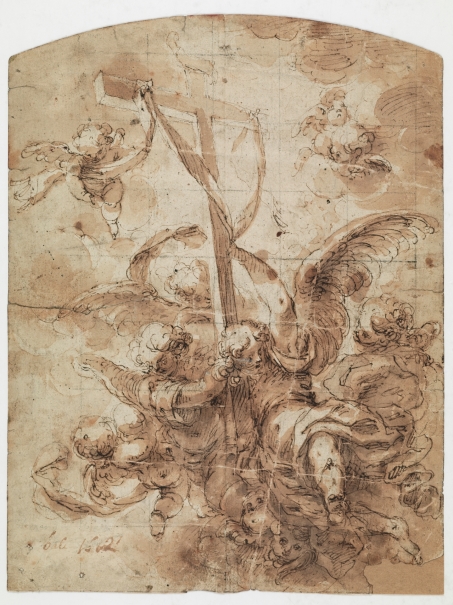
The Triumph of the Cross with Instruments of the Passion and Cherubim

Francisco de Herrera the Younger

Pen and grey-brown ink wash

c. 1670–75

London, Victoria and Albert Museum

42
The Liberation of Saint Peter

Francisco de Herrera the Younger

Pen, grey-brown ink, grey and grey-brown washes

1668-69

Paris, private collection

43
Christ and Simon of Cyrene on the Route to Calvary

Francisco de Herrera the Younger

Black chalk, pen and grey-brown wash; squared up in black chalk

c. 1668–75

Florence, Gallerie degli Uffizi

44
Study for a patent of nobility

Francisco de Herrera the Younger

Pen and grey-brown ink

c. 1675–85

Florence, Gallerie degli Uffizi

45
Study for a tapestry with a coat-of-arms of the Order of Santiago

Francisco de Herrera the Younger

Black chalk, pen, grey-brown ink and coloured washes

c. 1675–85

London, The British Museum

46
Study for a tapestry with a mirror

Francisco de Herrera the Younger

Black chalk, pen, grey-brown ink and coloured washes

c. 1675–85

London, The British Museum

Christ on the Route to Calvary
47
Christ on the Route to Calvary

Francisco de Herrera the Younger

Oil on canvas

c. 1676–77

Madrid, Museo Cerralbo

48
52
Saint Teresa of Ávila holding a Book and with the Holy Spirit

Francisco de Herrera the Younger

Black chalk, pen and grey-brown ink wash

1654

Madrid, Biblioteca Nacional de España

54
Apotheosis of the Church of Seville

Francisco de Herrera the Younger

Black chalk, pen and grey-brown wash

c. 1660

Madrid, Biblioteca Nacional del España

55
Mechanism for the Celebrations of the Immaculate Conception

Francisco de Herrera ‘el Mozo’

Lápiz negro, pluma y aguada de tinta parda

h. 1660

Florencia, Gallerie degli Uffizi

56
Design for a processional car with the Vision of Saint John the Evangelist on Patmos, with five variant plans

Francisco de Herrera the Younger

Black chalk, pen and grey-brown ink wash

c. 1654–60

New York, The Morgan Library and Museum. Purchased as the gift of Walter C. Baker

57
Auto-da-fé held in Seville on 13 April 1660

Francisco de Herrera the Younger

Black chalk, pen and grey-brown ink wash, reinforced with a stylus

c. 1660

London, The British Museum

58
Equestrian Portrait of Mariana de Austria, Regent of Spain

Francisco de Herrera the Younger

Black chalk

c. 1668–71

Madrid, Museo Nacional del Prado

59
Allegory of Charles II and Mariana of Austria

Francisco de Herrera the Younger

Black chalk, pen, grey-brown ink, grey-brown and grey wash

1668

Vienna, Albertina

60
Allegory of the Triumph of Saint Ferdinand

Francisco de Herrera the Younger (draughstman) and Matías de Arteaga (engraver)

Intaglio print

1671

Madrid, Museo Nacional del Prado

61
Dedication to Charles II

Francisco de Herrera the Younger (draughtsman and engraver)

Intaglio print

1671

Seville, Fundación Focus-Loyola

62
The Surrender of Seville to Ferdinand III, King of Castile and León

Francisco de Herrera the Younger

Black chalk, pen and grey ink

c. 1682

Paris, Musée du Louvre, Département des Arts graphiques

63
Urn for Saint Ferdinand

Juan José del Carpio (c. 1654–1713), after Francisco de Herrera the Younger

Black chalk, pen, grey-brown ink and coloured washes

c. 1682

Seville, Archivo de la Catedral de Sevilla. Fondo Capitular

64
Set designs for Los celos hacen estrellas by Juan Vélez de Guevara

Francisco de Herrera the Younger

Black chalk, pen and grey-brown ink, coloured washes and gold leaf

1673

Vienna, Österreichische Nationalbibliothek, Sammlung von Handschriften und alten Drucken

65
Proscenium arch and stage curtain for the Golden Hall in the Alcázar in Madrid

Francisco de Herrera the Younger

Black chalk, pen and grey-brown ink

1674

Florence, Gallerie degli Uffizi

66
Report written for Charles II by Francisco de Herrera regarding the foundation of an academy of mathematics

Printed type

c. 1680

Madrid, Biblioteca Nacional de España

67
Design for the ground plan of the basilica of El Pilar, Zaragoza

Francisco de Herrera the Younger

Pen and grey-brown ink on parchment

c. 1680

Zaragoza, Excelentísimo Cabildo Metropolitano

68
Ground plan and orthographic elevation for the project for the north façade of the basilica of El Pilar, Zaragoza

Francisco de Herrera the Younger

Pen, black ink and grey wash on parchment

After 1696

Zaragoza, Excelentísimo Cabildo Metropolitano

69
Altarpiece of Nuestra Señora de la Almudena

Johann Martin Lerch and Matthias Greischer (engravers) Teodoro Ardemans (drawing), after a design by Francisco de Herrera the Younger

Intaglio print

1686

Madrid, Biblioteca de la Real Academia de Bellas Artes de San Fernando

70
Design for the entrance to the courtyard of the Alcázar in Madrid

Francisco de Herrera the Younger

Pen, grey-brown ink and red, grey-brown, grey and yellow washes

c. 1679

Patrimonio Nacional. Colecciones Reales, Archivo General de Palacio

Resources for the visit

Brochure

Digital brochure

Print on demand

Print artworks available in our catalogue in high quality and your preferred size and finish.

Image archive

Request artworks available in our catalogue in digital format.

Up