formularioRDF
The itinerary <em>TITULORECORRIDO</em> has been successfully created. Now you can add in works from the Collection browser
<em>TITULOOBRA</em> added to <em>TITULORECORRIDO</em> itinerary

Close Continuar a ficha de la obra Continuar a ficha de la obra
02-06-2026
Francisco de Goya y Lucientes - Engraver
Fuendetodos, Zaragoza (Spain), 1746 - Bordeaux (France), 1828 - Engraver
Laureano Potenciano Pastor
Madrid, 1837 - ¿Madrid?, 1864
Real Academia de Bellas Artes de San Fernando

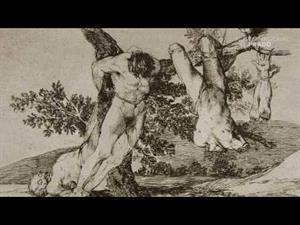
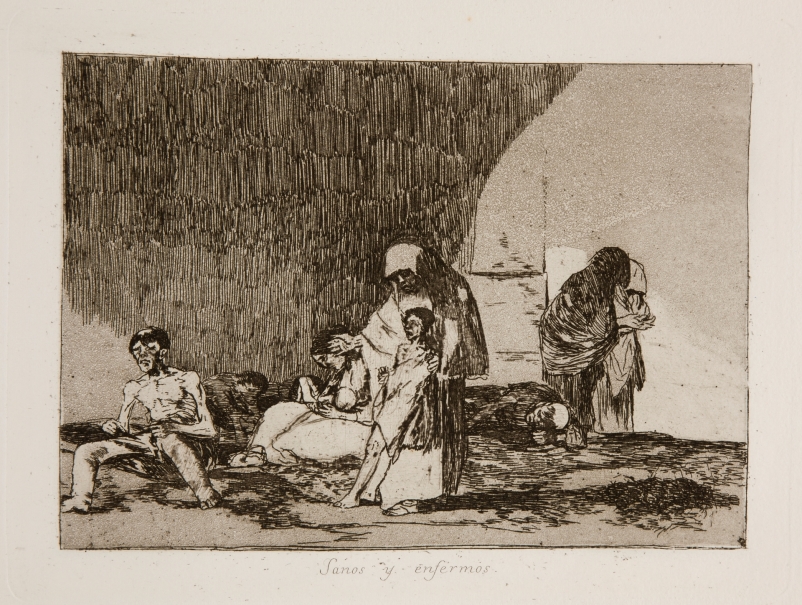
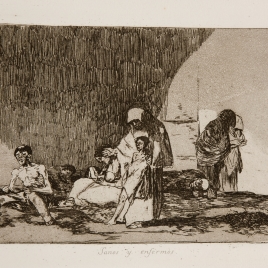
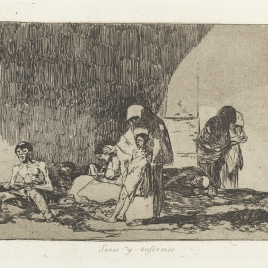
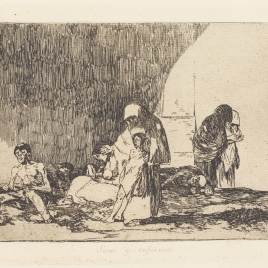
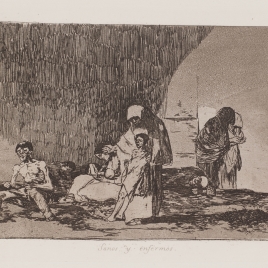
The healthy and the sick

1812 - 1814. Burnisher, Etching, Burin, Aquatint on wove paper.
Not on display

Disasters of War, 57, The healthy and the sick.

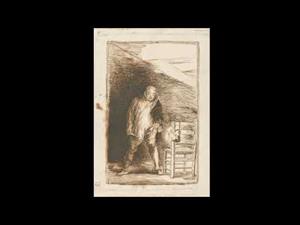
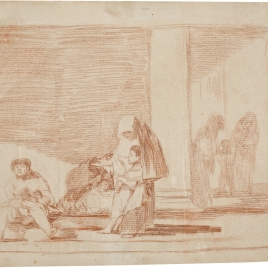
Goya devoted many of the prints in the first part of The Disasters of War to scenes in which the civilian population is the innocent victim of soldiers´ excesses, particularly with women presented as the object of the invaders´ sexual violence. Although the Disasters do not follow a strict order, there is a structure that allows us to see how Goya approaches his themes in a sequential fashion, even when occasionally certain prints appear to be inserted among other groupings dealing with a different subject. Through these reiterations and alternations, Goya may have sought to convey a sense of the randomness of war, in which one never knows what will happen next. Violence against women is one of the themes that Goya frequently returns to in the first part of the series, and which he occasionally ties together with the titles. Las mugeres dan valor (The women give courage, plate 4), No quieren (They don´t like it, plate 9), Tampoco (Not [in this case] either, plate 10), Ni por esas (Neither do these, plate 11), Amarga presencia (Bitter to be present, plate 13), and Ya no hai tiempo (There isn´t time now, plate 19), among other prints, show the crimes of the French soldiers against women portrayed as examples of beauty and pathos. In many scenes, such as in the present print, Goya makes use of a series of visual devices that help him express these concepts and direct our gaze towards the victims. He gives prominence to the female figures by using very few etched lines to delineate them, thus using white space to outline them against a dark background, while other figures have been intensely etched. The result sometimes gives the appearance of a theatrical set. He also makes use of vaults and arches - architectural motifs whose symbolic purpose is undeniable, shrouding the scene of the crime in shadows and darkness. Goya´s use of architectural space establishes a contrast between the light outside, where a religious building allows us to situate this scene in an urban setting, and the darkness beneath the arches, where the crimes are being committed. As in so many other prints from the series, these examples of cruelty are not limited to isolated, individual actions but are manifestations of collective violence, which also allows Goya to illustrate different stages in the scene he is narrating. Nevertheless, the most dramatic element of this print is the defenseless child lying at its mother´s feet. The diagonal created by the figure of the woman and the arms of the soldier pulling her away is broken by the foreshortening of the halfnaked body of the child. Crying inconsolably, the child extends his tensed hand in a gesture that recalls that of the French soldier in plate 3 trying to protect himself from the blow of an axe; a gesture that there, like here, indicates he will not escape death (Matilla, J. M.: Portrait of Spain. Masterpieces from the Prado, Queensland Art Gallery-Art Exhibitions Australia, 2012, p. 219).
Multimedia

Technical data

Imagen del carrusel
Imagen del carrusel
Inventory number
G002387
Authors
Francisco de Goya y Lucientes -Engraver-; Laureano Potenciano Pastor; Real Academia de Bellas Artes de San Fernando
Title
The healthy and the sick
Date
1812 - 1814
Technique
Burnisher; Etching; Burin; Aquatint
Support
Wove paper
Dimension
Height: 248 mm; Height of the plate mark: 157 mm; Width of the plate mark: 209 mm; Width: 345 mm
Series
Desastres de la guerra [estampa], 57 (5)
Provenance
Real Academia de Bellas Artes de San Fernando, Madrid; Eduardo Luis Moreda Fernández; Museo del Prado, 2000
Entry date
2000

Bibliography +

Brunet, M.G., Étude sur Francisco Goya sa vie et ses travaux, Aubry, Paris, 1865, pp. 56.

Viñaza, Cipriano Muñoz y Manzano Conde de la, Goya: su tiempo, su vida, sus obras, Tip.M.G. Hernández, Madrid, 1887, pp. 390.

Delteil, Loys, Francisco Goya, I, Chez L'Auteur, Paris, 1922.

Mayer, August L., Francisco de Goya, Labor, Barcelona, 1925, pp. 231.

Lafuente Ferrari, Enrique, Goya: el dos de mayo y los fusilamientos de la Moncloa, Juventud, Barcelona, 1946, pp. 20.

Lafuente Ferrari, Enrique, Los desastres de la guerra de Goya y sus dibujos preparatorios, Instituto Amatller de Arte Hispánico, Barcelona, 1952, pp. 26, 174.

Harris, Tomas, Goya, engravings and lithographs, II, Bruno Cassirer, Oxford, 1964, pp. 258.

Gassier, Pierre y Wilson-Bareau, Juliet, Vie et oeuvre de Francisco de Goya: l' oeuvre complet illustré: peintures, dessins, gravures, Office du Livre, Fribourg, 1970.

Derozier, C., La Guerre D'Independance Espagnole a Travers L'Estampe (1808..., II, Universidad de Lille, Lille, 1976, pp. 923.

Bozal, Valeriano, Imagen de Goya, Lumen, Barcelona, 1983, pp. 212.

Vega, Jesusa, Sanos y enfermos, Goya y el espíritu de la Ilustración, Museo Nacional del Prado, Madrid, 1988, pp. 311.

Vega, Jesusa, Fatales consecuencias de la guerra. Francisco de Goya, pintor, Francisco de Goya, grabador: instantáneas, Caser y Calcografía Nacional, Madrid, 1992, pp. 42.

Vega, Jesusa, Museo del Prado: catálogo de estampas, Museo del Prado, Madrid, 1992, pp. 96.

Blas, J. y Matilla, J.M., El libro de los desastres de la guerra : Francisco de Goya, Museo Nacional del Prado,Calcografía Nacional, Madrid, 2000, pp. 108-110.

Obras adscritas al Museo Nacional del Prado en el año 2000, Boletín del Museo del Prado, XIX, 2001, pp. 200.

Nieto Alcaide, Víctor, La guerra y lo imaginario en la pintura de Goya, Barcelona, 2003, pp. 319-329.

Calcografía Nacional (España), Calcografía Nacional: catálogo general, II, Calcografía Nacional, Madrid, 2004, pp. 465.

Wilson-Bareau J. [et alt.], Catalogue, Goya graveur, Chaudun y Paris musées, Paris, 2008, pp. 249.

Matilla, José Manuel, Estampas españolas de la Guerra de la Independencia: propaganda, conmemoración y testimonio, Universidad de Salamanca, 2008.

Bordes J., Matilla J.M. y Balsells S, Goya, cronista de todas las guerras: los "desastres" y la fotografía de guerra, Centro Atlántico de Arte Moderno y Real Academia de Bellas Artes de San Fernando, Las Palmas de Gran Canaria; Madrid, 2009, pp. 194.

Hofmann, Julius, Francisco de Goya: Katalog seines graphischen Werkes, Gesellschaft für vervielfältigende Kunst, Viena, 2014, pp. 91-145.

Filigree +

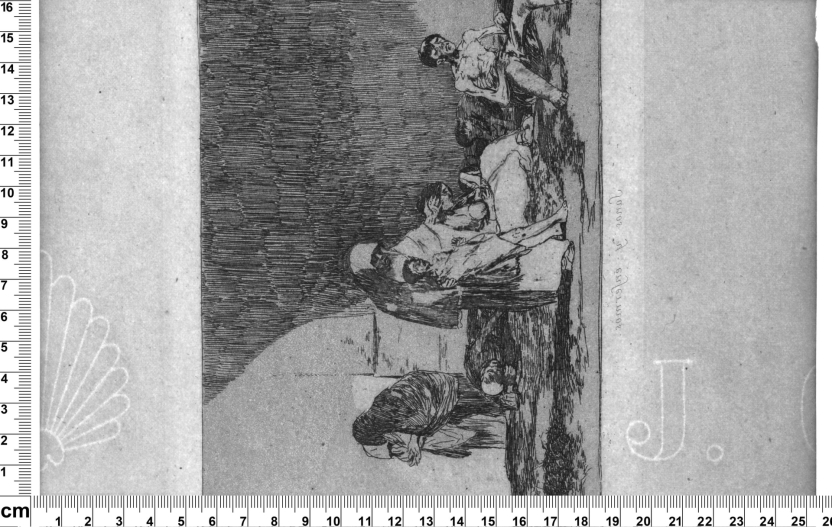
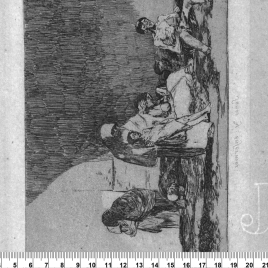
Motive: Venera e iniciales “J. G. O.” (fragmento central)


72 x 29 mm
Principal
Yes
En el centro de la hoja, de arriba abajo
José García Oseñalde
Marca de agua en forma de venera e iniciales "J. G. O." característica del papel fabricado por José García Oseñalde, establecido en La Cabrera, Guadalajara. En esta localidad existió fábrica de papel desde por lo menos 1733, como así es recogido por Eugenio Larruga en sus "Memorias políticas y económicas sobre los frutos, comercio, fábricas y minas de España...", de ese año y de 1746. Esta antigua fábrica de papel blanco debió de ser la que José García Oseñalde compró en 1847, junto a un molino de harina llamado "Los Heros", colindante entre las localidades de La Cabrera y Aragosa. La fábrica también debió conocerse con el nombre del molino de harinas, pues así consta en 1886, cuando la fábrica de papel sellado "Los Heros" era propiedad de Pedro García Oseñalde (véase: "El obispado de Sigüenza, ó sea Nomenclátor descriptivo, Geográfico y Estadístico de todos los pueblos del mismo, por un sacerdote de la diócesis", Zaragoza, 1886, p. 21 [Aragosa])

La primera edición de los "Desastres de la Guerra" de Goya se imprimió en papel con esta filigrana, en 1863.

Imagen de la bibliografia

Bibliography
Biblioteca Nacional de España, Catálogo de las estampas de Goya en la Biblioteca Nacional, Biblioteca Nacional, Sociedad Estatal Goya 96 y Lunwerg, Madrid, 1996, pp. 280, fil. 22.
Fundación Lázaro Galdiano, Goya en la Fundación Lázaro Galdiano, Fundación Lázaro Galdiano, Madrid:, 1999, pp. 386-387, fil. 14-15.

Other inventories +

Inv. Nuevas Adquisiciones (iniciado en 1856). Núm. 2564.
Inscriptions +

57 // Sanos y enfermos. // 5
Lettered in the plate. Front

Update date: 02-06-2026 | Registry created on 26-11-2015

Visor 360

Drag with the cursor to rotate the piece

Other works by Francisco de Goya y Lucientes; Laureano Potenciano Pastor; Real Academia de Bellas Artes de San Fernando

Print on demand

Print artworks available in our catalogue in high quality and your preferred size and finish.

Image archive

Request artworks available in our catalogue in digital format.

Up