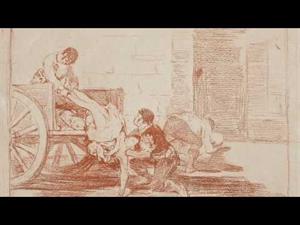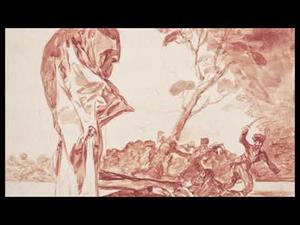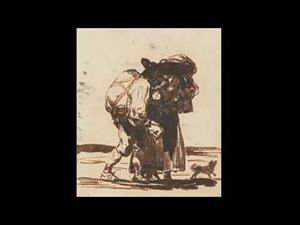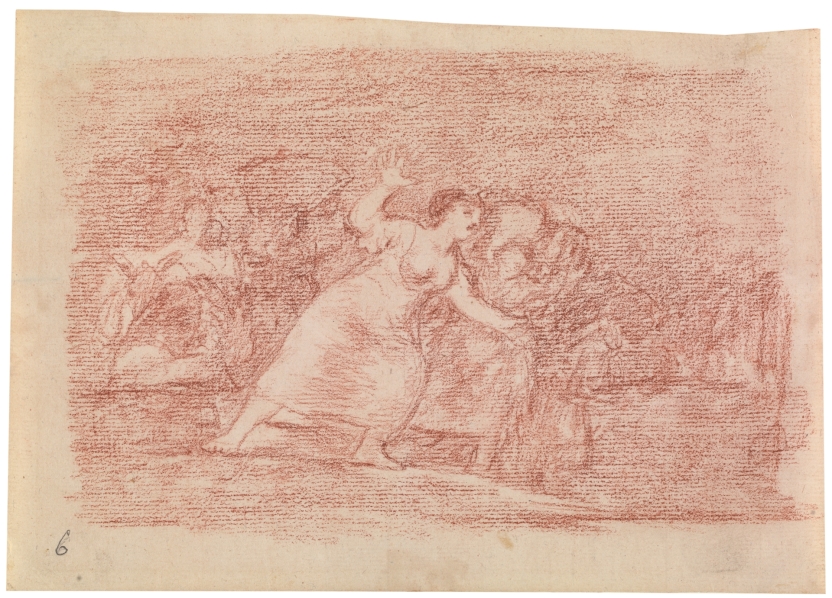
Group of Women Fleeing from Soldiers
Ca. 1812. Red chalk on laid paper.Not on display
Though related to Goya’s Disasters of War, this drawing was never engraved. Its composition -specifically, the central figure of a woman fleeing- led Gassier and Wilson to suggest that the drawing may have been a preliminary idea for Disaster 65, What is this Hubbub?. However, the two images are quite different, conceptually, as the print belongs to the Emphatic Caprices, while this drawing seems more closely related to the war scenes from the first part of the Disasters. This study bears no direct relation to any of the plates from the Disasters of War, and cannot, therefore, be considered a preparatory study as such.
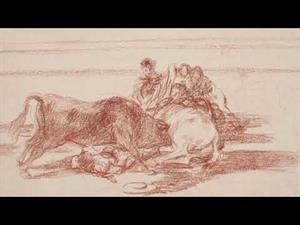
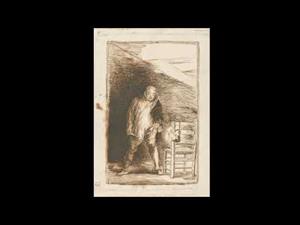
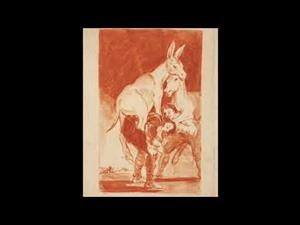
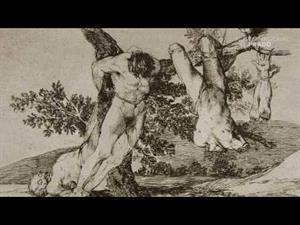
In this series of prints executed between 1810 and 1814 Goya offers a critical and personal vision of the consequences of the Spanish Peninsular War (1808-14) that is remote from the propagandistic images produced by his contemporaries. Through his etchings the artist condemned the irrationality of war and the brutality of both sides, which inevitably resulted in suffering, pain and death. The series’ meaning transcends a visual presentation of a specific conflict and can be considered the first critique of war in general. Disasters of War was the title added by the Real Academia de San Fernando in 1863 for the first edition of these prints, which were not published in Goya’s lifetime.