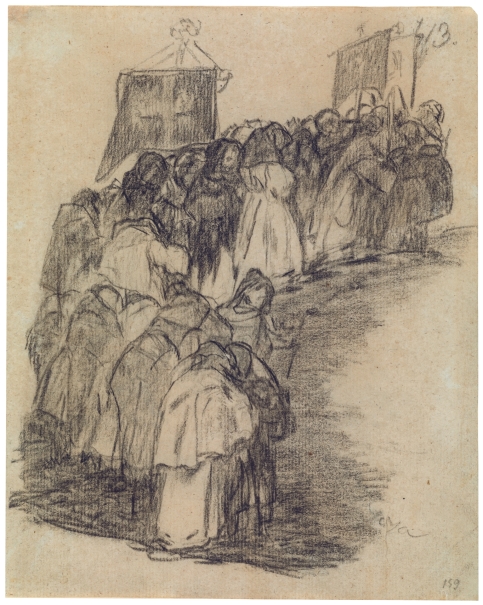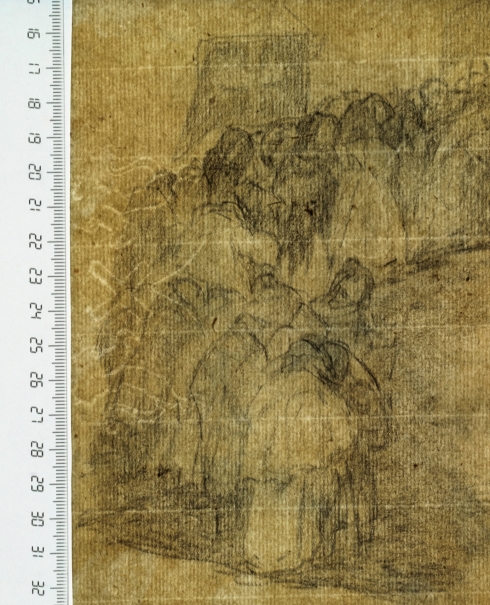
Monks in procession
1824 - 1828. Pencil on laid paper.Not on display
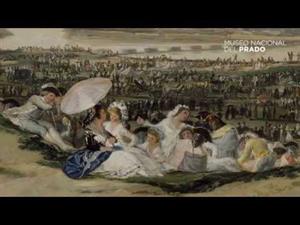
Processions are a frequent element in Goya´s last works, and are always depicted with a noticeably dark tone, such as I the The San Isidro Pilgrimage, one of his Black Paintings. Here the monks hide their faces, while walking together forming a crowd; these are two common resources used by Goya to express lying, submission and the absence of critical thinking. The image shows his technical mastery in the use of black crayon, since he is able to sketch out different types of strokes that he uses to construct the crowd.
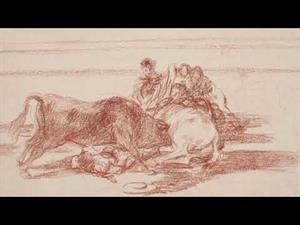
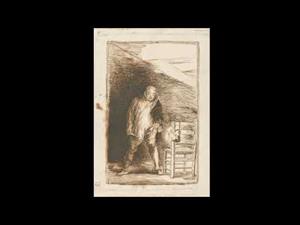
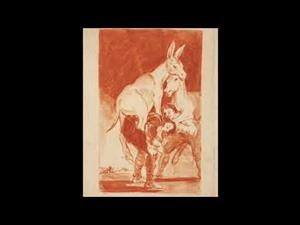
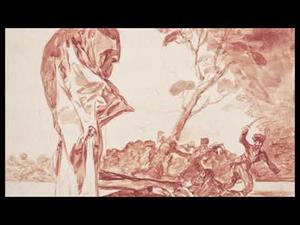
Albums G and H were produced in Bordeaux, probably simultaneously or very close to one another in time, as evidenced by their formal, stylistic and technical similarity. In them, Goya gave free rein to his capacity for invention based on specific events he had experienced, such as the popular characters seen on the streets of Paris and Bordeaux, and to his pure imagination. Goya depicts the most significant issues presented over the course of his career, but in this case the changes the tone from satirical to grotesque: the falsehood of humanity, inequality, poverty, irrationality and the violence of individuals and of society. Goya introduced the use of crayon in these albums. This occurs in coincidence to his interest in lithography and his practice of that procedure in Bordeaux.
Matilla Rodríguez, José Manuel, Ligereza y atrevimiento. Dibujos de Goya, Santander, Fundación Botín, 2017, p.130 n.78; 200 n.78