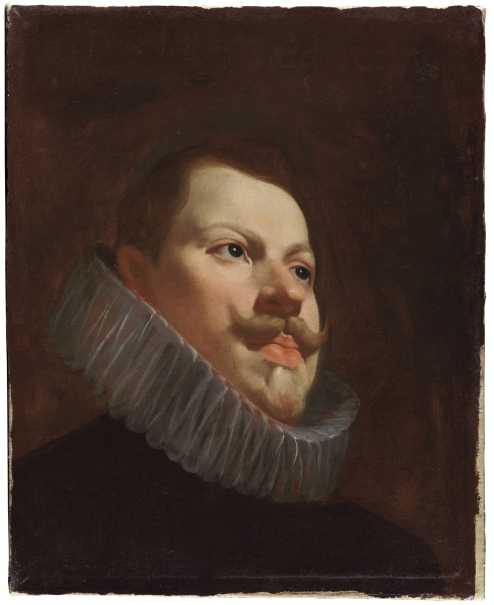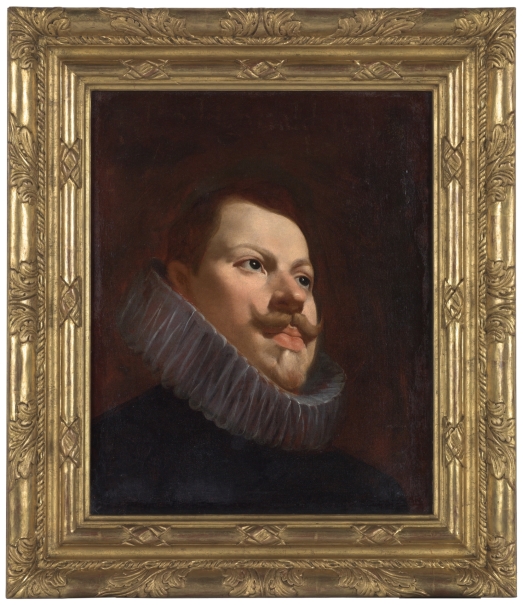
Philip III
1627. Oil on canvas.Room C
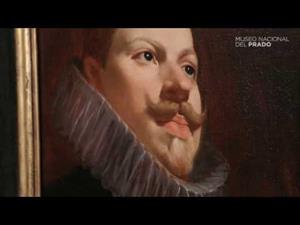
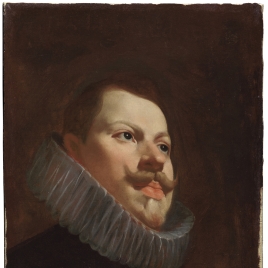
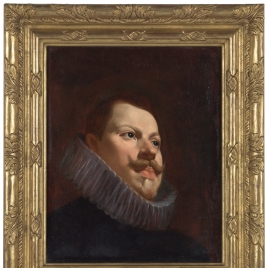
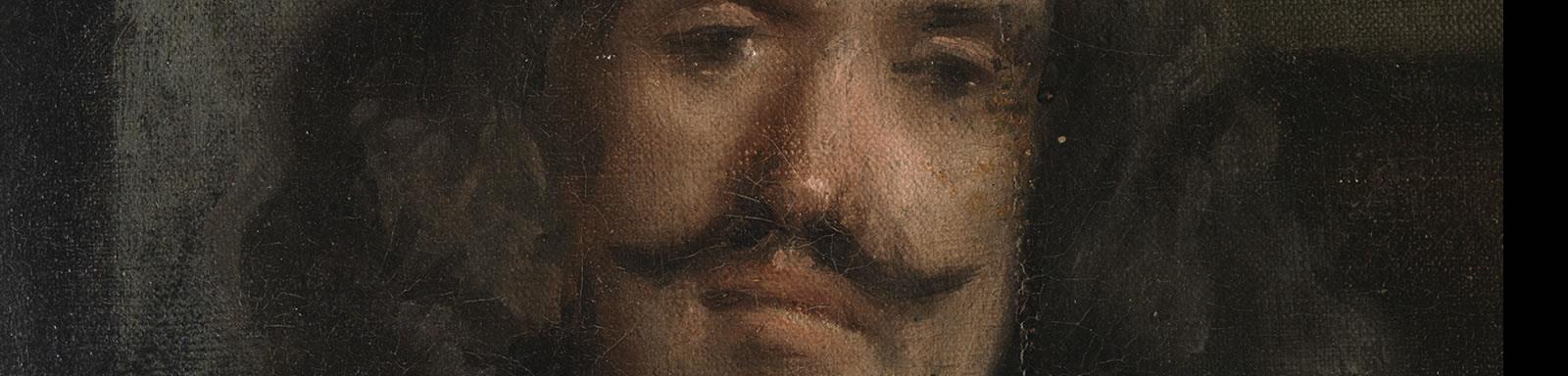
This portrait bust of King Philip III is attributed to the Sevillian painter on account of its resemblances to other works known to be by the artist dating from the 1620s. These similarities can be perceived both from a technical point of view (for example in the preparatory layers) and in the pictorial writing. The study and comparison of this work with other paintings such as Philip IV in Armour, with a Lion at his Feet (P001219) and Infante Don Carlos (P001188) brought to light a similar descriptive technique between them. Nevertheless, it is different from that of other contemporary artists. The painting was shrewdly linked by its finder and donor, William B. Jordan, to The Expulsion of the Moriscos, a work painted by Velázquez in 1627 intended for the Salón Nuevo of the Alcázar in Madrid. Velázquez’s painting has since disappeared, but we know from contemporary descriptions that Philip III was depicted as the main figure in the painting, standing and gazing into the distance. Velázquez never actually saw this monarch, who was 41 years old in 1609 when he decreed the expulsion of the Moorish population. Nonetheless, as he was the subject of the painting, the artist must have taken special care in portraying his face, which recalls many court portraits.
This painting, which is sketched, is most likely the preparatory study that helped the painter to imagine Philip III’s face and which served as a starting point for him to portray it on the main canvas.
Portús Pérez, Javier, 'Diego Velázquez. Felipe III'. En: Cuarenta años de amistad. Donaciones de la Fundación Amigos del Museo del Prado., Madrid, Museo Nacional del Prado. Fundación Amigos del Museo del Prado., 2021, p.112 nº 34