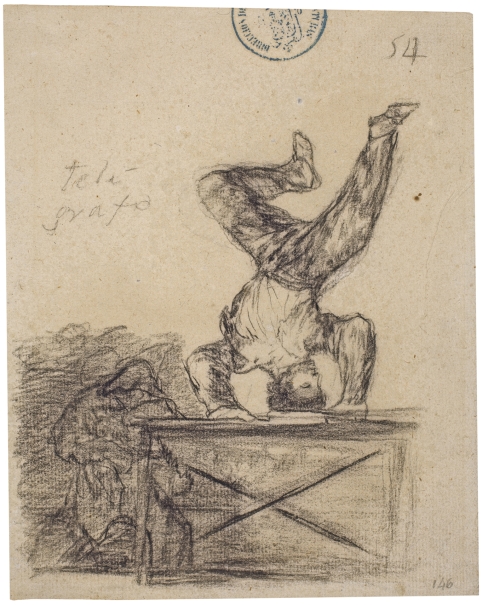
Telegraph
1825 - 1828. Pencil on laid paper.Not on display
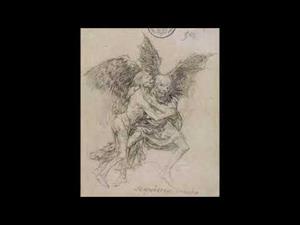
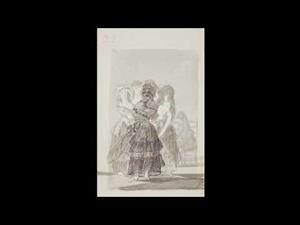
Without the artist’s handwritten inscription reading Telegraph, it would have been impossible to decipher the theme of his image, and it may have been understood superficially merely as a scene depicting street acrobats. Goya must have been fascinated by the modern means of communication provided by the semaphore telegraph. The system used parallel towers to hold up a pole with two jointed arms, almost human in appearance, whose movement transmitted encrypted messages. The contortionist here is sharply drawn, in contrast to the figure shown in the shadow.
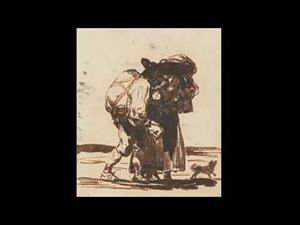
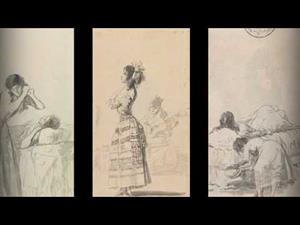
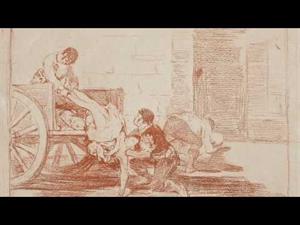
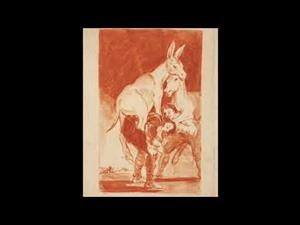
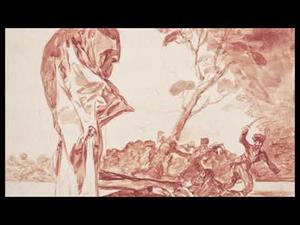
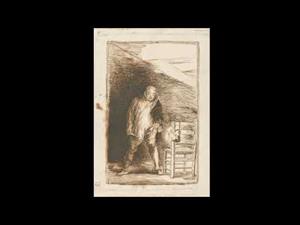
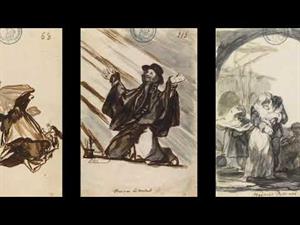
Albums G and H were produced in Bordeaux, probably simultaneously or very close to one another in time, as evidenced by their formal, stylistic and technical similarity. In them, Goya gave free rein to his capacity for invention based on specific events he had experienced, such as the popular characters seen on the streets of Paris and Bordeaux, and to his pure imagination. Goya depicts the most significant issues presented over the course of his career, but in this case the changes the tone from satirical to grotesque: the falsehood of humanity, inequality, poverty, irrationality and the violence of individuals and of society. Goya introduced the use of crayon in these albums. This occurs in coincidence to his interest in lithography and his practice of that procedure in Bordeaux.