formularioRDF
The itinerary <em>TITULORECORRIDO</em> has been successfully created. Now you can add in works from the Collection browser
<em>TITULOOBRA</em> added to <em>TITULORECORRIDO</em> itinerary

Close Continuar a ficha de la obra Continuar a ficha de la obra
02-06-2026
Francisco de Goya y Lucientes - Engraver
Fuendetodos, Zaragoza (Spain), 1746 - Bordeaux (France), 1828 - Engraver
Laureano Potenciano Pastor
Madrid, 1837 - ¿Madrid?, 1864
Real Academia de Bellas Artes de San Fernando

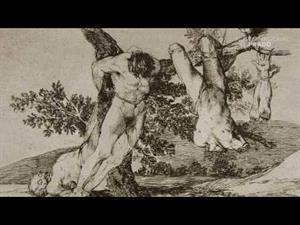
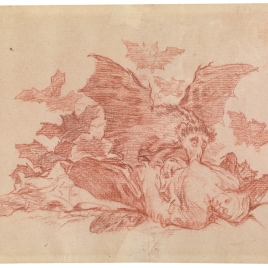
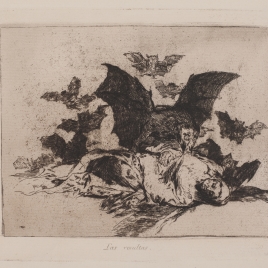
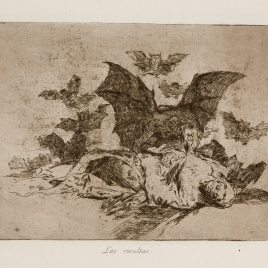
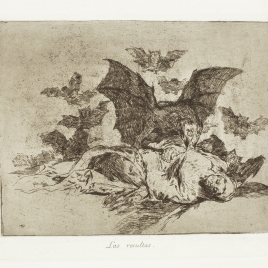
The consequences

1814 - 1815. Etching on wove paper.
Not on display
An understanding of the Caprichos enfáticos (Emphatic caprichos), the third part of The Disasters of War, which spans plates 65 to 82, must take into account various aspects of the repression and the restoration of absolutism marked by Ferdinand VII's return to Spain. The fullest expression of the new political order is to be found in the text of the royal decree from 4 May 1814: In accordance with the resolute and general demonstrations of the will of my peoples, and because those demonstrations were just and well-founded, I declare ... that that constitution [i.e., the liberal Constitution of 1812, promulgated by the Cortes of Cádiz in Ferdinand's absence] and such decrees null and void, now and forever, as if such acts had never taken place and had been erased from the past ... And since anyone who should seek to uphold those acts, contradicting my royal decree, made in accordance with the will of my peoples, would commit an outrage against the prerogatives of my sovereignty and the felicity of the nation, causing disturbance and unrest in my realms, I declare whosoever should dare or attempt such to be guilty of lese-majesty, and therefore subject to the penalty of death, whether he commit the crime in actions or in writing or in speech.
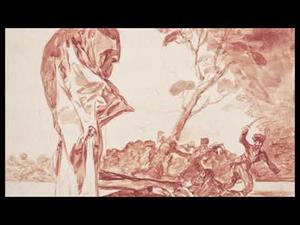
Unlike the previous more narrative compositions in the series, Goya returns, in this last group, to the allegorical language that he had deployed in the Caprichos series. From this point forward, throughout the last years of his life, this allegorical style would be a constant in his work, culminating in Los Disparates and the so-called Black paintings. It is likely that the currency of the subjects he deals with in this section -the struggle between Ferdinand's servile supporters and Spanish liberals, the repression of the latter, the re-establishment of the Inquisition and the abolition of the liberal Constitution of 1812- motivated Goya's use of a cryptic and ambiguous visual language in which ideas that were critical of the absolutist state would not seem terribly explicit and therefore compromising for the artist.
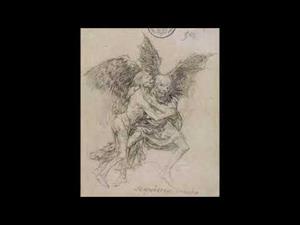
The dark imagery of this part of the series also manifests the artist's disillusionment with these events. The grotesque imagery, a constant in his subsequent work, in which humankind loses its humanity, is also significant: human figures, here, are animalised as a reflection of the baseness of their actions. In this process of dehumanisation -or animalisation- wolves, vampires, vultures, owls and other monstrous beings, half-way between man and beast, oppress humans or bring them to their death.
This last section of the series is a devastating criticism of the rulers who, contrary to the common good (a concept frequently employed to justify government policies), dictated laws based on the privileges of the Ancien Régime. The nocturnal animals that fill plate 43 from the Caprichos, El sueño de la razón produce monstruos (The sleep of reason produces monsters), etched nearly 20 years before this one, reappear here pouncing like vampires -in the words of Lafuente Ferrari- on the exhausted body that might represent post-war Spain, feeding on his weak, thin blood (Matilla, J. M.: Portrait of Spain. Masterpieces from the Prado, Queensland Art Gallery-Art Exhibitions Australia, 2012, p. 220).
Multimedia

Technical data

Related artworks

The consequences
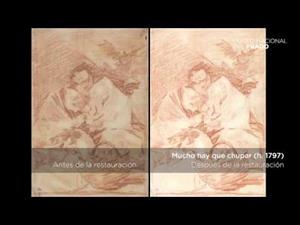
Red chalk on laid paper, 1814 - 1815
Francisco de Goya y Lucientes
Inventory number
G000717
Authors
Francisco de Goya y Lucientes -Engraver-; Laureano Potenciano Pastor; Real Academia de Bellas Artes de San Fernando
Title
The consequences
Date
1814 - 1815
Technique
Etching
Support
Wove paper
Dimension
Height: 225 mm; Width: 305 mm; Height of the plate mark: 179 mm; Width of the plate mark: 220 mm
Series
Desastres de la guerra [estampa], 72
Provenance
Bequest of Tomás Harris, 1964
Entry date
1964

Bibliography +

Brunet, M.G., Étude sur Francisco Goya sa vie et ses travaux, Aubry, Paris, 1865, pp. 58.
Yriarte, Charles, Goya: sa biographie, les fresques, les toiles, les tapisseries, les eaux-fortes et le catalogue de l' oeuvre, Henri Plon, Paris, 1867, pp. 118.

Viñaza, Cipriano Muñoz y Manzano Conde de la, Goya: su tiempo, su vida, sus obras, Tip. M.G. Hernández, Madrid, 1887, pp. 398.

Delteil, Loys, Francisco Goya, I, Chez L'Auteur, Paris, 1922.

Mayer, August L., Francisco de Goya, Labor, Barcelona, 1925, pp. 231.

Lafuente Ferrari, Enrique, Los desastres de la guerra de Goya y sus dibujos preparatorios, Instituto Amatller de Arte Hispánico, Barcelona, 1952, pp. 74, 185.

Harris, Tomas, Goya, engravings and lithographs, II, Bruno Cassirer, Oxford, 1964, pp. 282.

Gassier, Pierre y Wilson-Bareau, Juliet, Vie et oeuvre de Francisco de Goya: l' oeuvre complet illustré: peintures, dessins, gravures, Office du Livre, Fribourg, 1970.

Sayre, Eleanor, The Changing Image. Prints by Francisco Goya, Museum of Fine Arts, Boston, 1974, pp. 286.

Derozier, C., La Guerre D'Independance Espagnole a Travers L'Estampe (1808..., II, Universidad de Lille, Lille, 1976, pp. 947.

Pita Andradre J.M. y Alvarez Lopera J., Goya y la constitución de 1812, Ayuntamiento, Delegación de Cultura, Madrid, 1982, pp. 23.

Bozal, Valeriano, Imagen de Goya, Lumen, Barcelona, 1983, pp. 254.

Armstrong Roche M., Las Resultas, Goya y el espíritu de la Ilustración, Museo Nacional del Prado, Madrid, 1988, pp. 441.

Vega, Jesusa, Museo del Prado: catálogo de estampas, Museo del Prado, Madrid, 1992, pp. 96, 99.

Vega, Jesusa, Fatales Consecuencias de la guerra. Francisco de Goya, pintor, Francisco de Goya, grabador: instantáneas, Caser y Calcografía Nacional, Madrid, 1992, pp. 47.

Blas, Javier y Matilla, José Manuel, El libro de los desastres de la guerra: Francisco de Goya, Museo Nacional del Prado, Calcografía Nacional, Madrid, 2000, pp. 141-144.

Obras adscritas al Museo Nacional del Prado en el año 2000, Boletín del Museo del Prado, XIX, 2001, pp. 200.

Nieto Alcaide, Víctor, La guerra y lo imaginario en la pintura de Goya, Barcelona, 2003, pp. 319-329.

Calcografía Nacional (España), Calcografía Nacional: catálogo general, II, Calcografía Nacional, Madrid, 2004, pp. 467.

Matilla, José Manuel, Las Resultas, Goya: en tiempos de guerra, Museo Nacional del Prado, Madrid, 2008, pp. 341.

Matilla, José Manuel, Estampas españolas de la Guerra de la Independencia: propaganda, conmemoración y testimonio, Universidad de Salamanca, 2008.

Bordes J., Matilla J.M. y Balsells S, Goya, cronista de todas las guerras: los "desastres" y la fotografía de guerra, Centro Atlántico de Arte Moderno y Real Academia de Bellas Artes de San Fernando, Las Palmas de Gran Canaria; Madrid, 2009, pp. 224.

Vega, Jesusa, Ciencia, arte e ilusión en la España Ilustrada, Consejo Superior de Investigaciones Científicas, Madrid, 2010, pp. 478.

Hofmann, Julius, Francisco de Goya: Katalog seines graphischen Werkes, Gesellschaft für vervielfältigende Kunst, Viena, 2014, pp. 91-145.

Pérez Francés, José Antonio, Aragón en los Desastres de la guerra de Francisco de Goya, Institución Fernando el Católico,, Zaragoza, 2025, pp. 39-62 [313-314,335-342].

Inscriptions +

72 // Las resueltas.
Lettered in the plate. Front

TH [monograma en un círculo. Lugt, n. 4922] // Thomas Harris. [Lugt, n. 4921]
Brown ink stamp. Back, left side

Exhibitions +

Portrait of Spain. Masterpieces from the Prado
Houston TX
15.12.2012 - 31.03.2013

Portrait of Spain. Masterpieces from the Prado
Brisbane
22.07.2012 - 04.11.2012

Update date: 02-06-2026 | Registry created on 31-05-2025

Visor 360

Drag with the cursor to rotate the piece

Other works by Francisco de Goya y Lucientes; Laureano Potenciano Pastor; Real Academia de Bellas Artes de San Fernando

Print on demand

Print artworks available in our catalogue in high quality and your preferred size and finish.

Image archive

Request artworks available in our catalogue in digital format.

Up