formularioRDF
The itinerary <em>TITULORECORRIDO</em> has been successfully created. Now you can add in works from the Collection browser
<em>TITULOOBRA</em> added to <em>TITULORECORRIDO</em> itinerary

Close Continuar a ficha de la obra Continuar a ficha de la obra
02-06-2026
Francisco de Goya y Lucientes - Engraver
Fuendetodos, Zaragoza (Spain), 1746 - Bordeaux (France), 1828 - Engraver
Laureano Potenciano Pastor
Madrid, 1837 - ¿Madrid?, 1864
Real Academia de Bellas Artes de San Fernando

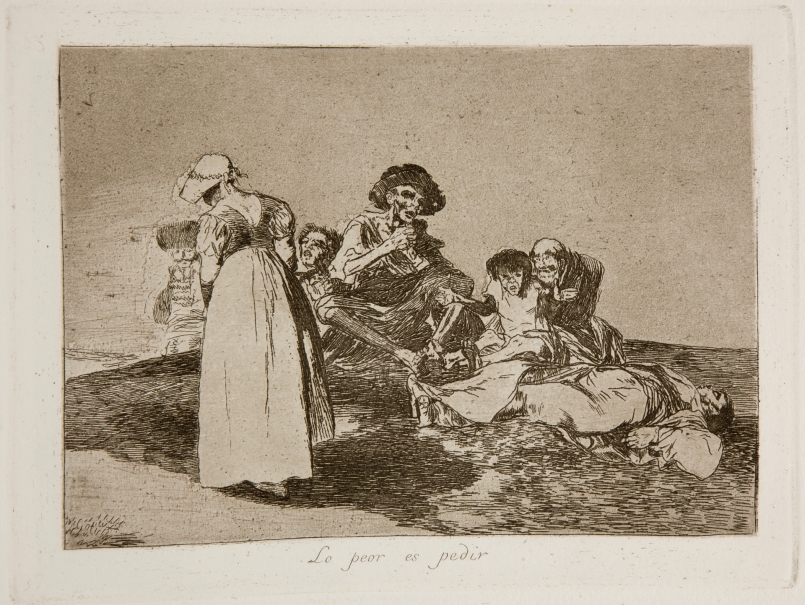
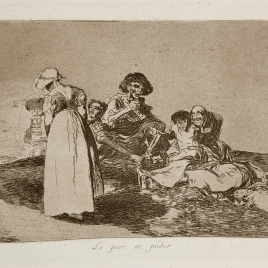
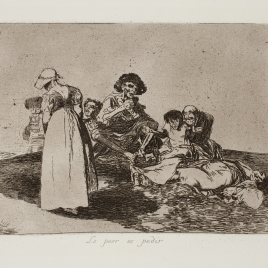
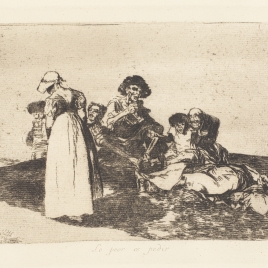
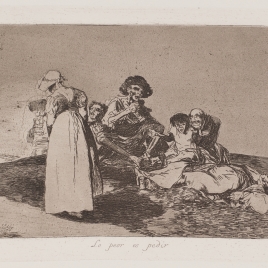
The Worst is to beg

1812 - 1814. Wash, Etching, Burnisher on wove paper.
Not on display

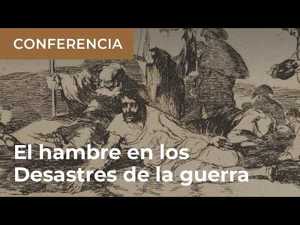
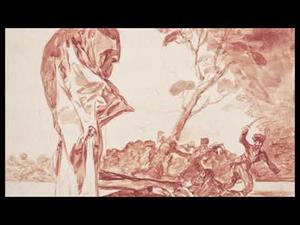
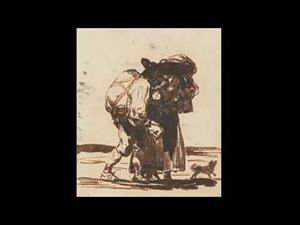
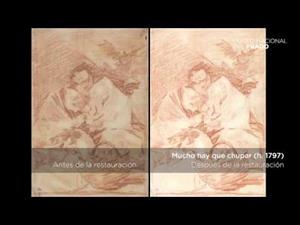
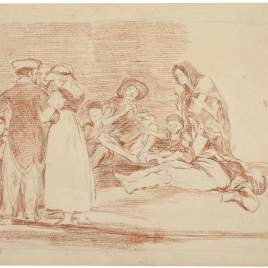
Disasters of War, 55, The Worst is to beg. One of Goya’s most singular conceptual contributions in his series of prints, Disasters of War, is his manner of representing the role of women in the conflict. They sometimes appear as heroines, but are more often depicted as victims of abuse and violence. In his desire to convey the war’s dire consequences for all levels of the population, he made women the protagonists of many of these prints—an unprecedented approach in the history of depictions of war. Their rape by soldiers and the exaltation of their motherhood constitute the two pivotal elements in scenes that present young women who have become prostitutes or mothers being raped alongside valiant heroines who defend their children’s lives or continue the battle initiated by their deceased husbands. On most occasions, the subject is quite explicit, but sometimes it proves more ambiguous. Such is the case with the present drawing and print. The latter’s title implies a previous question in two parts: which of the two responses to hunger is worse? Prostitution and its moral damage, or mendacity, with its physical consequences? Goya’s eloquent answer—The worst is to beg—is clearly set out in this image. The woman who survives by selling her body bows her head in humiliation, but those who keep their dignity die of hunger. As also occurs in Disaster 61, Perhaps they are of another breed, the composition presents two focal points as a means of expressing that duality. On the left we see the young woman and the French soldier; and in the center and right, the starving Spaniards. A comparison of the preparatory drawing to the subsequent print shows how Goya increased the work’s tragic and emotive aspects. In the drawing, despite the fact that she is not in the center of the composition, the young woman is the protagonist. Goya manages this by dressing her in a white skirt that stands out against the intensely drawn surroundings, and he further directs the other figures’ gazes towards her, just as did many years earlier in his cartoon for The Wedding (Museo del Prado, P799), where the bride draws the attention of everyone around her in what is clearly a marriage of convenience. Here, the man lying on the ground beside her is depicted with a similar use of light and dark: white shirt and trousers and a dark vest. Thus, Goya presents the two alternative responses to hunger, one alongside the other. The clearly commercial relationship between the woman and the soldier is underlined by the former’s bowed head as the Frenchman seems to be showing her where their encounter is to take place. The figure between them is probably her procuress. This highly descriptive presentation makes it easy to follow the story in the drawing, but in the print, the narrative becomes less precise as Goya opts, instead, for increased dramatic tension. He isolates the woman by moving the French soldier further back into the middle ground, where he faces forward. His colback, a French military hat, was customarily used by Goya to identify the French participants in his most violent compositions. This change accentuates the woman’s solitude and her condition as the victim of a destiny she, herself, has chosen over death (Text from: Matilla, J.M.: Lo peor es pedir, in Matilla, J.M. and Mena, M.B.: Goya: Luces y Sombras, Barcelona, 2012, p. 200).
Multimedia

Technical data

Imagen del carrusel
Imagen del carrusel

Related artworks

The Worst is to beg
Conté crayon on continuous paper, laid paper, 1812 - 1814
Francisco de Goya y Lucientes
Inventory number
G002385
Authors
Francisco de Goya y Lucientes -Engraver-; Laureano Potenciano Pastor; Real Academia de Bellas Artes de San Fernando
Title
The Worst is to beg
Date
1812 - 1814
Technique
Wash; Etching; Burnisher
Support
Wove paper
Dimension
Height: 248 mm; Width: 345 mm; Height of the plate mark: 156 mm; Width of the plate mark: 208 mm
Series
Desastres de la guerra [estampa], 55 (37)
Provenance
Real Academia de Bellas Artes de San Fernando, Madrid; Eduardo Luis Moreda Fernández; Museo del Prado, 2000
Entry date
2000

Bibliography +

Brunet, M.G., Étude sur Francisco Goya sa vie et ses travaux, Aubry, Paris, 1865, pp. 56.

Viñaza, Cipriano Muñoz y Manzano Conde de la, Goya: su tiempo, su vida, sus obras, Tip. M.G. Hernández, Madrid, 1887, pp. 390.

Delteil, Loys, Francisco Goya, I, Chez L'Auteur, Paris, 1922.

Mayer, August L., Francisco de Goya, Labor, Barcelona, 1925, pp. 231.

Lafuente Ferrari, Enrique, Las Pruebas de Estado de 'Los Desastres de la Guerra' en la Biblioteca Nacional, II, Anabad, Madrid, 1934, pp. 387.

Lafuente Ferrari, Enrique, Goya: el dos de mayo y los fusilamientos de la Moncloa, Juventud, Barcelona, 1946, pp. 20.

Lafuente Ferrari, Enrique, Los desastres de la guerra de Goya y sus dibujos preparatorios, Instituto Amatller de Arte Hispánico, Barcelona, 1952, pp. 26, 173.

Harris, Tomas, Goya, engravings and lithographs, II, Bruno Cassirer, Oxford, 1964, pp. 256.

Gassier, Pierre y Wilson-Bareau, Juliet, Vie et oeuvre de Francisco de Goya: l' oeuvre complet illustré: peintures, dessins, gravures, Office du Livre, Fribourg, 1970.

Sayre, Eleanor, The Changing Image. Prints by Francisco Goya, Museum of Fine Arts, Boston, 1974, pp. 190.

Derozier, C., La Guerre D'Independance Espagnole a Travers L'Estampe (1808..., II, Universidad de Lille, Lille, 1976, pp. 920.

Vega, Jesusa, Lo peor es pedir, Goya y el espíritu de la Ilustración, Museo Nacional del Prado, Madrid, 1988, pp. 309.

Vega, Jesusa, Museo del Prado: catálogo de estampas, Museo del Prado, Madrid, 1992, pp. 93.

Vega, Jesusa, Fatales consecuencias de la guerra.Francisco de Goya, pintor, Francisco de Goya, grabador: instantáneas, Caser y Calcografía Nacional, Madrid, 1992, pp. 42.

Biblioteca NacionalEspaña, "Ydioma Universal": Goya en la Biblioteca Nacional, Biblioteca NacionalLunwerg, Madrid, 1996, pp. 213.

Cuenca M. L., Docampo J. y Vinatea P., Catálogo de las estampas de Goya en la Biblioteca Nacional, Biblioteca Nacional y Lunwerg, Madrid, 1996, pp. 167.

Blas, J. y Matilla, J.M., El libro de los desastres de la guerra : Francisco de Goya, Museo Nacional del Prado,Calcografía Nacional, Madrid, 2000, pp. 105-107.

Obras adscritas al Museo Nacional del Prado en el año 2000, Boletín del Museo del Prado, XIX, 2001, pp. 200.

Nieto Alcaide, Víctor, La guerra y lo imaginario en la pintura de Goya, Barcelona, 2003, pp. 319-329.

Calcografía Nacional (España), Calcografía Nacional: catálogo general, II, Calcografía Nacional, Madrid, 2004, pp. 465.

Matilla, José Manuel, Estampas españolas de la Guerra de la Independencia: propaganda, conmemoración y testimonio, Universidad de Salamanca, 2008.

Matilla J.M., Lo peor es pedir, Goya: en tiempos de guerra, Museo Nacional del Prado, Madrid, 2008, pp. 326.

Wilson-Bareau J. [et alt.], Catalogue, Goya graveur, Chaudun y Paris musées, Paris, 2008, pp. 248.

Bordes J., Matilla J.M. y Balsells S, Goya, cronista de todas las guerras: los "desastres" y la fotografía de guerra, Centro Atlántico de Arte Moderno y Real Academia de Bellas Artes de San Fernando, Las Palmas de Gran Canaria; Madrid, 2009, pp. 190.

Matilla, José Manuel, Lo peor es pedir, Goya: luces y sombras, Fundación "la Caixa" y Museo Nacional del Prado, Barcelona Y Madrid, 2012, pp. 200.

Hofmann, Julius, Francisco de Goya: Katalog seines graphischen Werkes, Gesellschaft für vervielfältigende Kunst, Viena, 2014, pp. 91-145.

Filigree +

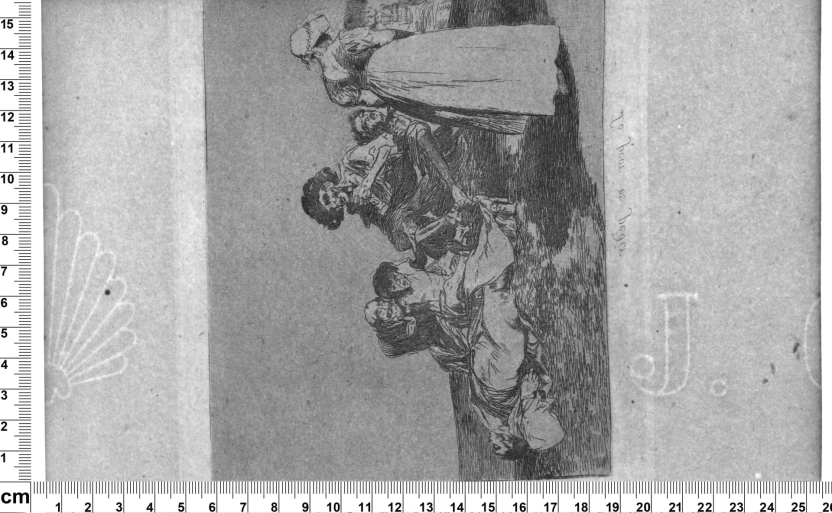
Motive: Venera e iniciales “J. G. O.” (fragmento central)


72 x 248 mm
Principal
Yes
En el centro de la hoja, de arriba abajo
José García Oseñalde
Marca de agua en forma de venera e iniciales "J. G. O." característica del papel fabricado por José García Oseñalde, establecido en La Cabrera, Guadalajara. En esta localidad existió fábrica de papel desde por lo menos 1733, como así es recogido por Eugenio Larruga en sus "Memorias políticas y económicas sobre los frutos, comercio, fábricas y minas de España...", de ese año y de 1746. Esta antigua fábrica de papel blanco debió de ser la que José García Oseñalde compró en 1847, junto a un molino de harina llamado "Los Heros", colindante entre las localidades de La Cabrera y Aragosa. La fábrica también debió conocerse con el nombre del molino de harinas, pues así consta en 1886, cuando la fábrica de papel sellado "Los Heros" era propiedad de Pedro García Oseñalde (véase: "El obispado de Sigüenza, ó sea Nomenclátor descriptivo, Geográfico y Estadístico de todos los pueblos del mismo, por un sacerdote de la diócesis", Zaragoza, 1886, p. 21 [Aragosa])

La primera edición de los "Desastres de la Guerra" de Goya se imprimió en papel con esta filigrana, en 1863.

Imagen de la bibliografia

Bibliography
Biblioteca Nacional de España, Catálogo de las estampas de Goya en la Biblioteca Nacional, Biblioteca Nacional, Sociedad Estatal Goya 96 y Lunwerg, Madrid, 1996, pp. 280, fil. 22.
Fundación Lázaro Galdiano, Goya en la Fundación Lázaro Galdiano, Fundación Lázaro Galdiano, Madrid:, 1999, pp. 386-387, fil. 14-15.

Other inventories +

Inv. Nuevas Adquisiciones (iniciado en 1856). Núm. 2564.
Inscriptions +

55 // Goya // Lo peor es pedir // 37
Lettered in the plate. Front

Exhibitions +

Goya in Times of War
Madrid
15.04.2008 - 13.07.2008

Update date: 02-06-2026 | Registry created on 26-11-2015

Visor 360

Drag with the cursor to rotate the piece

Other works by Francisco de Goya y Lucientes; Laureano Potenciano Pastor; Real Academia de Bellas Artes de San Fernando

Print on demand

Print artworks available in our catalogue in high quality and your preferred size and finish.

Image archive

Request artworks available in our catalogue in digital format.

Up