formularioRDF
The itinerary <em>TITULORECORRIDO</em> has been successfully created. Now you can add in works from the Collection browser
<em>TITULOOBRA</em> added to <em>TITULORECORRIDO</em> itinerary

Exhibition

Art and Myth. The Gods in the Prado

CaixaForum Palma. Illes Balears 11/22/2017 - 2/18/2018

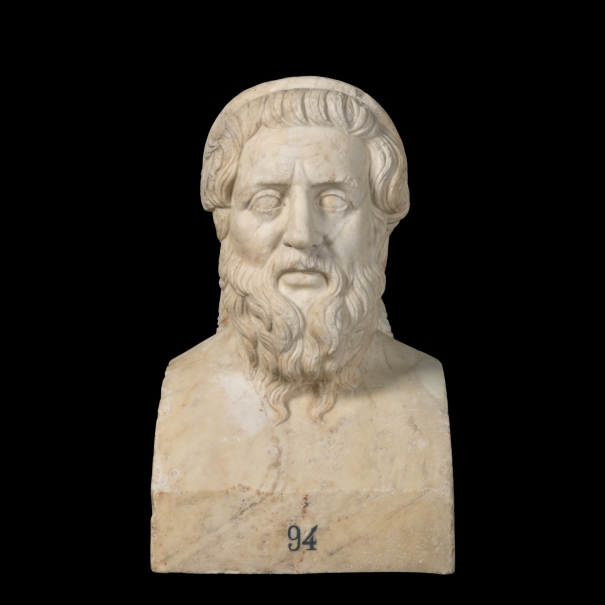
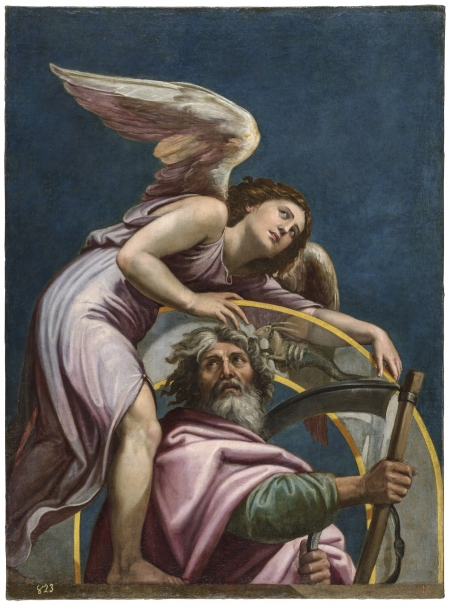
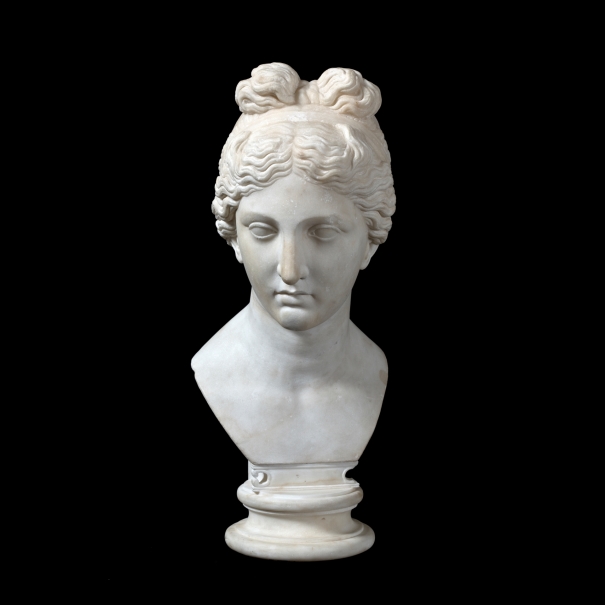
Art and Myth. The Gods in the Prado is an unprecedented exhibition organised by the Museo Nacional del Prado and the ”la Caixa” Foundation that offers a sweeping overview of classical mythology and its representation in paintings, sculptures and objects made between the mid-first century BC and the late eighteenth century.

This diachronic proposal, divided into eight thematic sections, simultaneously presents various depictions of deities and different interpretations of mythological episodes so that visitors can fully appreciate the iconographic, geographical and chronological diversity of the Prado’s collections. The show features fifty works by Rubens, Ribera, Zurbarán and many other legendary masters from the history of art.

Curator:
Fernando Pérez Suescun, Didactic Content Manager in the Prado’s Education Department

RDF

RDF

Co-organized by:

Exhibition

Mythology as a Source of Inspiration

Mythology as a Source of Inspiration
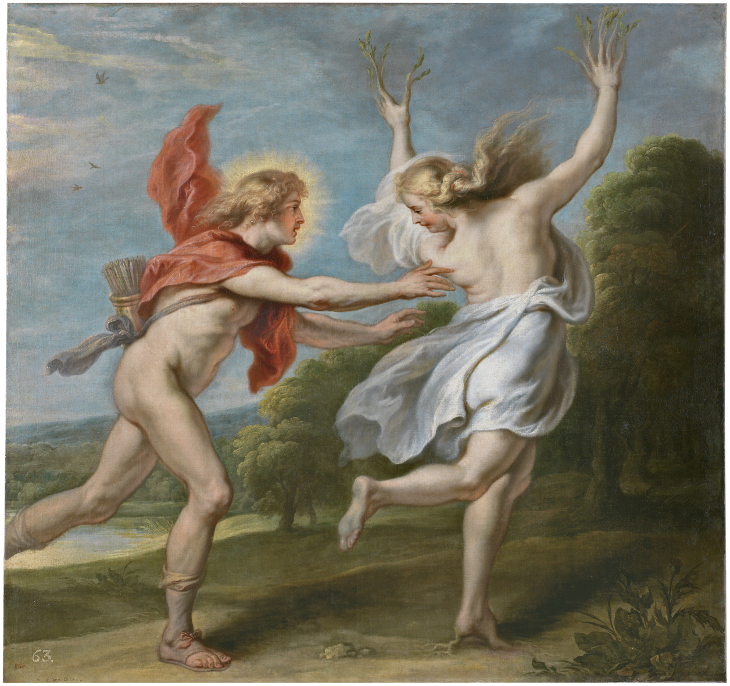
Apollo and Daphne
Theodoor van Thulden
Oil on canvas
1636-38
Museo Nacional del Prado

Myths are stories about gods and demigods and their interactions with ordinary humans, which is why they can be found in every ancient society and culture. These tales, usually of unknown origin, were traditionally passed down orally and gradually changed over time as new tellers added details and came up with different versions. In the case of Greek myths, the earliest written records are no older than the eighth century BC.

The main characters in these stories were the Olympian deities, who governed the fates of men but also came down to Earth and interacted with them, occasionally adopting human form to make themselves more approachable. Myths also served to explain all sorts of phenomena in the surrounding natural world or the universe. People came up with countless deities to personify mountains, springs, rivers, seas, winds, constellations, every kind of tree and even the animal species that lived alongside humans.

Throughout history, classical mythology has been an inexhaustible source of inspiration for many artists, and these fabulous tales were depicted on pottery pieces, marble blocks, medals, panels and canvases like the ones featured in this exhibition. The show consists almost entirely of works from the Museo del Prado, dated between the mid-first century BC and the late 1800s, and provides an extensive overview of Graeco-Roman mythology and how it has been represented by artists of the stature of Francisco de Zurbarán, Jusepe de Ribera, Peter Paul Rubens, Michel-Ange Houasse, Francesco Albani, Corrado Giaquinto and Leone Leoni, among others.

A Story To Tell

Myths are fantastic stories that take place outside historical time and feature divine or heroic characters. And the word mythology refers to a collection of myths or the study of myths.

Myths allowed the ancient Greeks and Romans to offer their interpretations of how the world was created and explain different natural or universal phenomena. They came up with countless deities to personify mountains, springs, rivers, seas, winds, constellations, and all kinds of trees and animal species. Gods and demigods—who always looked human, unless they were monsters—and heroes left an indelible mark on the world by performing exemplary deeds steeped in symbolic meaning.

At first, myths were unwritten stories passed down orally from generation to generation and gradually added to over time. In the eighth century BC, Homer and Hesiod were the first to write down those stories, naming the gods and describing their particular traits. However, our knowledge and understanding of classical myths is heavily indebted to later Greek and Roman authors, chief among them Apollodorus, Lucian of Samosata, Diodorus Siculus, Philostratus, Virgil and especially Ovid, author of the Metamorphoses, a veritable textbook of Graeco-Roman mythology.

Scholars who attempt to unravel classical myths must overcome the hurdle of terminology. Some gods are known by their Greek names, while others are more recognisable in Latin. Both options are used alternately throughout this exhibition, depending on the success of a certain version of a myth or the titles of the works on display, all from the collections of the Museo del Prado.

The Gods of Olympus

The Gods of Olympus
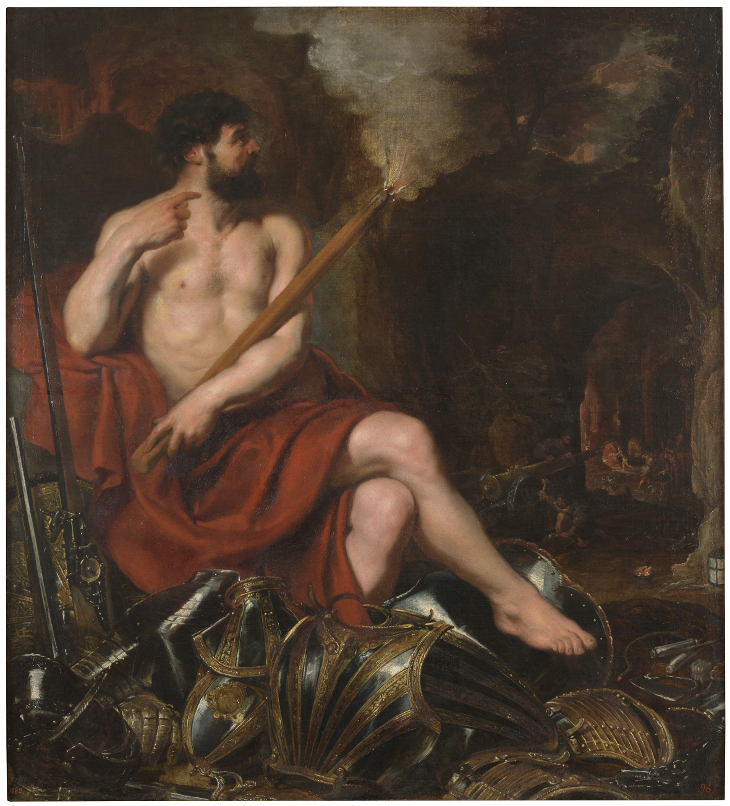
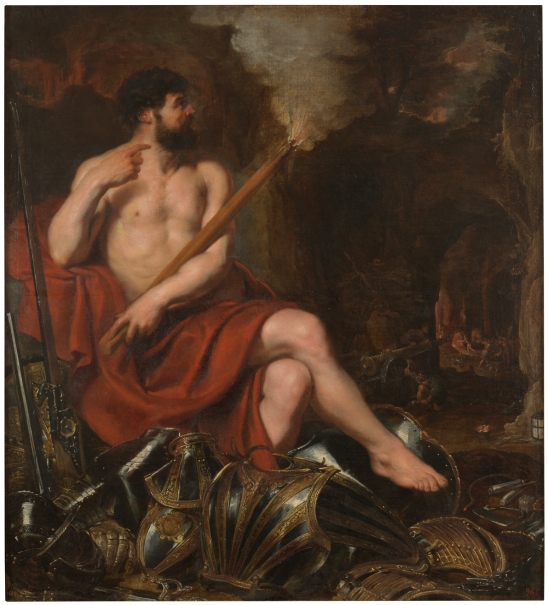
Vulcan and Fire
Peter Paul Rubens
Oil on canvas
17th century
Museo Nacional del Prado

Mount Olympus was the dwelling place of the principal Greek deities, called the Olympian gods. They were led by Zeus who, after defeating their father Cronus, had divided up the world with his brothers: it fell to him to rule the skies, Poseidon the seas, and Hades the underworld. In theory, all three had the same power, but Zeus was considered the supreme god of Olympus and, therefore, of the Greek pantheon (and later the Roman pantheon, where he was identified with Jupiter).

Zeus had several wives and countless dalliances with goddesses, nymphs, mortal women and even the odd ephebe. These relationships engendered some of the most important Olympian gods, as well as lesser deities—the Horae, the Moirai, the Graces, the Muses—and renowned heroes like Perseus and Heracles.

With Metis the Oceanid he conceived Athena, goddess of war but also of wisdom, music and handicraft. Zeus’s affair with Leto brought forth Artemis, goddess of the hunt, and Apollo, god of light, beauty, poetry and music. With his sister Demeter he begot Persephone, who was abducted by her uncle Hades and carried off to the underworld. His marriage to Hera, another sister, produced Eileithyia, protector of women in childbirth, Hebe, the personification of youth, and Ares, god of war. Maia the Pleiad bore him Hermes, the messenger of the gods, and the mortal woman Semele gave him a son named Dionysus, god of wine and revelry. Some accounts claim that he also fathered Aphrodite, goddess of love, who married Vulcan, the god of fire whom Hera had engendered without the help of her husband.

Free Spirits

Free Spirits
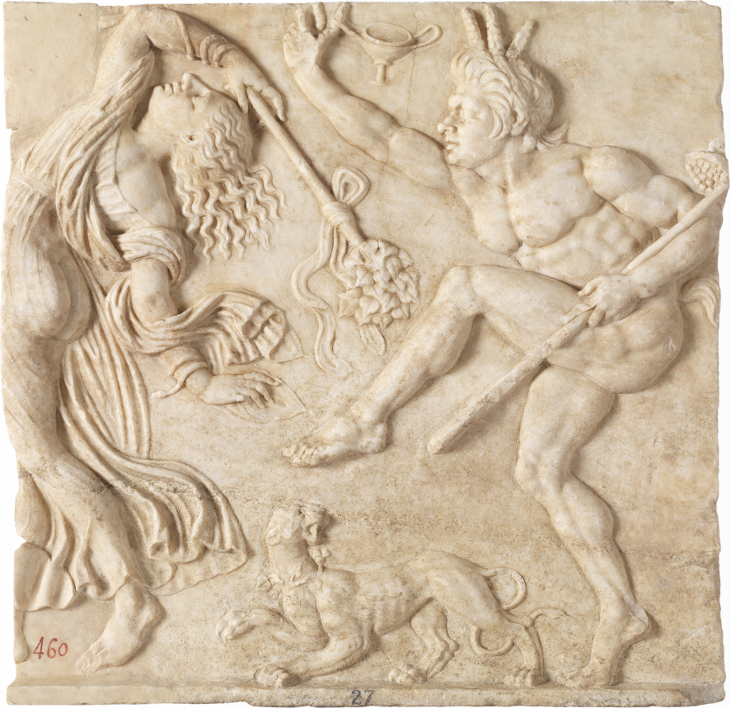
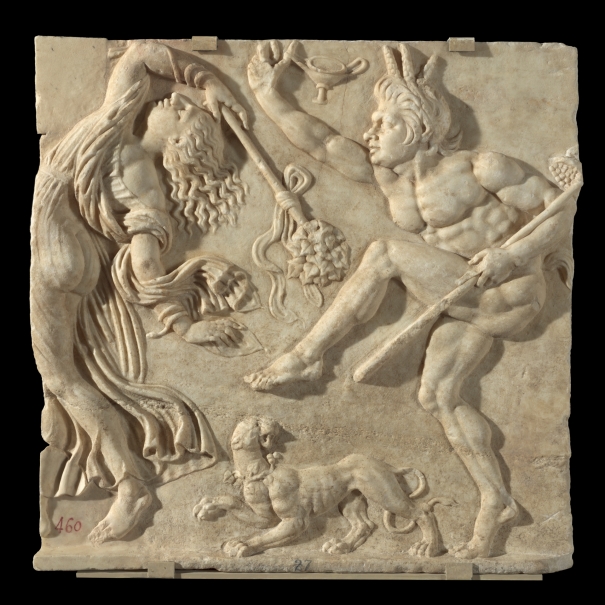
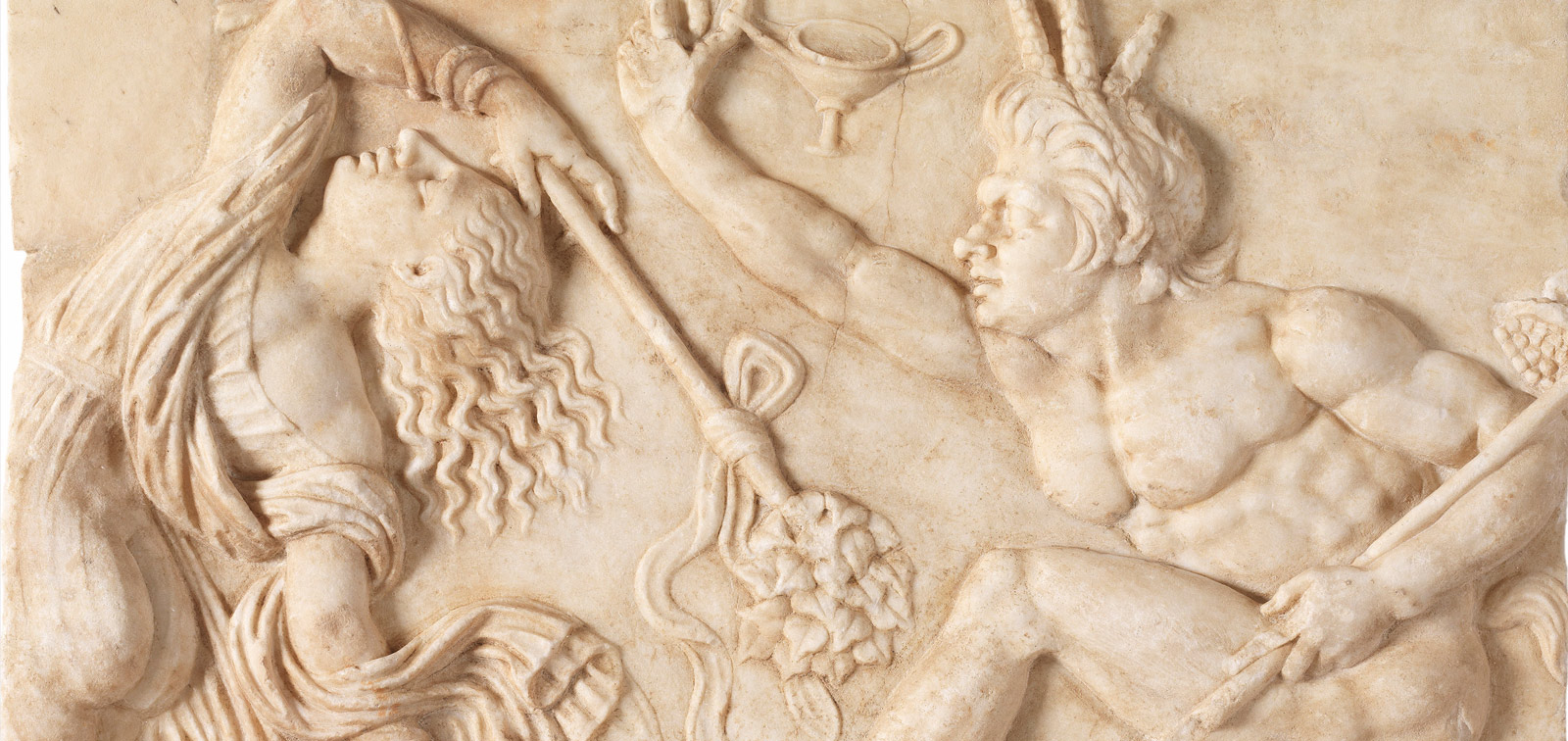
Dionysian Dance
Hellenistic workshop
Marble
50–40 BC
Museo Nacional del Prado

In myths, the classical deities were accompanied by all sorts of creatures and characters, often associated with different natural phenomena, which they used to satisfy their carnal needs or appetites and invited to share in their festivities and celebrations.

For example, the nymphs were minor deities of nature who lived in forests, caves and water bodies and eventually came to be identified with the elements whose vitality they embodied: naiads, dryads, oreads, Nereids and Oceanids. Present in many myths, they were all mortal and often members of the retinues that accompanied certain gods, like Artemis or Dionysus, who was also served by Maenads. Nymphs were forever being chased by the male spirits of nature—mainly Pan, fauns and satyrs—and they also had romantic and/or sexual relationships with various Olympian gods.

The Muses, daughters of Uranus and Gaia or of Zeus and Mnemosyne the Titanide, lived on Mount Olympus, where they sang and danced at the gods’ great celebrations. They were traditionally associated with Apollo, god of the arts, and were themselves—individually and collectively—believed to inspire artists, especially literary writers and musicians, to the point that they came to personify different disciplines of art and knowledge.

The three Charites (known as the Graces in Rome) were daughters of Zeus and Eurynome the Oceanid. Members of Apollo’s entourage, sometimes they also accompanied Aphrodite, Athena, Eros and Dionysus. They symbolised amiability, kindness and grace and were associated with love, beauty, sexuality and fertility as life-generating forces.

Love, Desire and Passion

Love, Desire and Passion
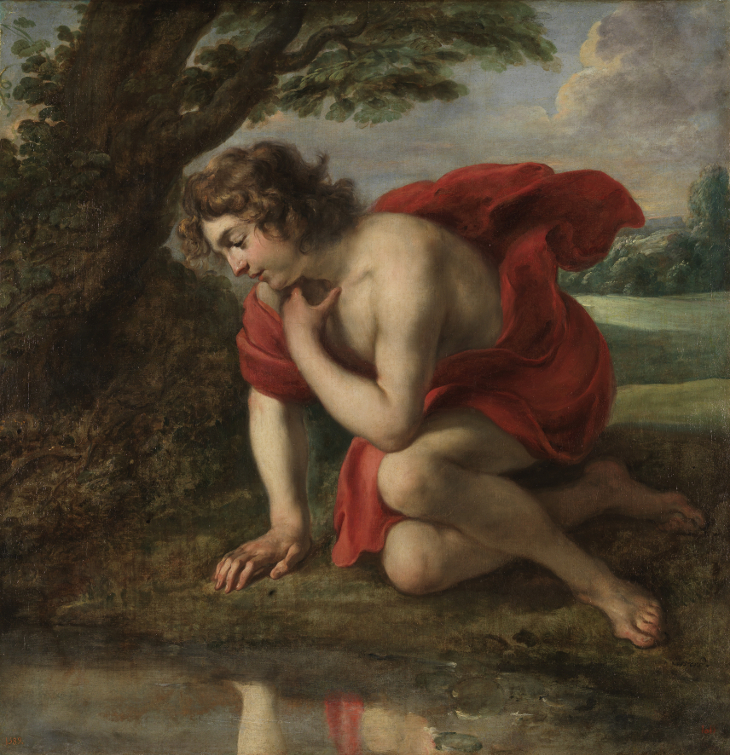
Narcissus
Jan Cossiers
Oil on canvas
1636-38
Museo Nacional del Prado

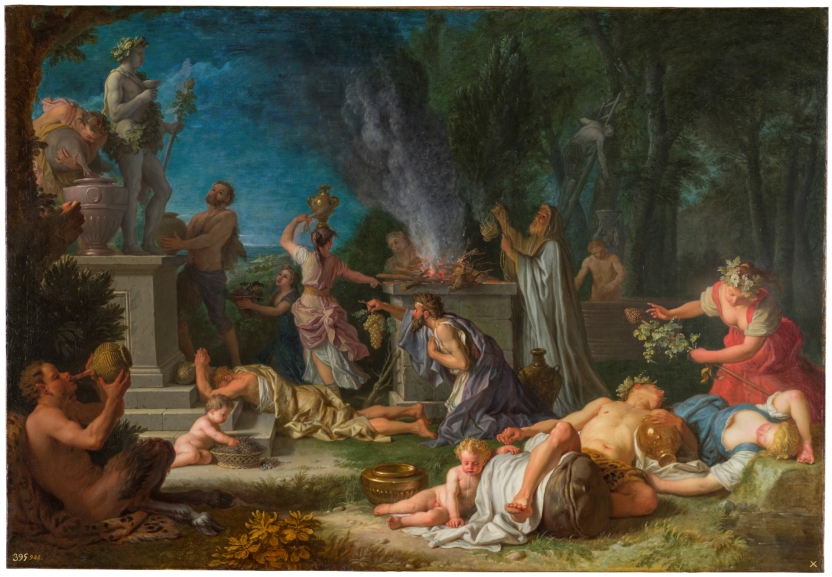
They say love is what makes the world go round. It is a feeling, a state of mind, a thrill, a passion—but it also happens to be a god, at least according to the ancient Greeks and Romans. They even gave him a name: Eros or Cupid. Although his origins are unclear, he was always depicted as a winged child who amused himself by toying with the hearts of gods and mortals, which he inflamed with his torch or wounded with his arrows. The gold arrows awakened love, but the lead ones instilled hate.

Like ordinary men and women, the gods were also susceptible to sudden infatuations and could find themselves ‘lovestruck’. This happened to Dionysus on Naxos when he encountered Ariadne, who had been abandoned by Theseus, and to Hermes when he saw Herse while flying over the city of Athens.

Despite their difficult and stormy beginnings, many such romances prospered and stood the test of time; examples include Cupid and Psyche, or Neptune and Amphitrite, whose relationship began with an abduction, much like Pluto and his niece Proserpina. But myths also told of ill-fated unions that were tragically cut short by the death of one of the lovers. Orpheus failed to rescue his beloved Eurydice from Hades; and jealousy proved fatal to Procris, who went out to spy on her husband Cephalus while he hunted and was accidentally killed by his own spear.

Narcissus is a unique case, for he fell in love with his own reflection in the water and was so besotted that he wasted away and died, later metamorphosing into the flower that bears his name.

Misdeeds and Punishments

Misdeeds and Punishments
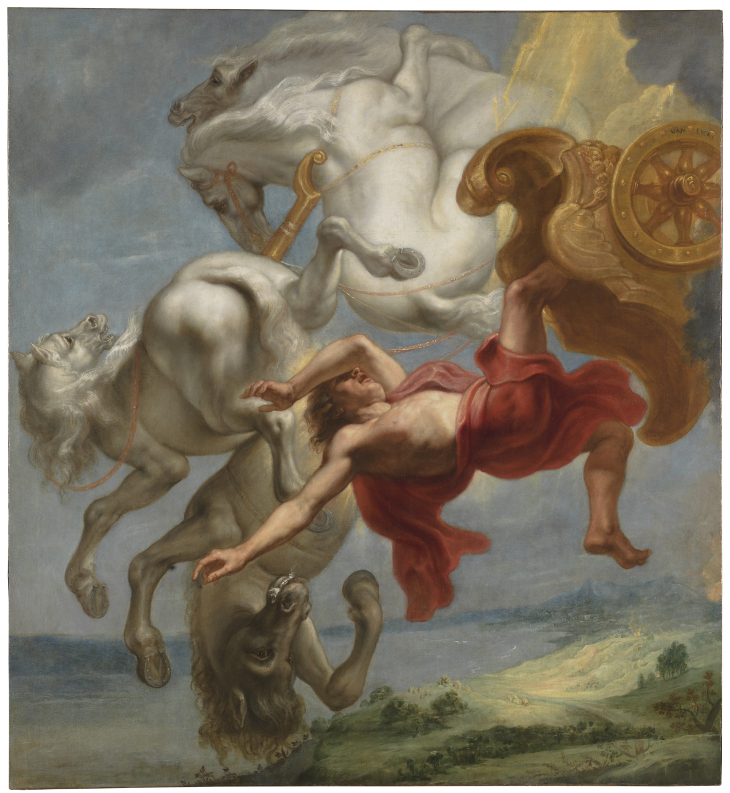
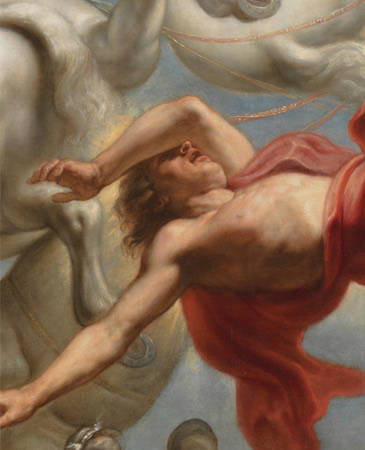
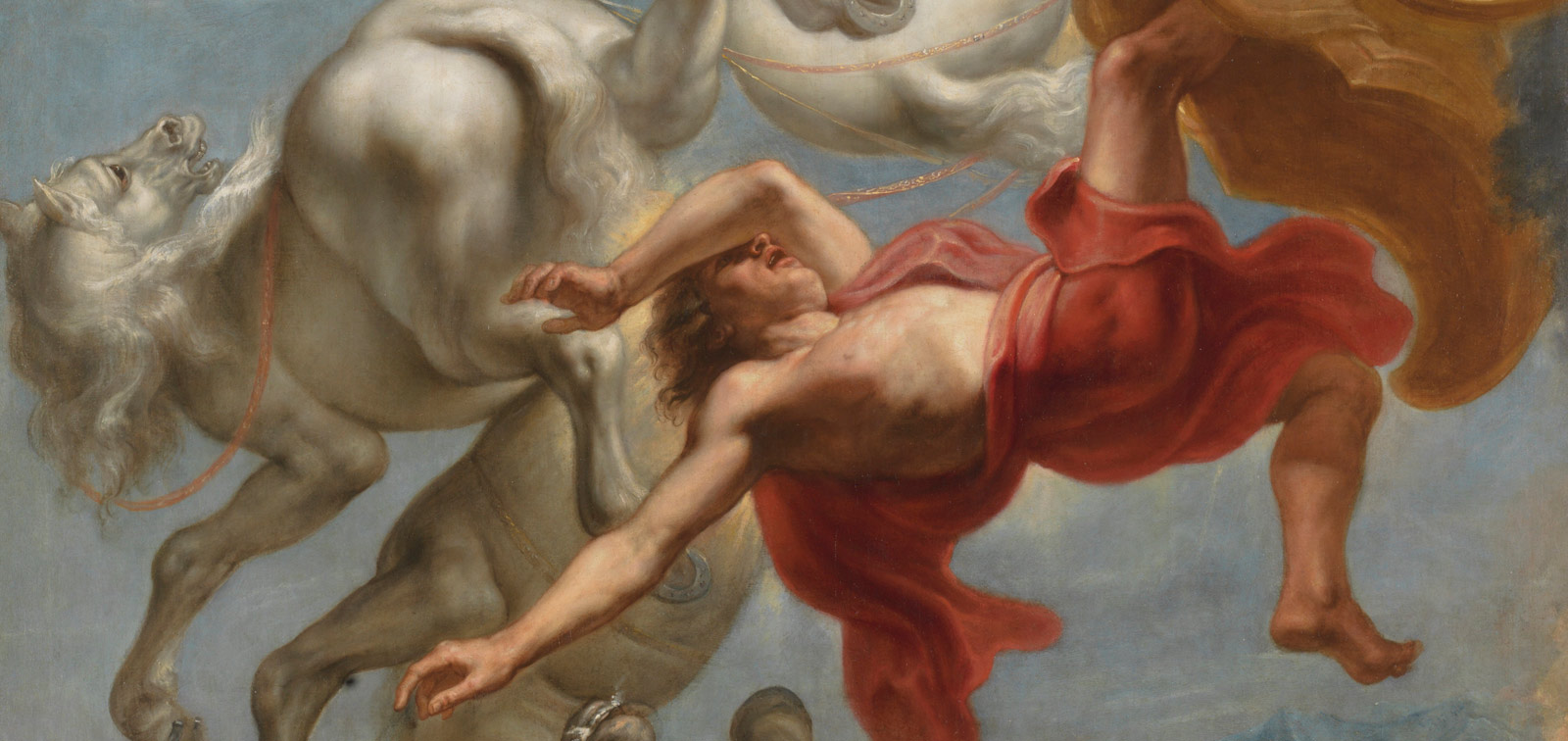
The Fall of Phaeton
Jan Carel van Eyck
Oil on canvas
1636-38
Museo Nacional del Prado

Violence is inherent to human beings, and the Graeco-Roman gods who adopted human forms and interacted with men shared the same failing. For this reason, the classical myths are filled with clashes and disputes between different deities. Cronus castrated and overthrew his father Uranus, and he in turn was deposed by his son Zeus. These fratricidal struggles led to two major wars in which numerous gods fought: the Titanomachy and the Gigantomachy. Even in antiquity, those confrontations were seen as symbolic of the conflict between chaos and order.

The punishments that the gods of Olympus meted out to the mortals and lesser deities who rose up against them could be indefinite and even eternal. The Furies were famous instruments of divine vengeance, and some prisoners in the underworld suffered endless torments: Tityus, who had his liver devoured by a bird of prey every day; Tantalus, doomed to feel eternal hunger and thirst; Sisyphus, sentenced to constantly roll a boulder up a hill; and Ixion, forced to spin endlessly on a wheel. Prometheus was also subject to the daily predations of an eagle that consumed his liver, which grew back each night.

Having sexual relations in a temple was a serious act of impiety that inevitably incurred the wrath of the gods. This sin was committed by the Trojan priest Laocoön, who ended up dying along with his sons wrapped in the coils of two serpents; and the goddess Cybele turned Hippomenes and Atalanta, guilty of the same violation, into lions and harnessed them to her chariot. Metamorphosis or transformation was one of the gods’ favourite forms of punishment.

Divine and Human Metamorphoses

Divine and Human Metamorphoses
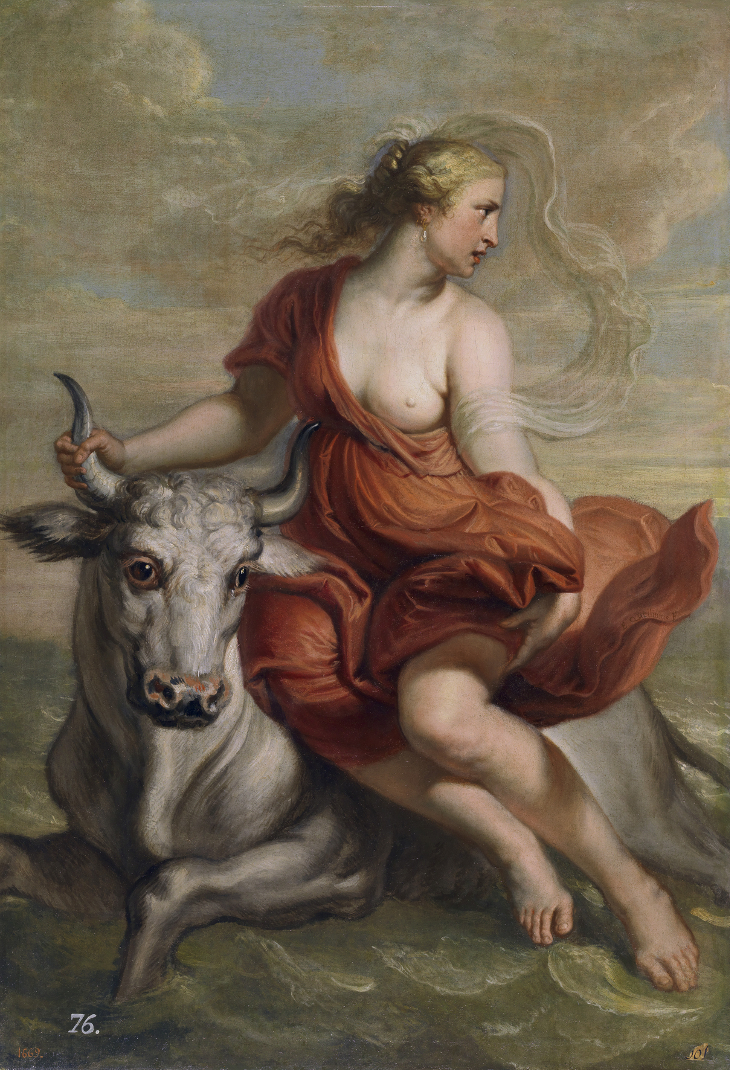
The Rape of Europa
Erasmus Quellinus
Oil on canvas
1636-38
Museo Nacional del Prado

Metamorphosis is synonymous with transformation, deception and false appearances. The main Graeco-Roman deities had a remarkable ability to alter their physical appearance and take on new identities in order to achieve their goals, which usually had to do with carnal pleasures.

Although his brother Poseidon was no mean shapeshifter—turning himself into a horse to mate with Demeter and a ram to couple with Theophane—it was Zeus who most frequently employed such trickery to indulge his most basic instincts, and this section is almost exclusively devoted to him.

Zeus’s favourite ruse was to take on the outward appearance of an animal. He metamorphosed into an eagle, the animal most frequently associated with this deity, and abducted a young shepherd named Ganymede, carrying him off to Olympus to be his lover and cup-bearer to the gods. Zeus turned into a swan to seduce Queen Leda, who bore him Helen and Pollox, and kidnapped Princess Europa while disguised as a bull. But he also pretended to be his own daughter Artemis in order to seduce the nymph Callisto and disguised himself as King Amphitryon so that he could lie with his wife Alceme, an affair that resulted in the birth of Heracles. On other occasions, Zeus adopted the form of atmospheric phenomena to make his romantic conquests: he turned into a grey cloud to take the young maiden Io and golden rain to possess Danaë, who gave birth to Perseus, one of the greatest Greek heroes.

Metamorphosis was often a means of deflecting the unwanted attentions of a god, and various nymphs used it as a last resort: Daphne turned into a laurel tree to avoid Apollo, and Syrinx, fleeing from the god Pan, was transformed into reeds.

Heroes

Heroes
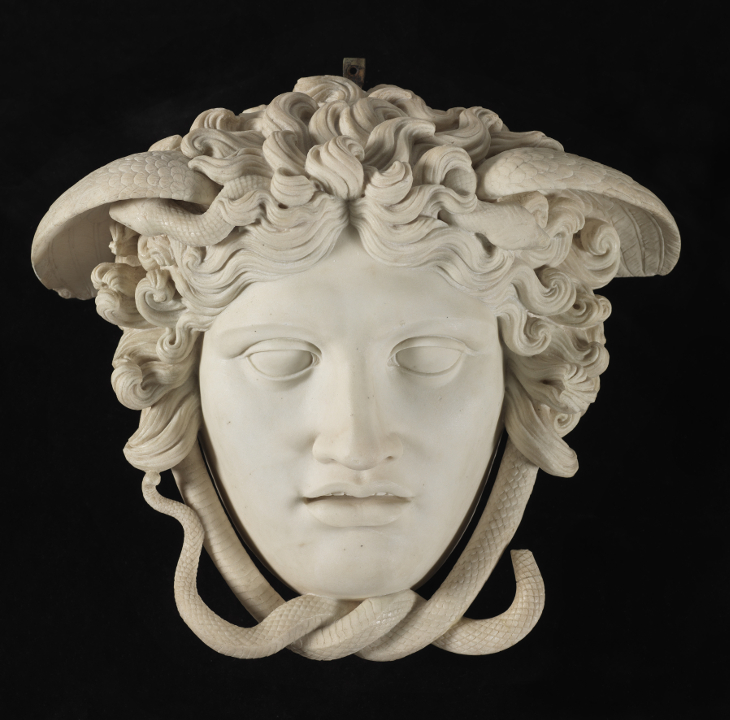
Medusa
Anonymous
Marble
17th–18th century
Museo Nacional del Prado

In addition to gods and demigods, heroes played a fundamental role in classical myths. They were often the offspring of a god and a mortal woman or a goddess and a mortal man, but there were also heroes with two mortal parents. Today all that remains of them are the deeds that earned them fame and glory.

Achilles the ‘swift-footed’ is the indisputable protagonist of the Iliad. Shortly after he was born, his mother—the goddess Thetis, wife of Peleus, King of Phthia—plunged him into the infernal River Styx and made his entire body invulnerable, except for the heel by which she held him. Achilles was raised by Chiron the centaur and, years later, played a key part in the Trojan War, where he won glory and found death when Paris’s arrow struck his only weak point, the heel.

Perseus, son of Zeus and Danaë, also has a prominent place among the great Greek heroes. His principal feat was vanquishing the Gorgon Medusa by cutting off her head. He later slew the sea monster Cetus, who was plaguing the kingdom of Ethiopia, and freed Princess Andromeda, his future wife.

Hercules—Heracles in Greece—was the ultimate classical hero, the embodiment of mythical, exemplary virtues and qualities. The son of Zeus and Alceme, he suffered the consequences of Hera’s wrath when the goddess sent him into a mad frenzy and he killed his own children. As punishment for this crime, he had to complete the legendary Twelve Labours of Hercules, and along the way he earned universal recognition and fame, ultimately achieving immortality and ascending to Olympus with the gods.

The Trojan War

The Trojan War
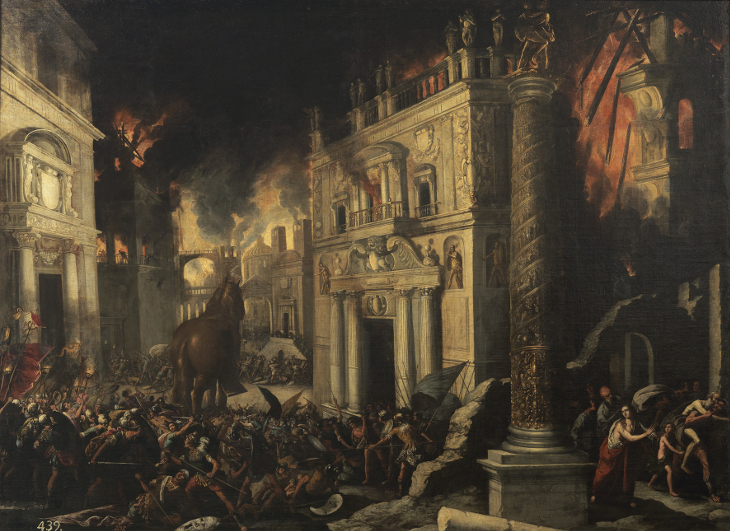
The Burning of Troy
Francisco Collantes
Oil on canvas
17th century
Museo Nacional del Prado

The Trojan War was a great clash between Greeks and Trojans, but many gods who, for different reasons, chose to support one side or the other also played an active and decisive role in the conflict.

It all began with a golden apple for ‘the fairest one’, a title coveted by Juno, Minerva and Venus. To settle the dispute, Jupiter ordered a young Trojan shepherd named Paris to act as judge and give the apple to whichever goddess he believed to be the most beautiful. In addition to showing up naked in order to display their physical attractiveness, the deities made him interesting and tempting offers: Juno offered him dominion over a vast territory; Minerva pledged wisdom and victory in every battle; and Venus promised the love of the world’s most beautiful woman. Paris chose Venus.

The loveliest woman in the world turned out to be Helen, wife of King Menelaus of Sparta. Paris kidnapped her, or she went with him willingly, and they fled to Troy. The Greeks were determined to rescue her, and so began a war that involved many great heroes and warriors: Agamemnon, Menelaus, Odysseus, Diomedes, Ajax the Great and, above all, Achilles, the most important character in the Iliad, the great Homeric poem that narrates this legendary armed conflict.

Achaeans and Trojans fought each other for many years without either side being able to claim victory, and both camps lost great warriors in the process. Finally, the Greeks decided to fake their retreat and left a large wooden horse on the Trojan beach with several of their finest soldiers, led by Odysseus, concealed inside. Believing it was an offering to the gods, the Trojans brought the horse into the city, and so the Greeks were at last able to take Troy, which was sacked and destroyed by a great fire.

Artworks

3
4
5
6
7
13
14
15
20
22
27
29
30
39
44
47
49

50

Activities

Print on demand

Print artworks available in our catalogue in high quality and your preferred size and finish.

Image archive

Request artworks available in our catalogue in digital format.

Up