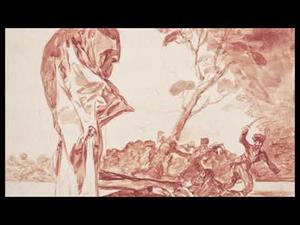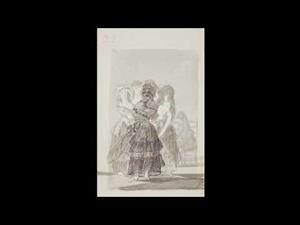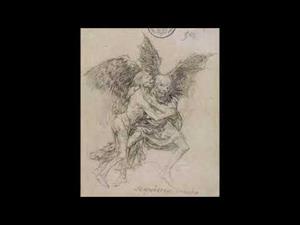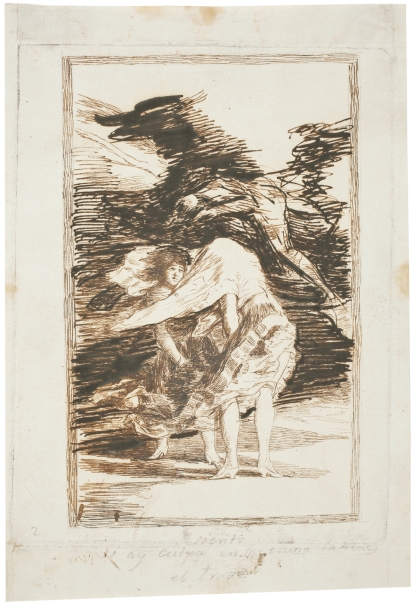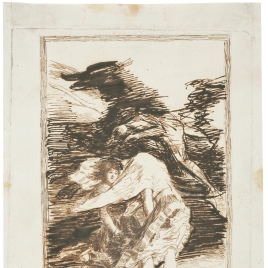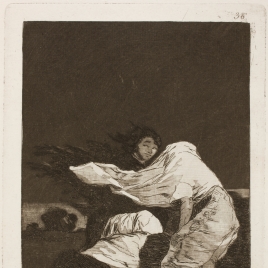
Wind. If anyone is to blame in this scene, it is the suit
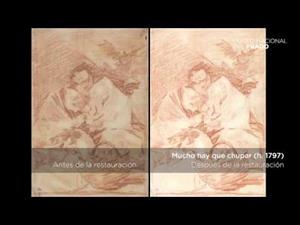
1796 - 1797. Pencil, Iron gall ink on laid paper.Not on display
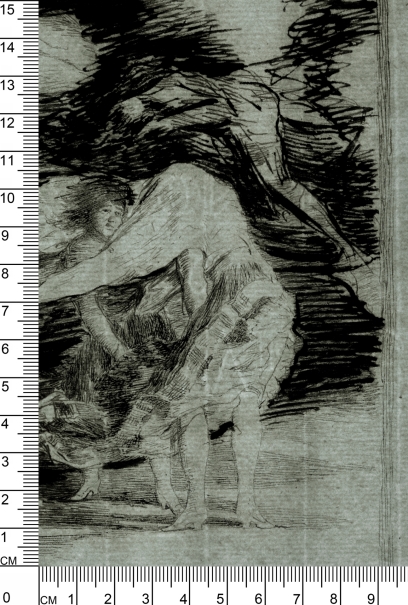
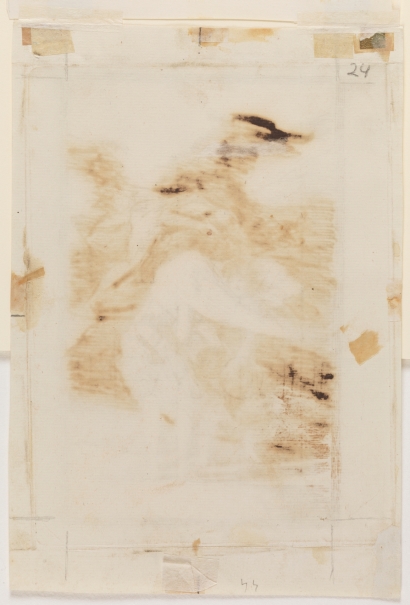
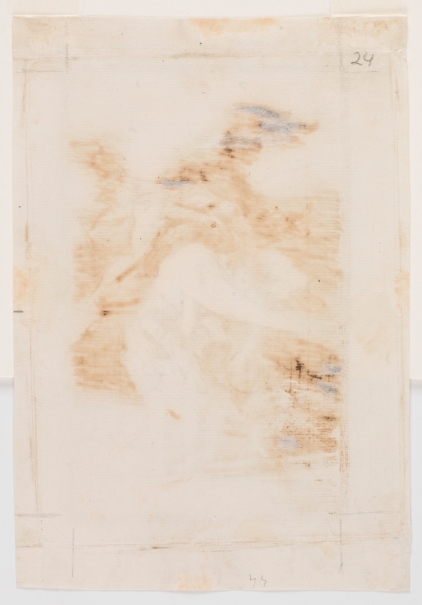
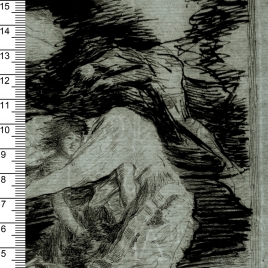
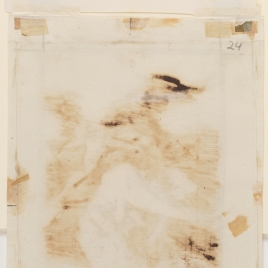
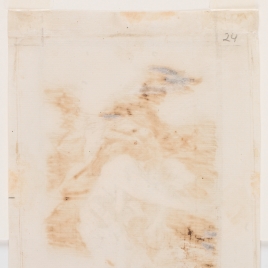
This preparatory drawing for the etching Capricho 36, Bad Night (G02124) is part of The Dreams, a series of twenty-six pen-and-ink drawings that serve as the basis for the Caprichos. This type of composition was common in that period among Enlightenment critics. Immediate precedents for some of these works may be found in the Sanlúcar and Madrid Albums, but there tend to be important semantic changes between the Album drawings and the Dreams, and also between the latter and the final etchings. Here, the print and drawing have different, though similar schemes. The sense of social criticism can be grasped in Valentín Carderera’s manuscripts at the Museo del Prado, the Biblioteca Nacional and the 1791 and 1803 editions of the Dictionary of the Real Academia Española. The Prado’s manuscript reads: This kind of work is done by the sluttish women who do not want to stay home (women of the street who do not take care of their home). The Biblioteca Nacional’s note is much clearer: A harsh and windy night is not a good one for whores, and this is completed by the text in the dictionary of the Real Academia Española: Business is poor when it is the wind, rather than money, that hoists attractive women’s skirts. The Museo del Prado has various works related to Capricho 36 (G02124/ G00648), and the Gobin collection in Paris has a preliminary paint-and-India ink drawing from Album B, 81(234 x 148 mm, 1794-95, no. GW 439/ G I 3584). There is also a steel-plated copper plate from the same series at Calcografía Nacional in Madrid (218 x 155 mm, 604.64 g. No. 3462). The mark of the plate is visible on the drawing as a result of its tracing on the copper plate (201 x 151 mm), as are 26 mm vertical laid lines (Text from: Matilla, J.M. and others: El libro de los Caprichos. Francisco de Goya: dos siglos de interpretaciones, 1799-1999. Catálogo de los dibujos, pruebas de estado, láminas de cobre y estampas de la primera edición, Museo Nacional del Prado, Madrid, 1999. pp. 22-23, 208).