formularioRDF
The itinerary <em>TITULORECORRIDO</em> has been successfully created. Now you can add in works from the Collection browser
<em>TITULOOBRA</em> added to <em>TITULORECORRIDO</em> itinerary

Exhibition

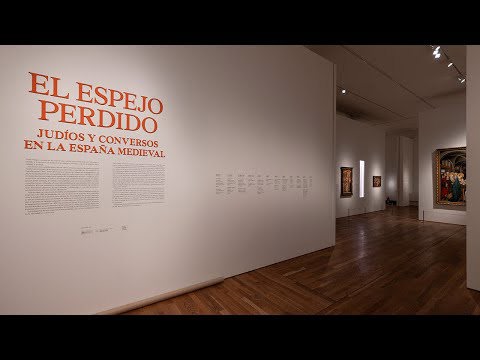
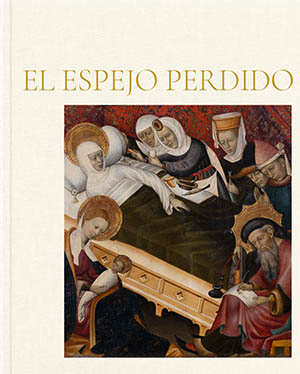
The Lost Mirror. Jews and Conversos in Medieval Spain

Museo Nacional del Prado. Madrid 10/10/2023 - 1/14/2024

Every image we create is a mirror that reflects a way of seeing. We look at the world and at others in relation to ourselves, through our own mentality and attitude. Using a broad selection of works, this exhibition recreates a medieval mirror that shows how Jews and conversos (converts to Christianity) were portrayed by Christians in Spain from 1285 to 1492.

Images played a key role in the complex relationship between all three groups during this period. On the one hand, they were an important vehicle for the transmission of rites and artistic models between Christians and Jews and provided a space for collaboration between artists from both communities. On the other—the grim flipside— they helped spread the growing anti-Judaism embedded in Christian society. In this respect, the visual stigmatisation of the Jews was a faithful reflection of the Christians’ mirror, of their beliefs and anxieties, and accordingly a powerful means of asserting their identity.

Following the mass conversion of Jews to Christianity resulting from the pogroms of 1391, cult images became the centrepiece of the controversy. They were taken as evidence for confirming New Christians’ sincerity or, on the contrary, for accusing them of Judaising. The spread of these unfounded suspicions of Judaising heresy lay at the root of the establishment of the Spanish Inquisition in 1478. Aware of the power of images, the new institution used them intensively, either to design powerful settings or to define methods for visually identifying conversos.

The images featured in this exhibition remind us that while differences exist, the idea of otherness is a construct.

Curator:
Joan Molina Figueras, Head of the Department of Spanish Gothic Painting at the Museo del Prado.

Access

Room C . Jerónimos

RDF

RDF

Organized by:
Museo del Prado
Museu Nacional de Catalunya

Multimedia

Exhibition

Transfers and exchanges

Transfers and exchanges
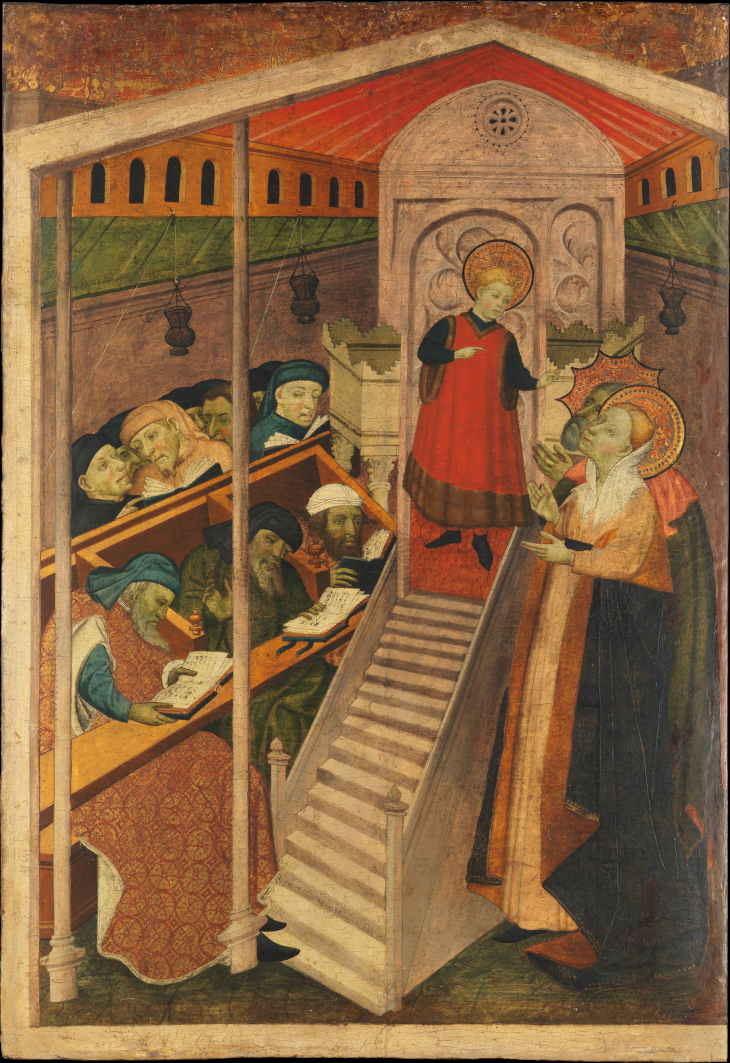
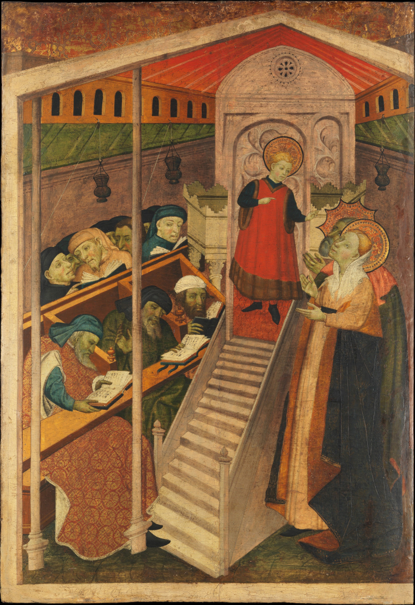
Christ among the Doctors

Catalan painter, possibly a follower of Bernat Martorell

Tempera and gold on panel, 111.8 × 76.2 cm

c. 1420–40

New York, The Metropolitan Museum of Art, The Friedsam Collection, Bequest of Michael Friedsam, 1931, inv. 32.100.123

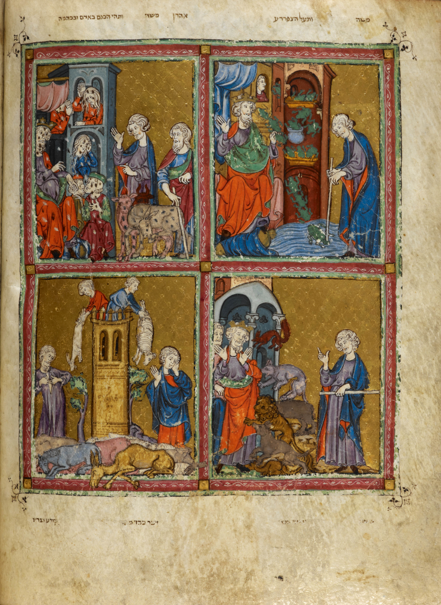
Christians and Jews inhabited a shared space with permeable religious boundaries. Despite the differences between the two communities, Jewish artists produced works for Christians and Christian masters executed pieces for Jews. Transfers and exchanges were often encouraged by the patrons themselves. In a display of acculturation, the Jewish elite commissioned illuminated manuscripts—notably haggadot—similar in format and type to Christian codices. For their part, some Christian painters and patrons drew on their intimate knowledge of Jewish customs and rituals to devise portraits of various kinds: from positive depictions of traditional environments and practices to scenes designed from a clearly polemical perspective. The images show that for Christians no religious adversary was more familiar—and therefore more difficult to ignore—than the Jews.

From forerunners to a blind people

From forerunners to a blind people
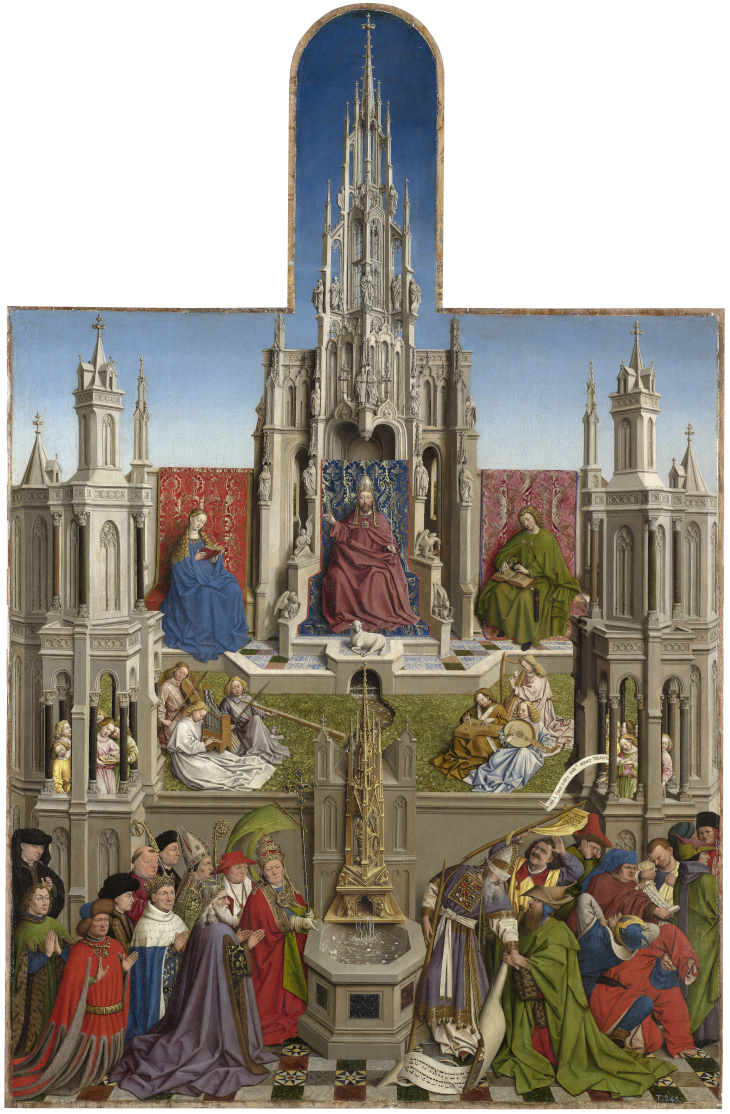
The Fountain of Grace

Workshop of Jan van Eyck

Oil on panel, 181 × 119 cm

c. 1430–40

Madrid, Museo Nacional del Prado, P-1511

According to the Christian concept of Salvation History, the so-called Old and New Testaments are inextricably linked. That is why prominent Jewish kings and prophets were common subjects of Christian iconography, where they were represented as prefigurations of the New Law. In contrast to this positive view, from the 13th century onwards Christian theologians developed a distinctly belligerent attitude of negatively stressing the Jews’ inability to accept Jesus’ divine nature. Images, like texts, echoed this controversy through the explicit metaphor of the Jews’ blindness, a theme that was widely disseminated and reproduced in all kinds of works and media. Although many authorities continued to argue that it was possible for the Jews to convert to Christianity, the visual recreation of this blindness paved the way for constructing their alterity. Through their denial of the Messiah, the Jews began to become the Other.

Anti-judaism and mediatic images

Anti-judaism and mediatic images
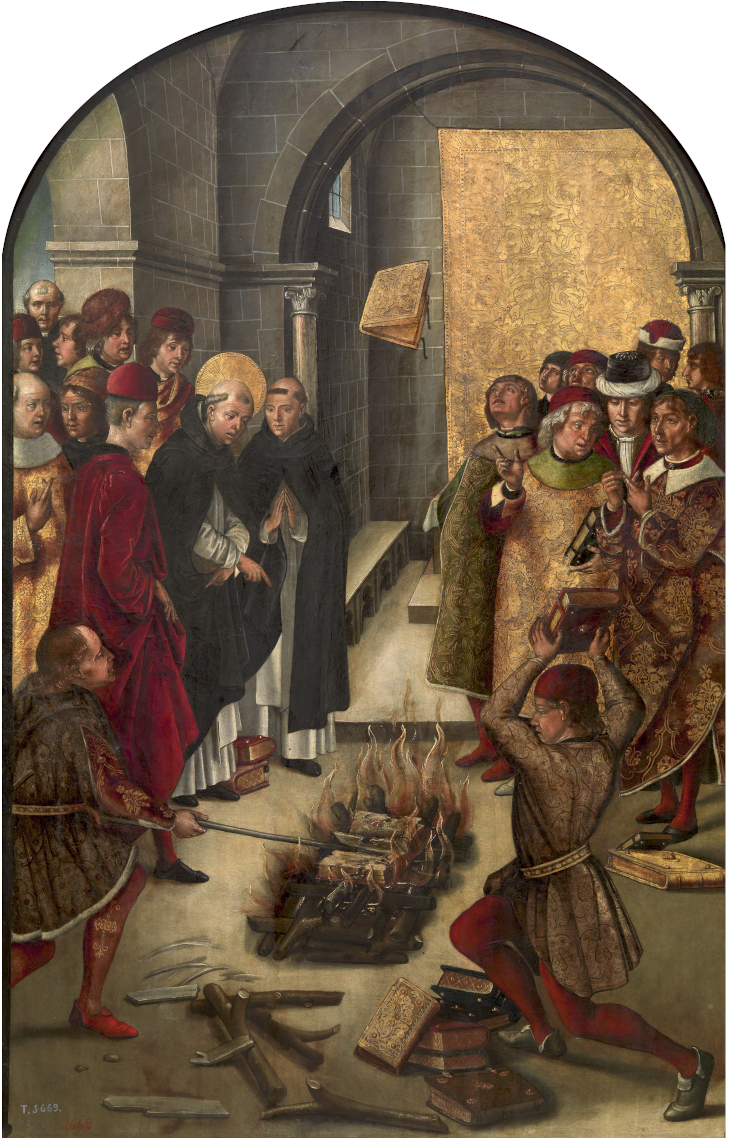
Altarpiece of Saint Dominic. Side panel: Saint Dominic and the Albigensians

Pedro Berruguete

Oil on panel.,122 × 83 cm

c. 1491–99

Madrid, Museo Nacional del Prado

A varied anti-Jewish iconography began to develop in the late 13th century in a context of systemic violence against the Jews. It ranges from portraits based on caricatures and distinguishing signs (clothing and round badges) to scenes portraying the Jews as enemies of the Christian faith. As in the rest of Western Europe, besides expressing intolerance and prejudice, these degrading images often stemmed from strategies for asserting the Christian identity. We need only look at the scenes showing acts of desecration of cult images and the host, or at the Passion cycles. From a Christian viewpoint, many of these representations were regarded as an effective means of ratifying beliefs that had sparked heated controversy within the Church—for example, the cult of images and of the Eucharist— or of spreading Christocentric devotions. The distorted image of the Jews as desecrators and deicides was a reflection returned by the Christian mirror—an expression of the beliefs, fears and anxieties of the faithful of the Roman Catholic Church.

Images for conversos, images of conversos

Images for conversos, images of conversos
Altarpiece of Saint Dominic. Side panel: Saint Dominic and the Albigensians

Pedro Berruguete

Oil on panel.,122 × 83 cm

c. 1491–99

Madrid, Museo Nacional del Prado

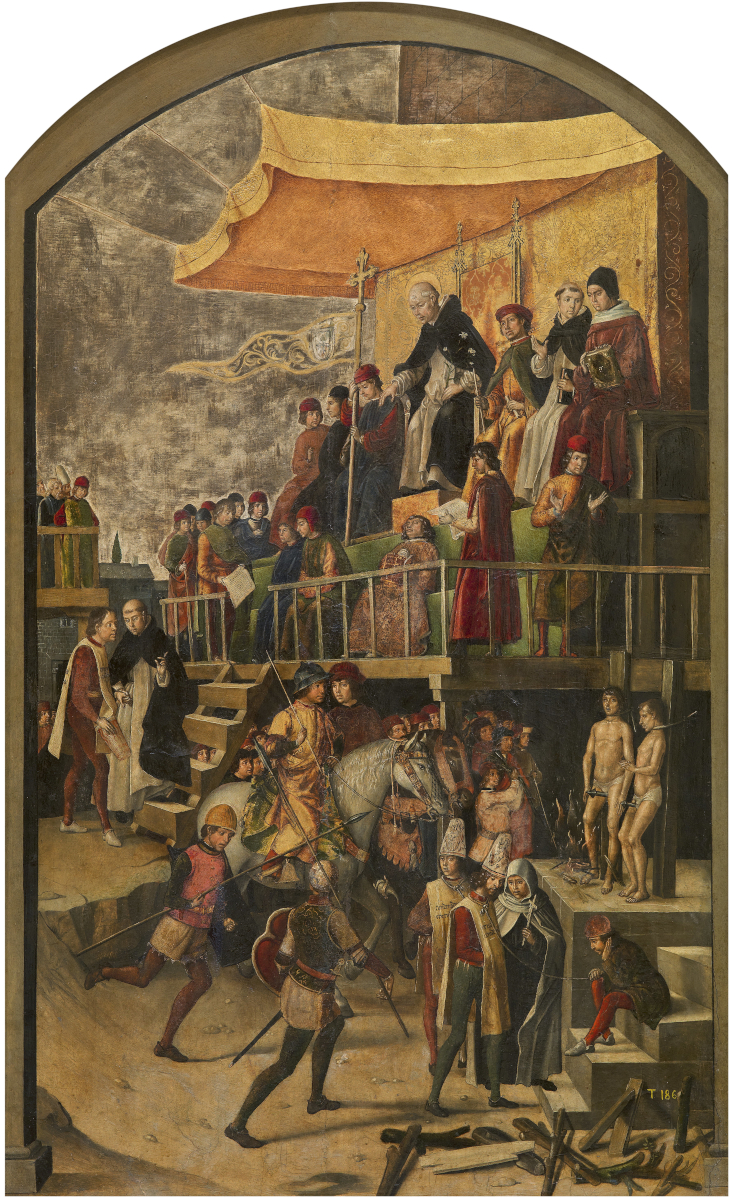
11. Saint Dominic presiding over an Auto-da-fe

Pedro Berruguete

Oil on panel, 154 × 92 cm

c. 1491–99

Madrid, Museo Nacional del Prado, P-618

Following the pogroms that devastated many of the Jewish quarters on the Iberian Peninsula in 1391, large numbers of Jews were forced to embrace Christianity. Far from putting an end to the tensions, the mass conversions fuelled unease that Christianity was now under threat from Judaism from within. Accusations of Judaising caused fears and anxieties to be redirected towards New Christians—that is, conversos and their descendants. In this situation, unique in Europe, images were an active and powerful means of expressing a wide range of desires and concerns. On the one hand, Christians in favour of evangelisation used them to stress the need for all those who remained faithful to the Law of Moses to convert. On the other hand, the growing climate of mistrust prompted many conversos to commission religious images to allay suspicions of Judaising. In both cases, images were at the centre of the controversy.

Inquisitional settings

Inquisitional settings
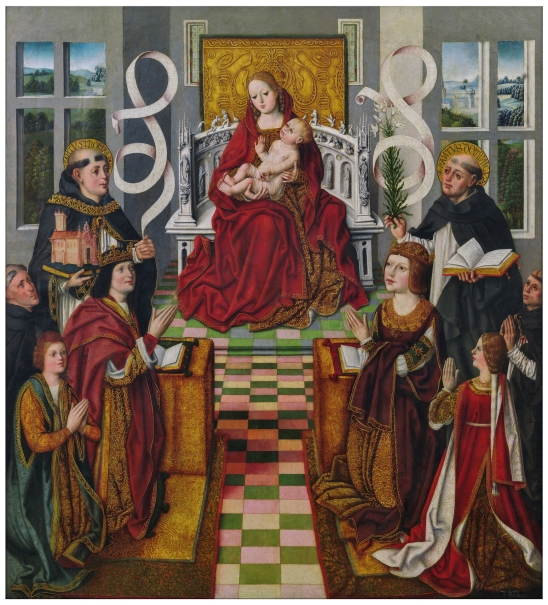
The Virgin of the Catholic Monarchs

Master of the Virgin of the Catholic Monarchs

1491 - 1493

Mixed method on panel

Museo Nacional del Prado

During the 15th century animosity towards conversos grew and eventually led to the establishment of the Inquisition (1478). Specific to the kingdoms of Spain, this institution was founded to persecute new Christians suspected of Judaising. Religious suspicions were joined in 1449—the date the first statutes on purity of blood were enacted in Toledo—by racial prejudice: the idea that conversos were corrupt because their blood was impure. Religious images once again played a prominent role in this atmosphere of persecution and suspicion. Accusations of their desecration became one of the most common arguments levelled against people prosecuted for Judaising heresy. Images were also the means of designing rhetorical programmes justifying and glorifying the Inquisition’s repressive agenda. Lastly, the creation of an iconography that stigmatised Judaising conversos paved the way for a new and shameful visual otherness. This intense production process reached its peak around 1492, when the expulsion of the Jews was decreed.

Artworks

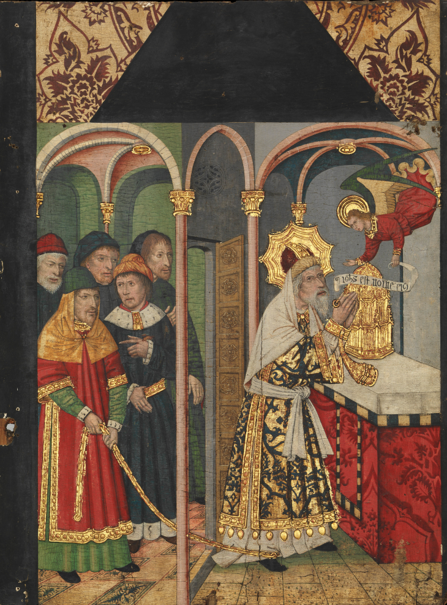
Christ among the Doctors
1
Christ among the Doctors

Catalan painter, possibly a follower of Bernat Martorell

Tempera and gold on panel, 111.8 × 76.2 cm

c. 1420–40

New York, The Metropolitan Museum of Art, The Friedsam Collection, Bequest of Michael Friedsam, 1931, inv. 32.100.123

2
Expulsion of Saint Joachim and Saint Anne from the Temple

Scene from the retable of Santa María de Borja

Nicolás and Martín Zahortiga

Oil on panel, 130 × 98 cm

1465–77

Borja (Zaragoza), Museo de la Colegiata de Santa María

The Angel appearing to Zacharias
3
The Angel appearing to Zacharias

Domingo Ram

Tempera and gold leaf on panel, 95.3 × 69.2 cm

c. 1470

New York, The Metropolitan Museum of Art, The Cloisters Collection, 1925, inv. 25.120.929

4
5
Lot fleeing from Sodom and Exodus from Egypt

Scenes from the retable of Saint Bernardino of Siena and the Guardian Angel

Jaume Huguet

Oil on panel, 236 × 103 cm (overall)

1462–75

Barcelona, Museo de la S. I. Catedral Basílica, 2522687/2522688

6
Moses receiving the Tablets of the Law

Pere Vall

Tempera and gold on panel, 87 × 82 cm

c. 1410

Private collection

Golden Haggadah
7
Golden Haggadah

Illuminated parchment, 245 × 200 mm

c.1320–30

London, The British Library, Add ms. 27210

8
Barcelona Haggadah

Illuminated parchment, 255 × 190 mm

c. 1340

London, The British Library, Add ms. 14761

9
Rylands Haggadah

Illuminated parchment, 280 × 230 mm

1335–40

Manchester, The John Rylands Research Institute and Library, Courtesy of the Manchester University, Hebrew ms. 6

10
Jewish necklace with apotropaic amulets from Les Roquetes

Glass paste, jet, horn, coral, silver, bronze, glass and rock crystal

c. 1350

Tàrrega (Lérida), Museu Tàrrega Urgell, inv. FS 163 – UE 1185

12
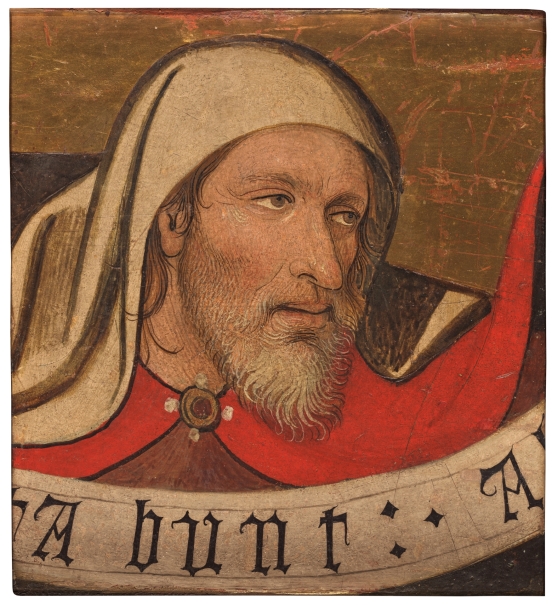
The Prophet Daniel

Circle of Jaume Cascalls

Polychrome limestone, 107 cm

c. 1360

Casacuberta Marsans Collection

14
Saint Stephen preaching in the Synagogue

Circle of Ferrer and Arnau Bassa

Tempera and gold leaf on panel, 55 × 44 cm

c. 1340–50

Barcelona, Museu Nacional d’Art de Catalunya, MNAC 44527

15
Christ among the Doctors

Scene from the retable of Santa María de Borja

Nicolás and Martín Zahortiga

Tempera on panel, 130 × 98 cm

1465–77

Borja (Zaragoza), Museo de la Colegiata de Santa María

16
Ecclesia

Palencia workshop

Polychrome wood, 146 × 27 × 34 cm

c. 1250–1300

Barcelona, Fundación Francisco Godia

17
Synagoga

Palencia workshop

Polychrome wood, 146 × 27 × 34 cm

c. 1250–1300

Barcelona, Colección ‘El Conventet’, inv. 00954-CO

19
Breviari d’amor

Matfre Ermengaud of Béziers

Illuminated parchment, 400 × 280 mm

c. 1325–50

Madrid, Biblioteca Nacional de España, ms. RES/203

20
Breviari d’amor

Matfre Ermengaud of Béziers

Illuminated parchment, 365 × 250 mm

c. 1375–1400

London, The British Library, ms. Yates Thompson 31

21
Cantigas de Santa María, Códice Rico

Illuminated parchment, 490 × 326 mm

c. 1280

Patrimonio Nacional, Colecciones Reales, Real Biblioteca del Monasterio de San Lorenzo de El Escorial

22
Passion of the Christ of Beirut

Juan de la Abadía the Elder

Oil on panel, 83.6 × 69.8 cm

c. 1500

New Orleans, The New Orleans Museum of Art, Bequest of Mr. Lynn Dinkins, 38.3

23
Altarpiece of Corpus Christi from Vallbona de les Monges (Lérida)

Guillem Seguer (?)

Tempera, stucco reliefs, gold leaf and varnished metal plate on panel, 108.8 × 222 cm

c. 1335–45

Barcelona, Museu Nacional d’Art de Catalunya, MNAC 9920

24
Altar frontal of Corpus Christi from Vallbona de les Monges (Lérida)

Guillem Seguer (?)

c. 1335–45

Tempera, stucco reliefs and varnished metal plate on panel, 106.5 × 223.2 cm

Barcelona, Museu Nacional d’Art de Catalunya, MNAC 9919

25
Altarpiece of the Eucharist

Llorenç Saragossà (?)

Tempera on panel, 255 × 234 cm

c. 1370–80

Villahermosa del Río (Castellón), Iglesia parroquial de la Natividad de Nuestra Señora

26
Predella of the Altarpiece of the Virgin in the convent of Santa María de Sijena (Huesca)

Jaume Serra

Tempera, gold leaf and metal plate on panel, 40 × 321 cm

c. 1367–81

Barcelona, Museu Nacional d’Art de Catalunya, MNAC 15916-CJT

27
Last Supper

Jaume Serra

Tempera and gold leaf on panel, 40.5 × 43 cm

c. 1360–70

Palermo, Galleria Regionale della Sicilia, Palazzo Abatellis, inv. 1138

28
Caricature of Salomó Vidal on the cover of a liber iudeorum

Ink on parchment, 310 × 205 mm

1334–40

Vic, Arxiu i Biblioteca Episcopal de Vic, Cúria Fumada, ABEV, ACF-4603

29
Jew bearing demon on the cover of a liber iudeorum of Cardona

Ink on parchment, 320 × 240 mm

15th century

Barcelona, Biblioteca de Catalunya, Archivo de la Bailía de Cardona, B-VI-3

30
Christ before Pilate

Pere Serra

Tempera on panel, 117.5 × 109 cm

c. 1375–1400

Vic, Museu Episcopal de Vic, MEV 4150

31
Speculum animae

Colour inks on paper, 320 × 220 mm

Early 16th century

Paris, Bibliothèque nationale de France, ms. Esp. 544

32
Predella with Passion scenes (part of a retable in the charterhouse of Valldecrist [Castellón])

Joan Reixach

Tempera and oil on panel, 58 × 345 cm

c. 1454

Valencia, Museu de Belles Arts de València, inv. 2101-2108

33
Book of Hours of Maria of Navarre

Illuminated parchment, 170 × 113 mm

c. 1340

Venice, Biblioteca Nazionale Marciana, ms. Lat. I, 104/12640

34
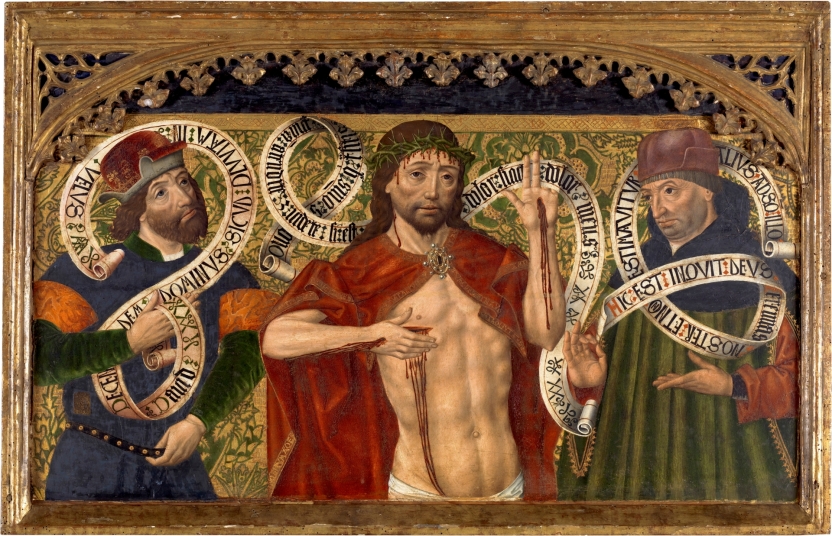
Ecce Homo

Alonso de Sedano     

Óleo sobre tabla, 142 x 148 cm

1495-96             

Burgos, Museo Diocesano de la Catedral de Burgos

35
Preaching Saint Vincent

Master of the View of Saint Gudula

Tempera on panel, 49.5 × 49.2 cm

c. 1470–80

Las Caldas de Besaya, Los Corrales de Buelna (Cantabria), Convento de Nuestra Señora de las Caldas

Birth of Saint John the Baptist (part of the Altarpiece of the Saints John from Vinaixa [Lérida])
36
Birth of Saint John the Baptist (part of the Altarpiece of the Saints John from Vinaixa [Lérida])

Bernat Martorell

Oil on panel, 88.5 × 68.7

c. 1450

Barcelona, Museu Nacional d’Art de Catalunya, MNAC 71932

37
Saint John the Baptist engaged in Disputation with the Priests and Levites (part of the Altarpiece of the Saints John from Vinaixa [Lérida])

Bernat Martorell

Oil on panel, 78 × 65 cm

c. 1450

Colección Casacuberta Marsans

38
Saint John the Baptist preaching (part of the Altarpiece of the Saints John from Vinaixa [Lérida])

Bernat Martorell

Oil on panel, 76.5 x 70.7 cm

c. 1450

Barcelona, Museu Nacional d’Art de Catalunya, MNAC 71934

39
Virgin of Mercy

Juan de Nalda

Oil on panel, 157 × 75 cm

c. 1500

Madrid, Museo Arqueológico Nacional, inv. 51812

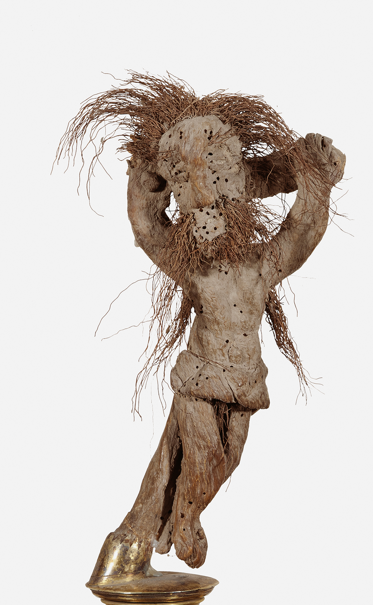
Christ of the Vine
40
Christ of the Vine

Vine trunk and roots, 19 × 8.5 cm

c. 1400

Valladolid, Museo Diocesano y Catedralicio de Valladolid

43
Christ on the Cross

Gil de Siloé

Polychrome wood, 200 × 160 cm

c. 1488–90

Ciguñuela (Valladolid), Iglesia parroquial de San Ginés

44
Christ with the Just in Paradise

Bartolomé Bermejo

Oil and gold leaf on panel, 103.7 × 68.7 cm

c. 1474–79

Barcelona, Fundació Institut Amatller d’Art Hispànic, IAAH 546 (on long-term loan to the Museu Nacional d’Art de Catalunya, MNAC 251907)

Descent of Christ into Limbo
45
Descent of Christ into Limbo

Bartolomé Bermejo

Oil and gilding on panel, 89.5 × 69.5 cm

c. 1474–79

Barcelona, Museu Nacional d’Art de Catalunya, MNAC 15872

46
Christ of the Pietà

Bartolomé Bermejo

Oil on panel, 94.8 × 61.9 cm

c. 1471–76

Peralada (Gerona), Museu del Castell de Peralada, inv. 13848

49
Arragel Bible

Illuminated parchment, 390 × 260 mm

c. 1422–33

Madrid, Palacio de Liria, Fundación Casa de Alba

50
Fortalitium fidei

Alonso de Espina

Illuminated parchment, 365 × 276 mm

c. 1464

El Burgo de Osma (Soria), Catedral de la Asunción de Nuestra Señora, Biblioteca y Archivo Capitular, ms. 154

51
Fortalitium fidei

Alonso de Espina

Illuminated parchment, 500 × 370 mm

1480

Paris, Bibliothèque nationale de France, ms. Fr. 20068

52
Pietà

Burin, 155 × 95 mm

c. 1462

Tortosa (Tarragona), Arxiu Històric Diocesà, Causes Criminals

53
Christ tied to the Column

Pedro Millán

Polychrome wood, 195 × 45 × 42 cm

c. 1487

Segovia, Museo de Segovia (on long-term loan from the Diputación Provincial de Segovia), inv. 152

64
Sambenitos with inquisitorial inscriptions

Paint on canvas, 68.5 × 326.3 cm

c. 1550

Coruña del Conde (Burgos), Iglesia parroquial de San Martín de Tours

65
Sepulchre of Pedro de Arbués

Gil Morlanes the Elder

Alabaster, 39 × 117 × 70 cm

c. 1487–90

Zaragoza, Catedral del Salvador (La Seo). Museo de Tapices. Excelentísimo Cabildo Metropolitano de Zaragoza

66
67
Historia de la muerte y gloryoso martyrio del Sancto Innocente que llaman de La Guardia, natural de la ciudad de Toledo, Madrid, San Jerónimo el Real

Rodrigo de Yepes

1583

Madrid, Biblioteca Nacional de España, R-30279

68
Martyrdom of the Holy Child of La Guardia

Anonymous Castilian

Oil on panel, 32 × 25 cm

1590 or after

Madrid, Archivo Histórico Nacional, Objetos N.131

69
Christ on the Cross

Pedro Berruguete

Oil on panel, 191 × 136 cm

c. 1493–98

Segovia, Museo de Segovia (on long-term loan from the Diputación Provincial de Segovia)

Resources for the visit

Digital Brochure

The Lost Mirror. Jews and Conversos in Medieval Spain

Audio guide

Spanish, English. €5

Print on demand

Print artworks available in our catalogue in high quality and your preferred size and finish.

Image archive

Request artworks available in our catalogue in digital format.

Up