
Loading...
Press Vs. Prado
Fernando Checa Cremades, Museum Director, 1996-2001Press Vs. Prado
Fernando Checa Cremades, Museum Director, 1996-2001
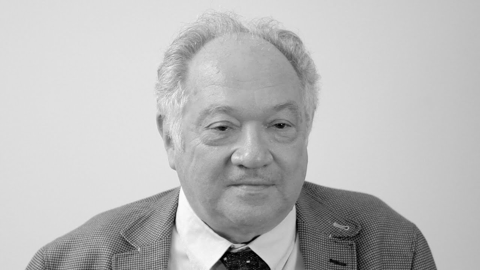
The press had taken the Museo del Prado as a constant source of scandal, especially during the years in which there was such a rapid turnover of directors. A news item would suddenly appear about a leak in some place, whether it was true or not, or because a painting had been taken down from one hall and put up in another. I’m not exaggerating. I was told to keep quiet, quite literally. The Minister for Culture and Science, Esperanza Aguirre, who, otherwise, defended many things at the Museum during her time, told me to maintain strict silence, telling me: “no, the fact is the press office … well, we’ll see what we do”; and they did nothing. The Ministry of Culture, or any other ministry for that matter, had (and has) quite enough with its own press office, without a body such as the Prado having more impact in the press than the rest of the Ministry of Culture together. Well, of course, the Museum really needed its own independent press office. But in the beginning, nobody understood that.
That is to say, on the one hand the Museum received significant political support; but, on the other, the Government was jealous of many of its powers at the Museo del Prado. One of them was the press. And this wasn’t acknowledged until many years later. When it was finally recognised, a press office was set up that was able to meet the needs of a museum such as the Prado. Everybody at the Museo del Prado understands this, but not really at the Ministry of Culture and Sports.
Just consider the opening ceremony for the exhibition on Philip II, which was inaugurated with considerable fanfare, featuring the presence of the Prime Minister, the King and Queen and the Directors of ten or twelve important museums throughout the world. That is to say, the inauguration was of considerable import from a political perspective. Well, in the sculpture hall, which was closed at the time, one or two restorers had placed a smock over a sculpture. The following day, this was on the front page of one of the most popular newspapers in Madrid, whose name I recall perfectly but shall not mention. This was the reception that the press gave to years of endeavour. And this was the story practically every day. You need to remember that this was a time when there was nothing, no Internet or anything. I’m talking about 1996 or 1997.
The first newspapers came out at around twelve midnight. And the first issues of the big Madrid newspapers were only distributed at the chain of cafeteria-restaurant and convenience stores known as “Vips”. So to find out what would be in the newspapers the following day, you had to go there. The Director of the Museo del Prado, doing the work of the Press Office that didn’t exist, would go to “Vips” to see what was in the press. Sometimes I would discuss it during the night or very early in the morning with the Chairman of the Board of Trustees, Antonio Fernández Ordóñez. I went there mainly to discover what they had said about us, what malice they had cooked up, so that we would have a chance to react. These two anecdotes - although I could tell you many more – simply illustrate what it meant not having a Press Office at the Museo del Prado.
Miguel Zugaza also had problems of this kind, but he had the skill and the wisdom that I lacked – I must admit it – to convince those he needed to convince that things couldn’t go on like this. This was a long time ago and things have now changed, thankfully. Now the press treats the Museo del Prado differently, like it should.
Director of the Museo del Prado from 1996 to 2001, art historian and museographer, specializing in Baroque painting and especially in collectionism and royal patronage in Spain during the 16th and 17th centuries.
Interview recorded on May 30, 2018
Interview index
13 / 17-
I Was Chosen Because of My Academic Profile -
Francisco Javier Sánchez Cantón: Perhaps the Most Important Director in the Twentieth Century -
Alfonso Pérez Sánchez: A Giant Step Forward -
The Two Great Experiences of My Life -
1996-1998: Refurbishment of the Roof Whilst the Museum Remained Open -
The Parliamentary Pact and the Expansion Project -
The Museum Plan for 1997 -
The New Acquisitions Policy: The Countess of Chinchón by Goya -
The Need for New Acquisitions -
The Restoration of Masterpieces: Titian, Goya, Hieronymus Bosch -
Staff Expansion: Successes and Pending Matters -
Education at the Museum -
Press Vs. Prado -
José Milicua: A Wise Observer -
Gustavo Torner: An Absolutely Exquisite Sensibility -
The Hardest and Most Enriching Challenge -
I Miss My Daily Contact with the Works
- Collective
- Management
- Chronology
- 1990-2000
- RDF
- RDF
Collective
Management
José María Luzón Nogué
Museum Director, 1994-1996
Francisco Calvo Serraller
Museum Director, 1993-1994
Felipe Garín Llombart
Museum Director, 1991-1993
Gabriele Finaldi
Assistant Director of Conservation and Research, 2002-2015
Manuela Mena Marqués
Head of the Department of Conservation of 18th Century Painting and Goya, 1978-2019
Miguel Zugaza Miranda
Museum Director, 2002-2017
Theme
--
Voces del Prado