
Loading...
The Transfiguration of Our Lord, by Penni. The work dictates what it needs
George Bisacca, Restorer, 1985-What's onThe Transfiguration of Our Lord, by Penni. The work dictates what it needs
George Bisacca, Restorer, 1985-What's on
It’s an enormous picture. When we took it off the wall, with 20 people helping and machinery, we weighed the picture with the frame and it weighed 558 kilos (out of the frame it weighed about 300 kilos). The picture had of course a very strange history, because it was mostly painted in Italy; little is known about it, but it seems that it may have been painted in Rome, or possibly Naples; and then there’s evidence that it may have been moved to the island of Ischia, where Penni maybe finished the picture. It’s not known exactly if bringing it to Ischia or bringing it to Madrid is when they made the decision to cut it in half across the middle. Because it was so big and so heavy, that in order to transport it, they decided to cut it in half. When it was rejoined, they didn’t do a perfect job, and so there were some level differences on the front.
Because the boards are so thick (they’re 4 centimeters thick), so you don’t have any chance of changing the curve that they have. So, because of that, you have the choice either to make a perfect level in the middle or perfect level at the edge. But you can’t make a perfect level all the way across. Instead, we limited ourselves to the extremities, top and bottom, and we did a very complicated thing of removing these cross pieces and repairing all the splits, and then making the upper and lower cross members turning them into spring-activated cross pieces that could allow movement, whereas that center part was stable and we decided to leave that alone. So, the treatment that we finally ended up executing turned out to be very different from what we had planned. But this is one of those cases where you have to just let the work dictate what it needs.
Conservator Emeritus at the Metropolitan Museum in New York, specialized in panel paintings. José de la Fuente, the Prado's specialist in this field, trained with him. Since his first contact with the Museo del Prado in the 1980s under the guidance of John Brealey, he has worked with the Museum on restoration of panel paintings and, among others, on the panels of The Descent from the Cross by van der Weyden (1991-1992), The Three Graces by Rubens (1997-1998), the sketches of The Triumph of the Eucharist by Rubens (2013-2014) and Adam and Eve by Dürer (2010).
Interview recorded on October 07, 2020
Interview index
13 / 18-
1985. From the Metropolitan to the Prado -
The specialization of panel supports restoration -
Florence: the trip that changed my life -
John Brealey’s call -
1990. Restoration of The Descent from the Cross, by van der Weyden at the Prado’s restoration department -
José de la Fuente: colleague and friend -
The Descent from the Cross, by Rogier van der Weyden -
The Adoration of the Shepherds by Mengs. An unsatisfying restoration -
A valuable initiative. The Getty Panels Painting -
Adam and Eve by Dürer. A wonderful experience -
Rubens and The Three Graces -
Modelli of The Triumph of the Eucharist, by Rubens. One of the most complex works -
The Transfiguration of Our Lord, by Penni. The work dictates what it needs -
Restoring masterpieces is terrifying -
John Brealey and the restoration of Las Meninas -
Enrique Quintana’s know how -
Miguel Zugaza. The great changes -
The key. To look at more and more paintings
- Collective
- Restoration
- RDF
- RDF
Collective
Restoration
María Teresa Dávila Álvarez
Restorer, 1982-2013
Rafael Alonso Alonso
Restorer, 1978-2016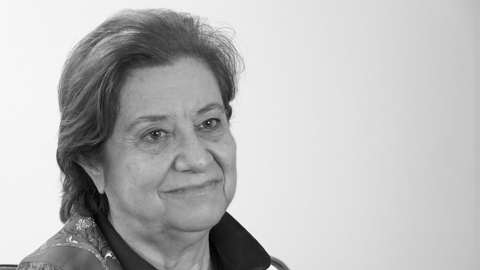
Rocío Dávila Álvarez
Restorer, 1974-2015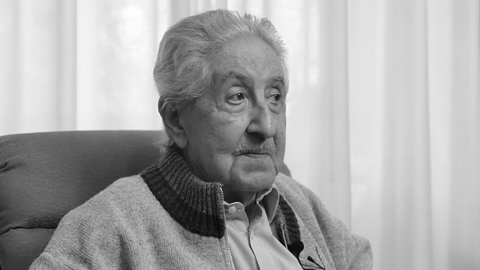
José Manso Gómez
Textile and Panel Painting Conservator, 1953-1992
Theme
--
Voces del Prado