formularioRDF
The itinerary <em>TITULORECORRIDO</em> has been successfully created. Now you can add in works from the Collection browser
<em>TITULOOBRA</em> added to <em>TITULORECORRIDO</em> itinerary

Exhibition Itinerary

Reflections of the Cosmos in the Museo del Prado

Museo Nacional del Prado. Madrid 7/11/2022 - 10/16/2022

With the support of American Friends of the Prado Museum. Thanks to the generosity of The Arthur and Holly Magill Foundation, from today until 16 October the Museo Nacional del Prado will offer a fresh perspective on its permanent collection in the form of a itinerary designed by Dr Montserrat Villar, an astrophysicist with the Spanish National Research Council (CSIC), that shows how our perception and knowledge of the cosmos changed as scientific advances were made, and how those breakthroughs were visually reflected in the art of the past.

This new approach, made possible by the diversity and depth of the Prado’s collections and rooted in astrophysics, draws our attention to themes and subjects that often go unnoticed in twenty selected works by major artists like Patinir, Rubens, Murillo, Zurbarán and Tiepolo. The itinerary is accompanied by a publication and audio guides in Spanish and English.

Take a journey through the ages to discover how art and science intertwine and enrich each other in a profound and wonderful exchange of perspectives.

The Museo del Prado’s itineraries invite visitors to see the museum in a different light by enlisting the aid of professionals not affiliated with the institution or the fields we tend to associate with it. The idea is to offer a novel and unusual but well-grounded vision of our collections, one that highlights themes and subjects which tend to go unnoticed.

All cultures have succumbed to the fascination of the cosmos and the urge to interpret its signs, understand and predict it, for a variety of reasons. This itinerary proposes a novel approach to selected works from the permanent collection of the Museo Nacional del Prado which reflect the fascination with the cosmos that humans have felt for thousands of years and the evolution of our perception of the universe and our place in it.

Curator:
Dr Montserrat Villar, astrophysicist with the CSIC

Access

Villanueva Building

RDF

RDF

Supported by:
Thanks to the generosity of:

The Arthur and Holly Magill Foundation

Route

Section I. The myth of the flat Earth

Section I. The myth of the flat Earth
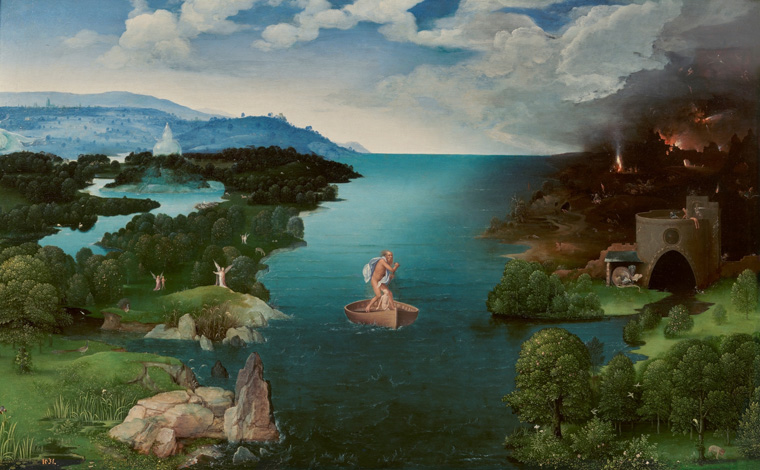
Charon crossing the Styx
Joachim Patinir
Oil on panel, 64 x 103 cm
1520-24
Madrid, Museo Nacional del Prado
1. Joachim Patinir, El paso de la laguna Estigia
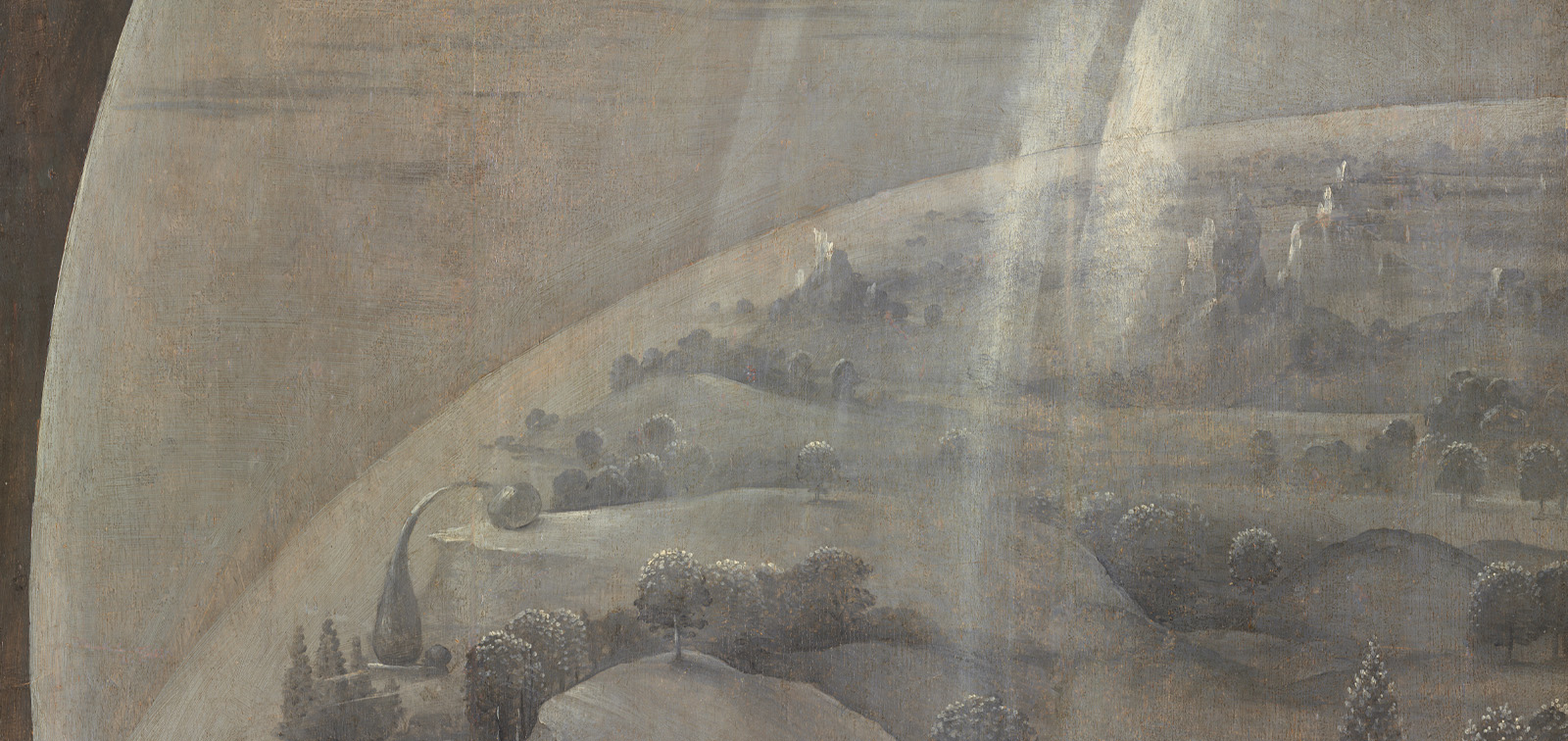
2. El Bosco, El tercer día de la Creación
3. Giovanni dal Ponte, Las siete Artes Liberales
4. Maestro de la Virgen de los Reyes Católicos, La Virgen de los Reyes Católicos
5. Fernando Gallego, Cristo bendiciendo

It is often claimed that medieval Europeans refused to believe the Earth is round. Supposedly, this ignorance was one of the more obvious symptoms of the darkness that pervaded the entire Middle Ages and led to the loss of a substantial part of classical knowledge. But art tells a different story.

Section II. Myths in the stars

Section II. Myths in the stars
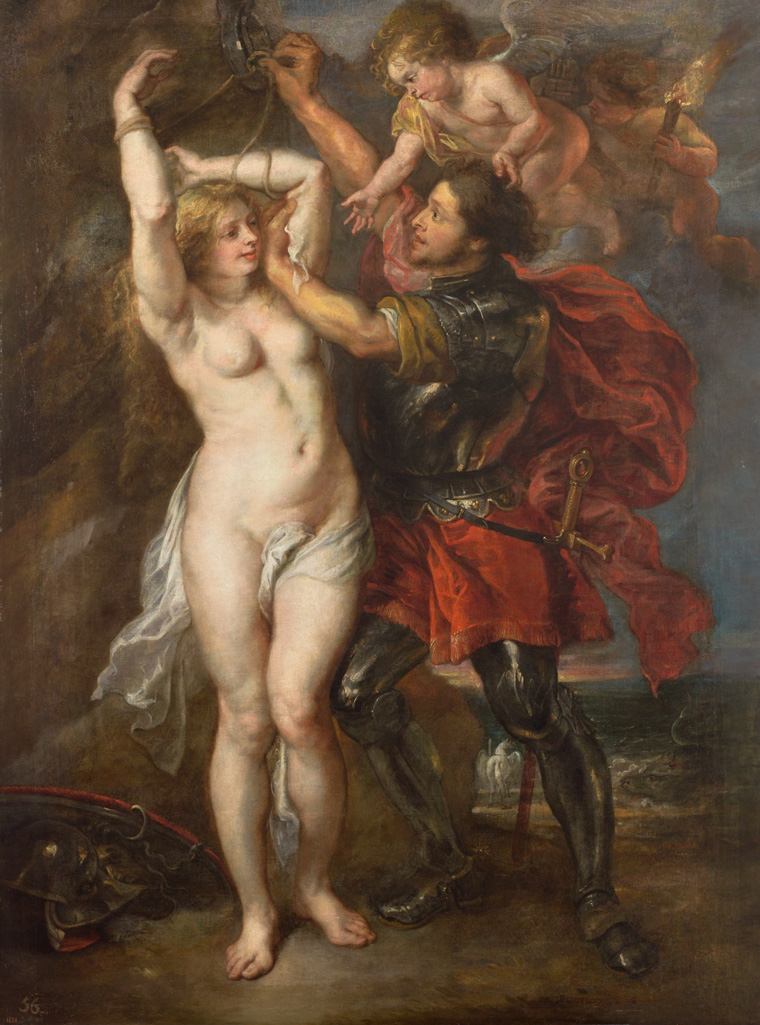
Perseus freeing Andromeda
Pedro Pablo Rubens and Jacques Jordaens
Oil on canvas, 223 x 163 cm
1639-41
Madrid, Museo Nacional del Prado
6. Pedro Pablo Rubens y Jacques Jordaens, Perseo liberando a Andrómeda
7. Pedro Pablo Rubens, Diana y Calisto
8. Anónimo italiano, Ariadna

Treating the night sky like a painted canvas, we have traced the outlines of our deities in the constellations and told tales of their loves and battles.

Section III. When the moon lost its lustre

Section III. When the moon lost its lustre
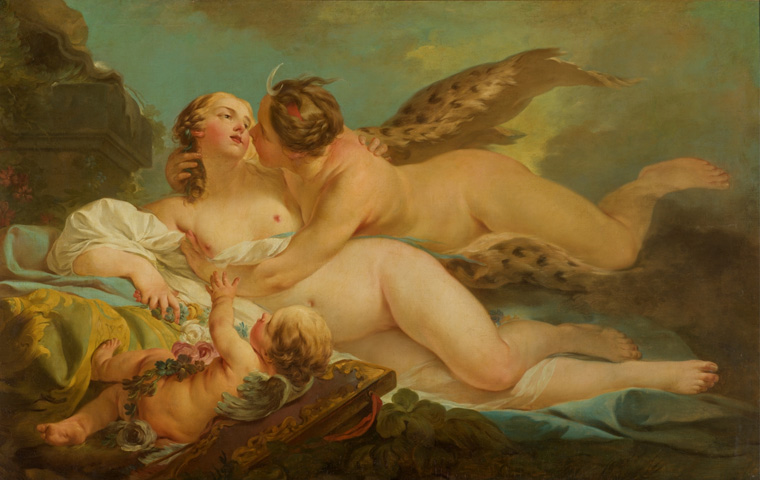
Diana and Callisto
Jean-Baptiste-Marie Pierre
Oil on canvas, 197 x 114 cm
1745-1749
Madrid, Museo Nacional del Prado
9. Jean-Baptiste-Marie Pierre, Diana y Calisto
10. Gaspare Vanvitelli, Vista de Venecia desde la isla San Giorgio
11. Giambattista Tiepolo, La Inmaculada Concepción
12. Francisco de Zurbarán, La Inmaculada Concepción
13. Bartolomé Esteban Murillo, La Inmaculada Concepción de Aranjuez
14. Pedro Pablo Rubens, La Inmaculada Concepción

For two thousand years, the moon was considered a perfect orb. However, in the early seventeenth century, telescopes revealed that it actually had valleys and mountains, just like Earth. This discovery astonished astronomers, artists and clergymen.

Section IV. The telescope revolution

Section IV. The telescope revolution
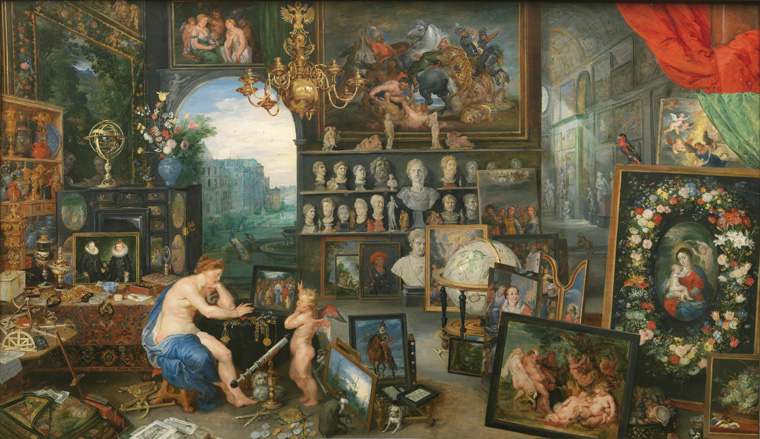
The Sense of Sight
Pedro Pablo Rubens and Jan Brueghel the Elder (Jan 'Velvet' Brueghel)
Oil on panel, 109.5 x 64.7 cm
1617
Madrid, Museo Nacional del Prado
15. Pedro Pablo Rubens, Jan Brueghel el Viejo, La Vista
16. Atribuido a Giuliano Finelli, Séneca
17. Taller de Pedro Pablo Rubens, Demócrito, el filósofo que ríe
18. Pedro Pablo Rubens, Saturno devorando a un hijo
19. Pedro Pablo Rubens, El nacimiento de la Vía Láctea
20. Adam Elsheimer, Ceres en casa de Hécuba

At the dawn of the 1700s, telescopes allowed us to examine the heavens in greater detail, forever altering our conception of the universe. Some artists who were eager to comprehend the workings of nature bore witness to that transformation of the cosmos.

Resources for the visit

Print on demand

Print artworks available in our catalogue in high quality and your preferred size and finish.

Image archive

Request artworks available in our catalogue in digital format.

Up