Loading...
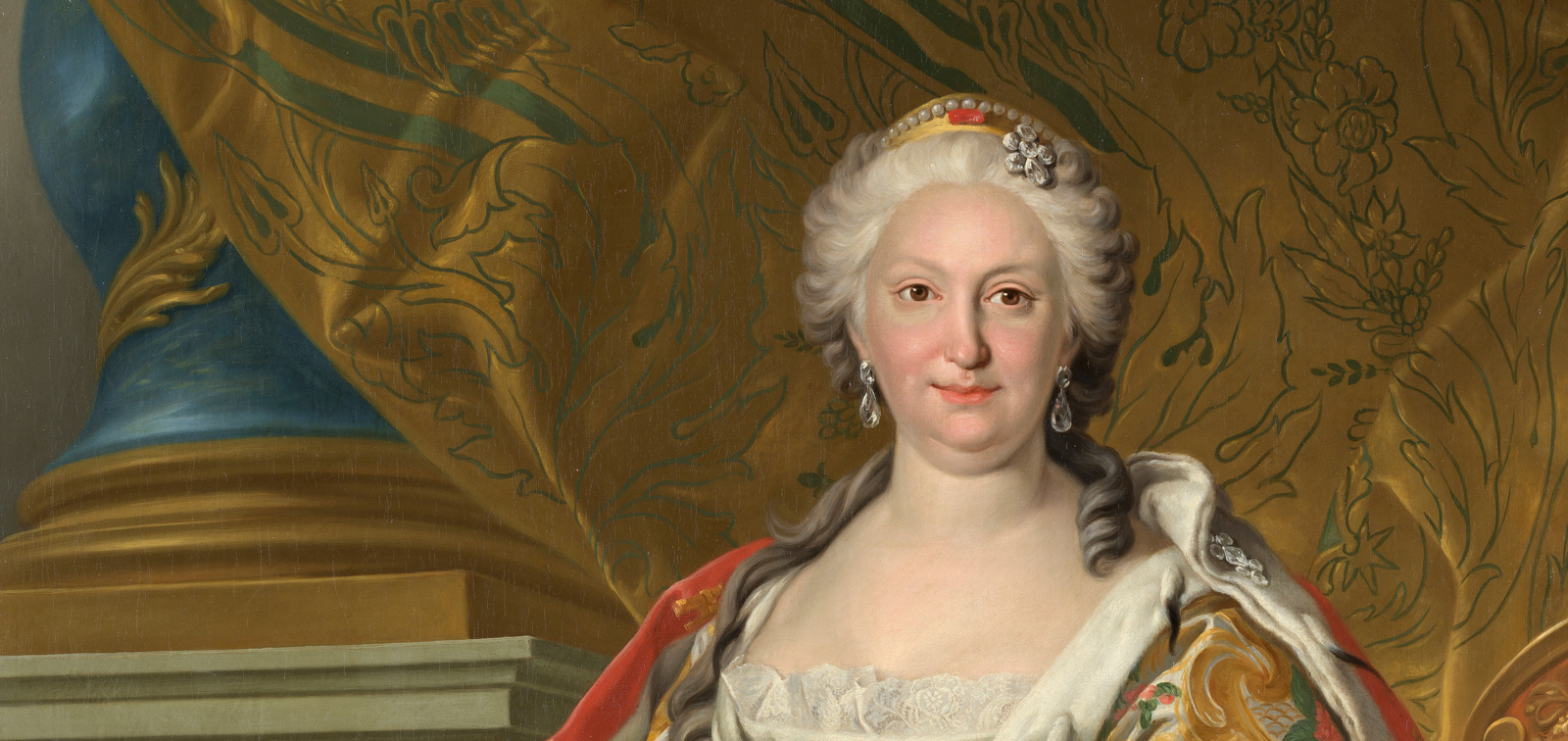
Following the exploration of the decisive role played by women from Europe’s royal houses in the 16th and 17th centuries, the third edition of The Female Perspective turns to the 18th century to examine the legacy of one of the most influential artistic patrons in the formation of the Museo del Prado’s collections: Queen Isabella Farnese (1692–1766). A pivotal figure in both politics and collecting, Isabella Farnese profoundly shaped the cultural landscape of 18th-century Europe.
Her collection — nearly a thousand paintings, of which more than a third now form a core part of the Prado’s holdings — stands among the most distinguished of her time. These 350 masterpieces include works by Velázquez, Ribera, Murillo, Correggio, Rubens, Reni, Van Dyck, Bruegel the Elder, Clara Peeters, Teniers, and Watteau, among others, as well as an exceptional group of classical sculptures acquired after the death of Queen Christina of Sweden, shared with King Philip V.
Guided by a cultivated eye and a strong personal vision, Isabella Farnese’s patronage left an enduring imprint on the royal collections. This edition of The Female Perspective is dedicated entirely to her, with the aim of recovering, studying, and celebrating her extraordinary artistic legacy.
Detail of Queen Isabella Farnese, Loo, Louis-Michel van. Ca. 1739. Oil on canvas. Museo del Prado.
Technical specifications
/ Tour inspired by the exhibition itinerary The Female Perspective III. Queen Isabella Farnese (1692–1766) and the Museo del PradoTitle
The Female Perspective III. Queen Isabella Farnese (1692–1766) and the Museo del Prado
Dates
1 Dec 2025 - 24 May 2026
Number of works and approximate duration
44 Artworks - 02:20 h
Curator
Professor of Art History, University of Murcia.
Section I. Constructing the image of the queen
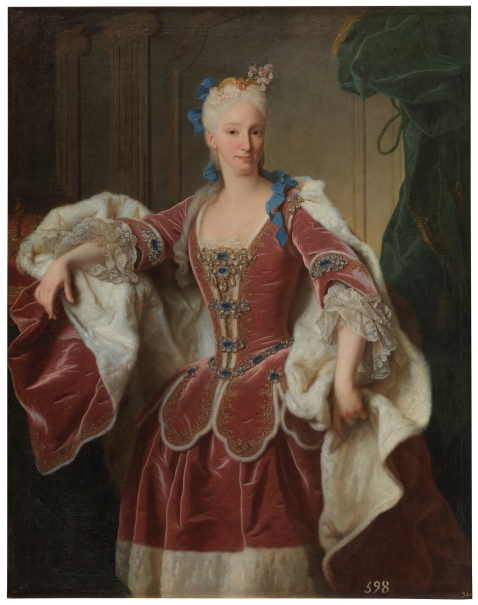

This is an official portrait of Queen Isabella Farnese (1692-1766), daughter of Eduardo II, Duke of Parma and second wife of Felipe V of Spain (1683-1746), whom she married in 1714. Shown three quarters and sumptuously dressed, the Queen turns her body to the left and her head to the right in an elegant pose characteristic of French portraits of that period. The technique of this painting, with a detailed rendering of her jewels, the qualities of the red velvet embroidered in gold, and the fur on her robe and dress, is outstanding, endowing Isabel with a presence befitting her position.
Room 020
Section I. Constructing the image of the queen
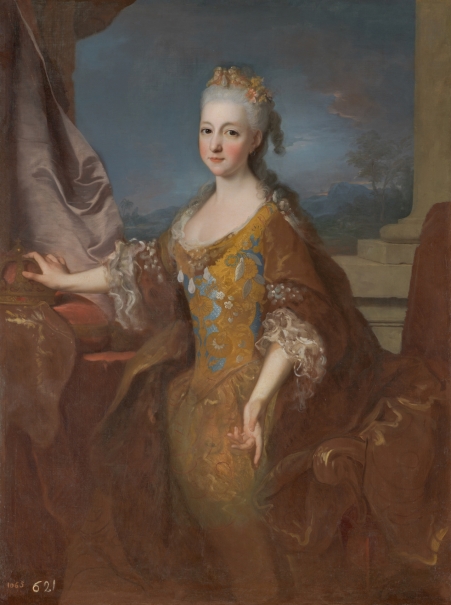

Following her arrival at the Spanish court in 1722, the young wife of the Prince of Asturias, Louis of Bourbon, displayed signs of unstable behaviour. Louise Élisabeth of Orléans (1710–1742) frequently got drunk, refused to wash, displayed herself naked, went barefoot and without underwear, and acted indecorously in public. She refused to eat anything at official meals but later devoured everything she found, edible or not. All this pointed to a serious personality disorder and possible eating disorders, which became even more evident when Philip V abdicated in January 1724 and Louis I ascended the throne.
Room 022
Section I. Constructing the image of the queen
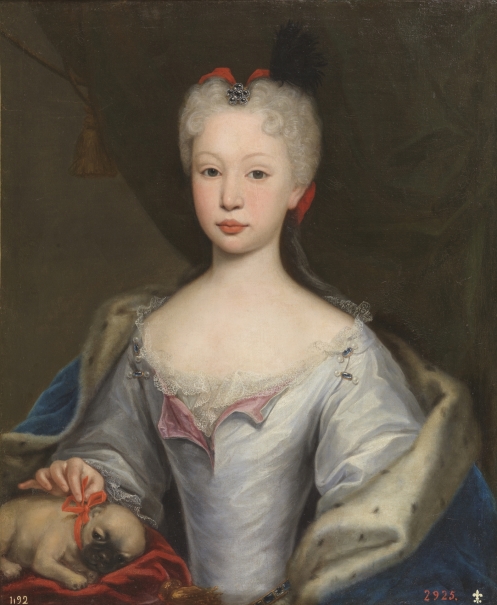
Barbara of Portugal (1711–1758) became queen consort of Spain in 1746 on the accession to the throne of her husband, Ferdinand VI. As daughter of King John V of Portugal and Maria Anna Josepha of Austria, her marriage was part of the ambitious diplomatic strategy devised by Isabella Farnese to unite her children with the major ruling houses of Europe.
The exchange of princesses thus took place in January 1729, with Barbara travelling to Spain to marry the then-Infante Ferdinand, and Maria Anna Victoria of Bourbon going to Lisbon to marry the Portuguese heir, Joseph of Portugal.
Room 022
Section I. Constructing the image of the queen
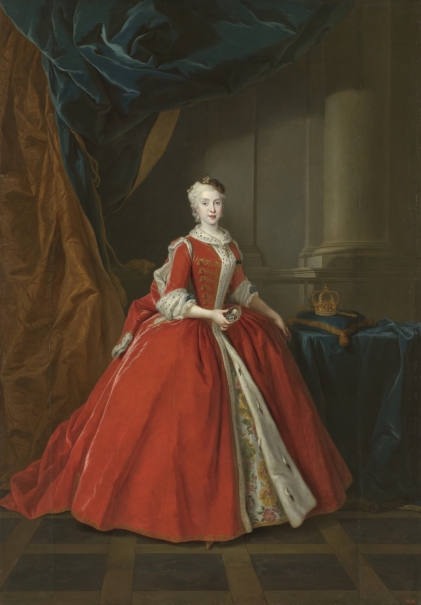
Maria Amalia Walburga (1724–1760), Princess Royal of Poland and Duchess of Saxony as daughter of its Elector, married Charles VII, King of Naples and the Two Sicilies (later Charles III of Spain), in May 1738. As was customary with royal betrothals, the engagement was accompanied by the traditional Exchange of pre-nuptial portraits. The image of Charles, painted by Il Molinaretto, was sent to Dresden, while two different versions of the princess were executed: one intended for Naples for her future husband, and the other (the present work) sent to the Spanish court for her future parents in-law, Philip V and Isabella Farnese.
Room 022
Section I. Constructing the image of the queen
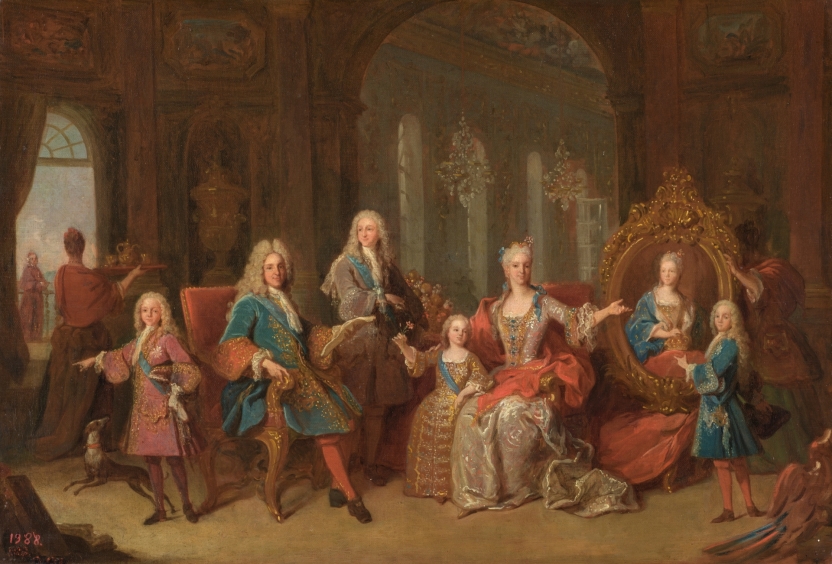

Philip V and Isabella Farnese always wished to possess a family portrait that would immortalise not only their union but also its significance, namely the continuity of the Spanish Bourbon dynasty. Among the first commissions Jean Ranc received on his arrival at the court in Madrid was to depict the monarchs together with their children. Although the final work is lost, the Museo del Prado has a preparatory drawing, and this oil sketch, intended for a larger composition, which was modified as the royal family expanded.
Room 079B
Section I. Constructing the image of the queen
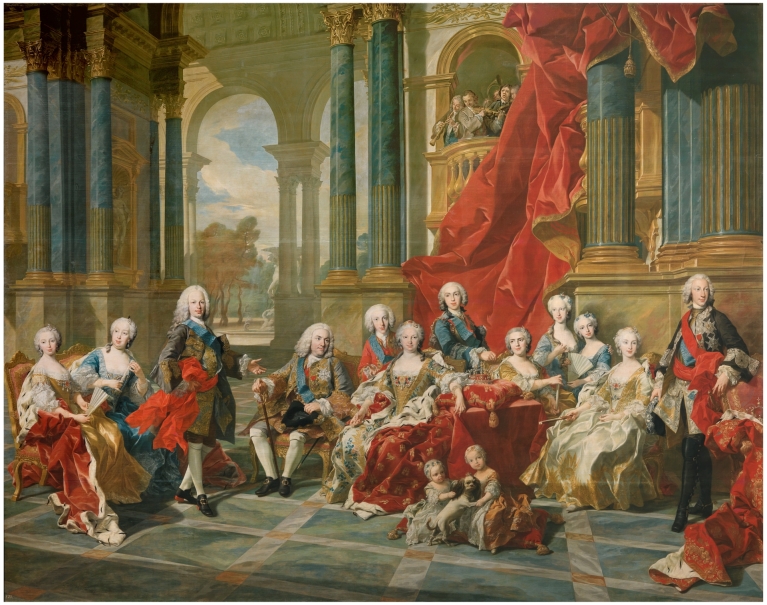

The King is depicted with his second wife, Isabella Farnese, at the centre of the composition. He appears surrounded by his descendants, soon-to-be Kings Ferdinand VI –son of the King’s first marriage– and Charles III, both with their respective wives, and all the other members of the royal family alive at that date. This portrait, at once intimate family and dynastic gathering, betrays curious and contrasting attitudes among the sitters: first of all, the exhaustion of Philip V against the dominant and authoritarian grandiosity of his second wife, Isabella Farnese. Secondly, the presence of the Prince of Asturias, soon-to-be King Ferdinand VI, whose presence, intended as elegant, ends as merely gauche. Thirdly, the somewhat oblivious confidence of Charles III, who at the time was King of Naples, the gentleness of his wife.
Room 039
Section II. Isabella Farnese's collection of paintings in the Museo del Prado
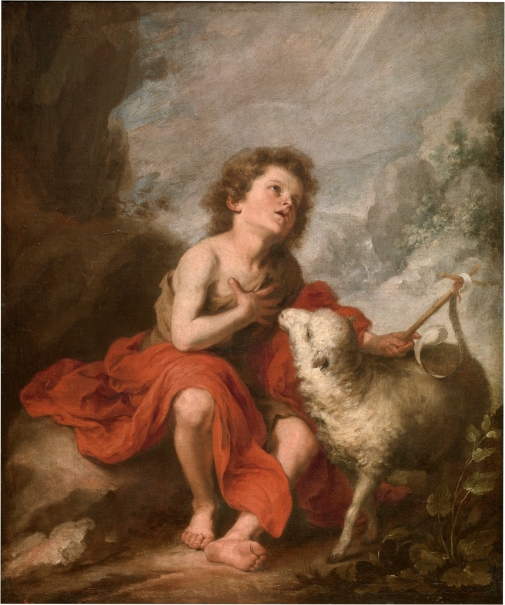

Alone in the countryside, a boy raises his hand to his breast while looking up to the heavens, his face illuminated by a beam of light. The lamb and the cross with the inscription “Ecce Agnus Dei” (Behold the Lamb of God) identify this figure as Saint John the Baptist, of whom the Gospels said: “the child grew and was strengthened in spirit and was in the deserts.”
Educated in Parma, Isabella Farnese was familiar with the great models of classicism, hence her fascination with Murillo, an artist with a sensibility akin to the Italian pictorial tradition.
Room 017
Section II. Isabella Farnese's collection of paintings in the Museo del Prado
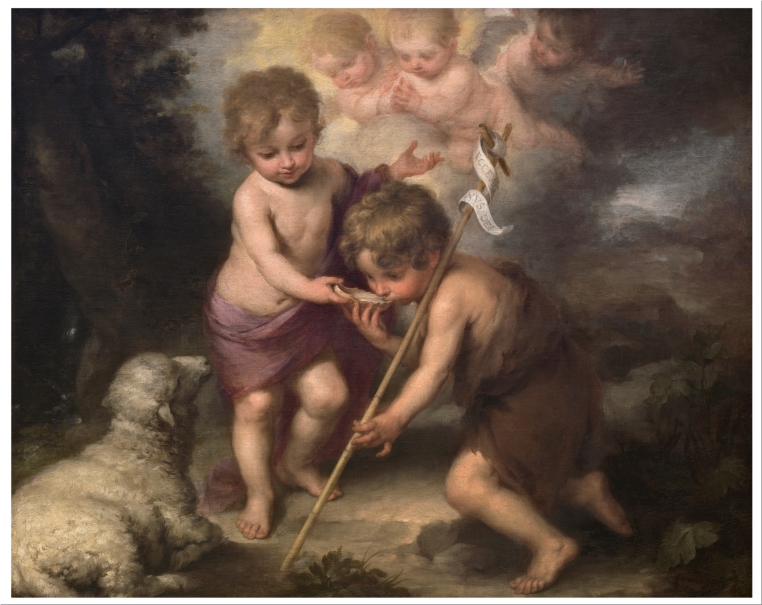
The combination of tangible reality with a visionary and spiritual atmosphere was one of the features that explain the fascination exerted by Murillo’s works, many of them extremely popular, which is why the Catholic Church used his images for the following three centuries. A fair number of his themes are not specifically described in the Bible and some, such as the scenes from the childhood of Christ and Saint John the Baptist, were his own inventions. As in this painting, Murillo portrayed complex theological concepts in easily understandable and sincere images that appealed immediately to the human emotions.
Room 017
Section II. Isabella Farnese's collection of paintings in the Museo del Prado
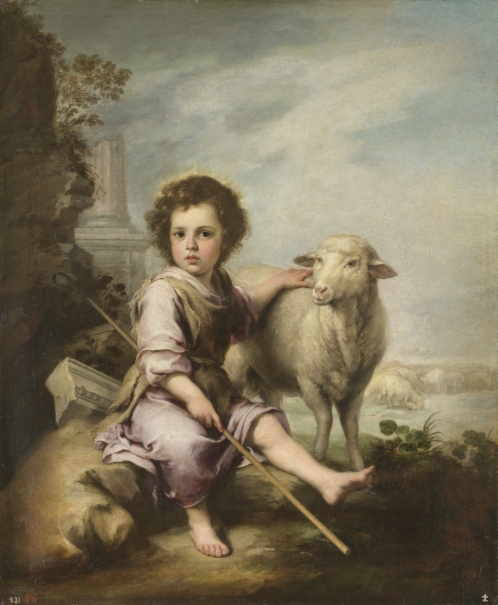
In a landscape with classical ruins that allude to the defeat of paganism, the Christ Child tends a lamb. Murillo based this image on a print by Stefano della Bella (1610-1664), while making use of his outstanding ability to depict children to create one of the most effective depictions of the parable of the Good Shepherd.
Room 017
Section II. Isabella Farnese's collection of paintings in the Museo del Prado
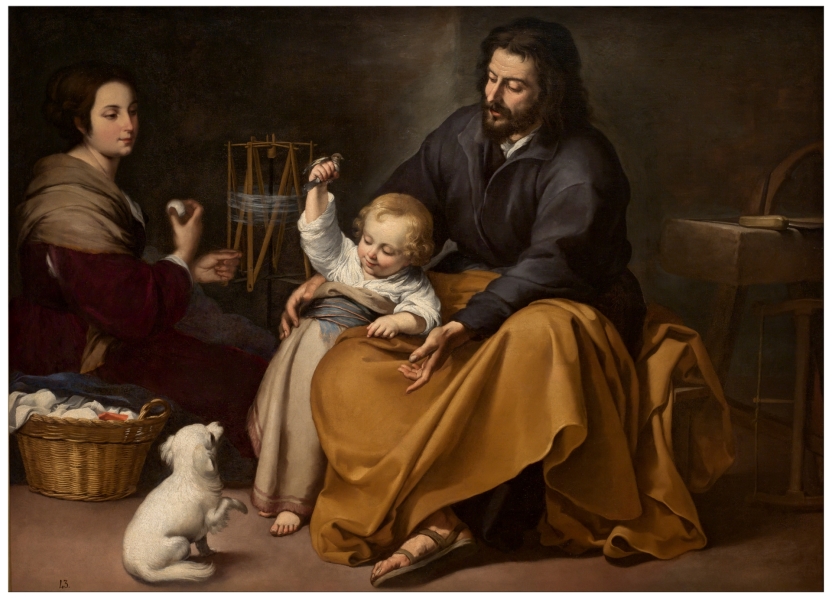
Acquired in 1744 after the death of Cardinal Gaspar de Molina, together with The Good Shepherd and The Infant Saint John the Baptist, this work became one of Isabella Farnese’s most cherished. Such was her appreciation for it that, among the group of paintings she took with her when she moved from La Granja to the newly acquired Buenavista Palace in Madrid in 1759, this tender episode from Christ’s childhood was included. The composition unites the Holy Family in a domestic scene in which the everyday and the sacred coexist with complete naturalness.
Room 017
Section II. Isabella Farnese's collection of paintings in the Museo del Prado
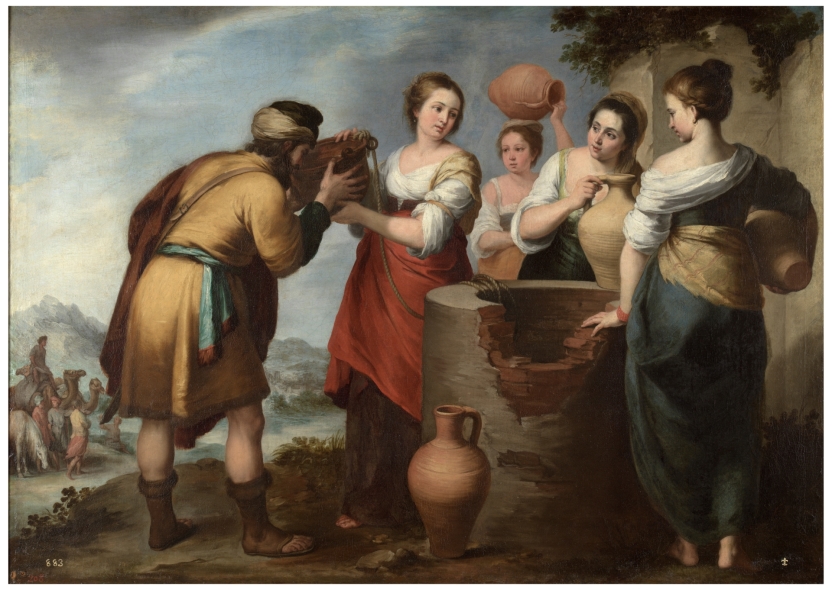
In his search for a wife for his master, Isaac, Eliezer encountered Rebecca, who offered him water from her pitcher by the well. The biblical account offered Murillo the perfect pretext for depicting an everyday scene typical of any Andalusian town square, with four women about to fill their pitchers.
Room 017
Section II. Isabella Farnese's collection of paintings in the Museo del Prado
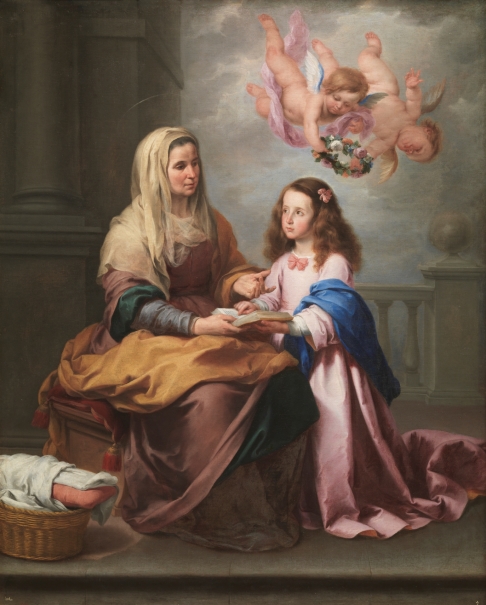
Painters from Seville were very fond of this apocryphal episode from the Virgin’s childhood. Here, Murillo used it to bring various levels of reality into a single pictorial space: first, historical reality in the form of a domestic scene in which a mother has left her sewing to instruct her daughter; second, a space generated with architectural references such as balustered columns that locate the scene in an indeterminate but not-at-all domestic setting; and third, an allegorical space consisting of an opening of the heavens with two angels placing a crown of flowers on the girl’s head.
Room 017
Section II. Isabella Farnese's collection of paintings in the Museo del Prado
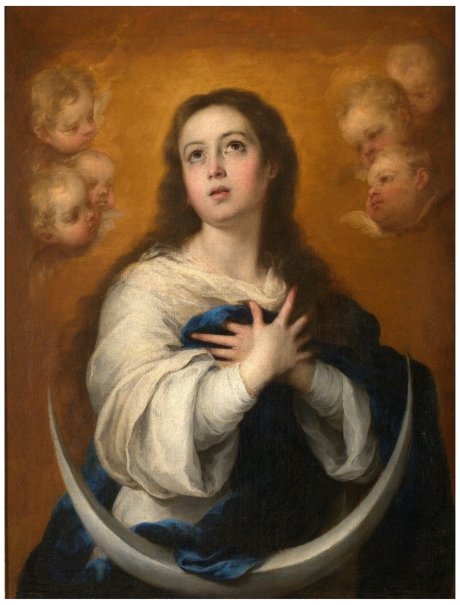
The colours of the Virgin’s tunic and cloak, her loose hair, hands crossed on her breast, her devoted gaze raised to heaven and the presence of the moon are elements of the imagery of the Immaculate Conception. Full-length depictions of this subject always include the moon at the Virgin’s feet.
Room 017
Section II. Isabella Farnese's collection of paintings in the Museo del Prado
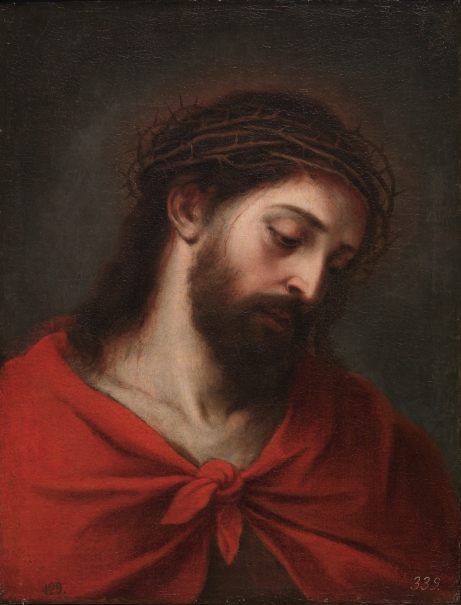
Ecce Homo and Mater Dolorosa (P977) are comparable with regard to size, provenance and their partial dependence on models by Titian. Above all, they are linked by their subject matter and are most effective and expressive if seen as a pair, when it becomes evident that the Virgin’s grief arises from her contemplation of her son’s suffering.
Room 017
Section II. Isabella Farnese's collection of paintings in the Museo del Prado
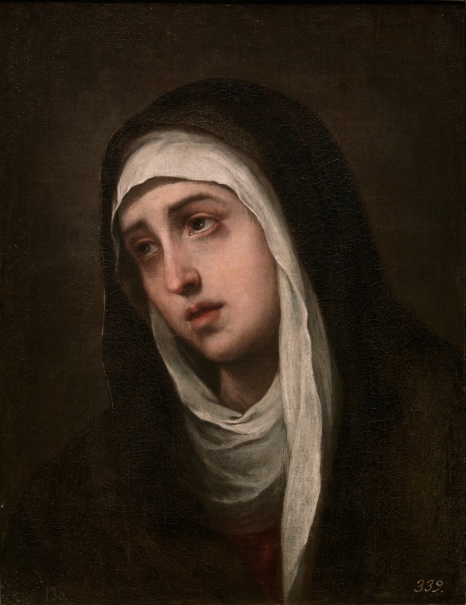
The Virgin, depicted as a bust and slightly turned to the left, emerges from a neutral background thanks to the lighting directed at her face, entering from the side towards which the figure inclines. Beneath the veil covering her head, she wears a white wimple that frames the face and neck, its raised edge creating areas of shadow. Once again in this image, Murillo demonstrates that he is the Spanish painter who most effectively expresses the Catholic sensibility of his time.
Room 017
Section II. Isabella Farnese's collection of paintings in the Museo del Prado
Section II. Isabella Farnese's collection of paintings in the Museo del Prado
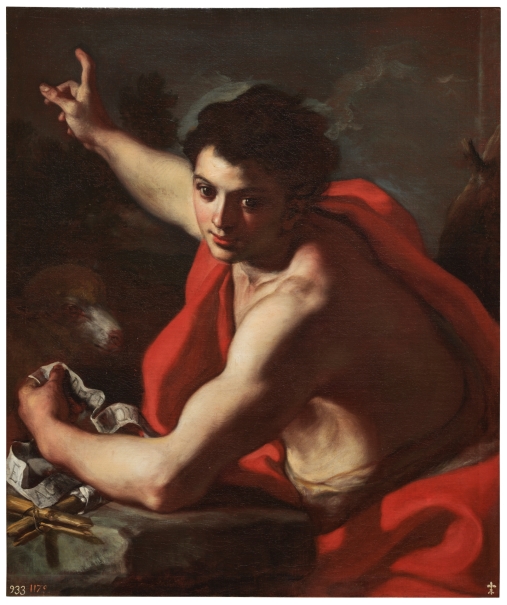

Saint John the Baptist looks out at the viewer with a direct, decided gaze. His face is framed by the diagonal lines of his arms while his body is emphasised by the pronounced chiaroscuro. The saint is accompanied by his traditional attributes: a scroll, a reed cross and the lamb that prefigures Christ’s act of redemption.
Room 021
Section II. Isabella Farnese's collection of paintings in the Museo del Prado
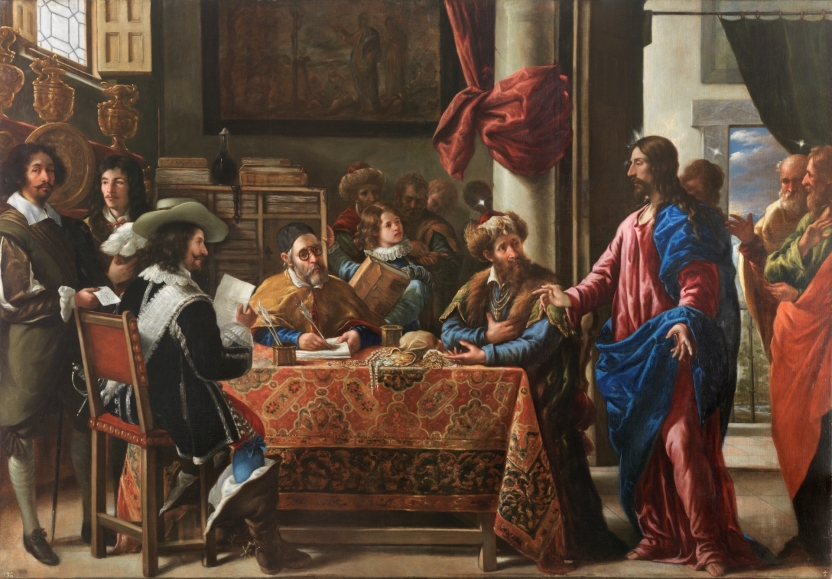

Christ appears in the tax collector’s office and calls on Matthew to follow him. Matthew, depicted raising his right hand to his breast and with a star above his head, would become one of Christ’s most faithful followers and the author of one of the Gospels. Pareja, Velázquez’s former slave, places considerable emphasis on the setting of this work and also includes himself in the composition. He is located on the left, proudly looking out at the viewer and holding in his right hand a piece of paper with his signature.
Room 016A
Section II. Isabella Farnese's collection of paintings in the Museo del Prado
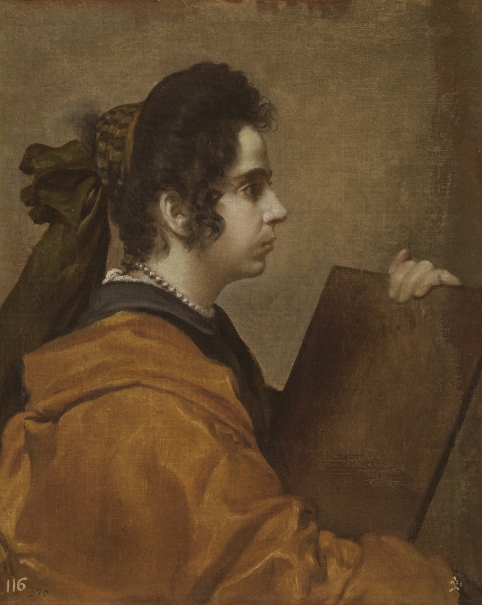

The first known reference to this work dates from 1746, when an inventory of paintings at the La Granja Palace was drawn up. There, it is attributed to Velázquez and identified as a likeness of his wife, Juana, whose father was the painter, Francisco Pacheco. It also specifies that she is holding a board. The linking of anonymous portraits to the lives of their authors was frequent in the 18th and 19th centuries, and Velázquez was no exception, as various of his works were thought to include his face, as well as likenesses of his wife and children.
Room 014
Section II. Isabella Farnese's collection of paintings in the Museo del Prado
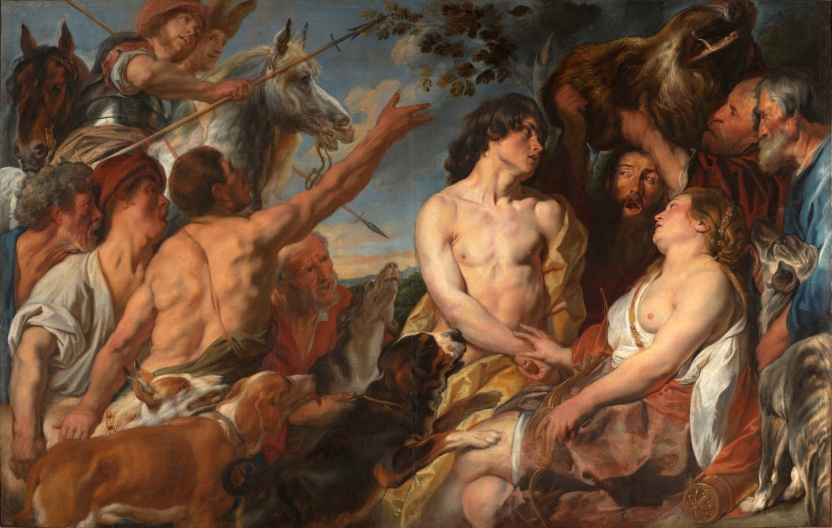

This mythological scene is drawn from the Metamorphoses of Roman poet Publio Ovidio Nason, one of the texts on ancient mythology that had the greatest intellectual impact on 17th-century Flemish artists. According to Ovid, Diana had sent an enormous wild boar to ravage the region of Calydon as punishment after the king failed to make the promised sacrifices to her. The king’s son, Meleager, was an experienced hunter and he gathered his most skilled colleagues to kill the beast. One of them was Atalanta, a brave huntress who was the first to wound it, making it easier for Meleager to kill it.
Room 029
Section II. Isabella Farnese's collection of paintings in the Museo del Prado
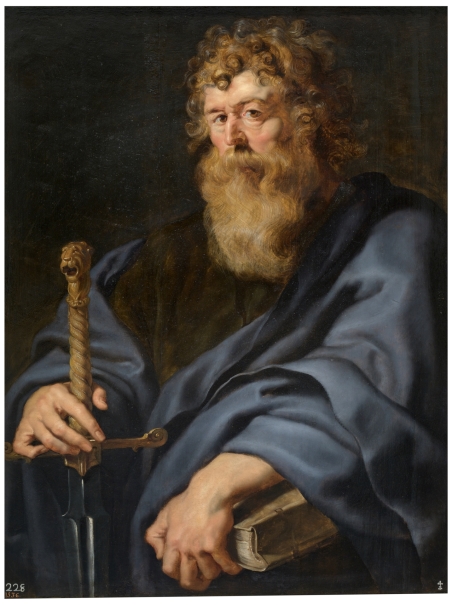

This is one of a series of twelve panels that make up an apostolate that originally included a Savior of the World. The disciples of Christ are represented in the style the painter used around 1612-1613. These are large figures of forceful appearance and considerable plasticity, contrasting with the dark backgrounds. The use of these human types and the intensely directed light are the result of the painter´s trip to Italy, where he was influenced by the art of Michelangelo. The saints are depicted with their most representative attributes in order to facilitate their identification.
Room 028
Section II. Isabella Farnese's collection of paintings in the Museo del Prado
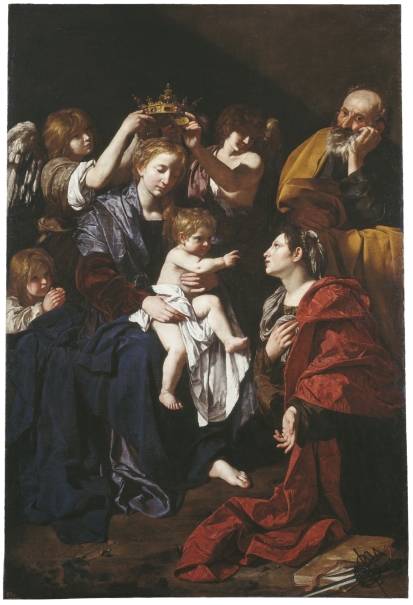

This painting shows the vision of Saint Catherine, who, in a dream, was mystically wed to the Christ Child. The work is dated between 1617 and 1619, when the artist was in Spain where he left a profound mark on artists such as Murillo. A follower of Caravaggio, he produced more delicate compositions with nobler figures and a more detailed treatment of the forms. He did however adopt Caravaggio’s violent chiaroscuro.
Room 026
Section II. Isabella Farnese's collection of paintings in the Museo del Prado
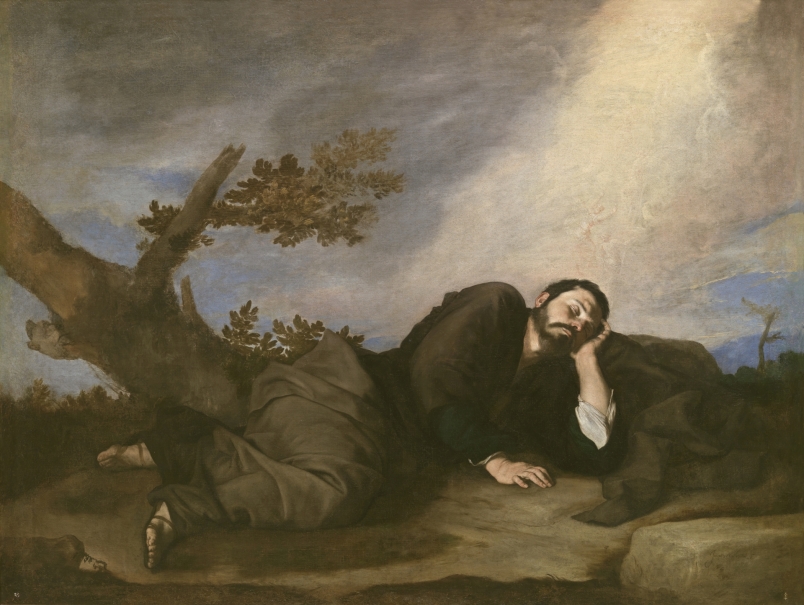

This painting tells of Jacob the Patriarch´s mysterious dream, as told in Genesis. He appears asleep, lying on his left shoulder with a tree behind him. On the other side is the ladder of light, by which the angels ascend and descend. This subject demonstrates Ribera´s skill at constructing metaphoric discourse. He uses the image of a shepherd resting in the countryside to describe one of the best-known Bible stories. The foreground view of the solidly constructed figure and the scene´s realistic features bring realism to the miraculous dream described in a ray of light under a blue and gray sky.
Room 009
Section II. Isabella Farnese's collection of paintings in the Museo del Prado
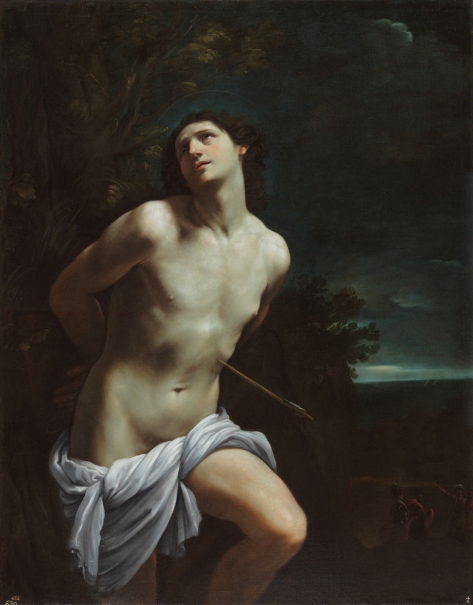

The Museo del Prado Saint Sebastian is one of five paintings of identical or similar composition that are traditionally ascribed to Guido Reni, and whose attributions and dating have sometimes been the object of heated debate – the four other works are in the Musée du Louvre, the Dulwich Picture Gallery, the Museo de Arte de Ponce, and the Auckland Art Gallery Toi o Tamaki. Stylistically, the Madrid, Paris, and (possibly) Ponce versions can be dated to about 1619.
Room 004
Section II. Isabella Farnese's collection of paintings in the Museo del Prado
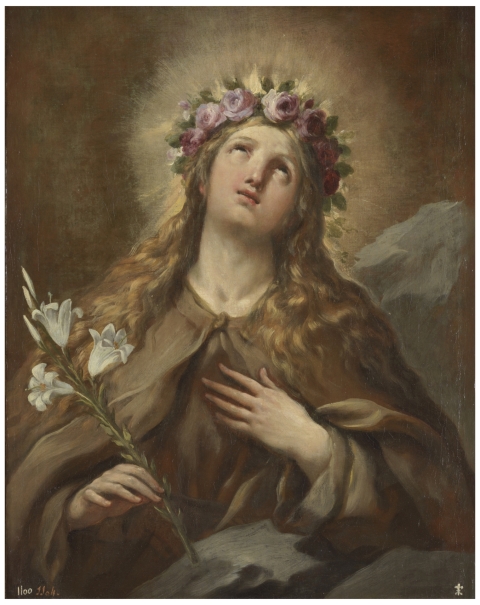
The saint holds a bunch of Madonna lilies in allusion to her purity and a garland of roses that recalls her name. Her attitude brings this depiction closer to the most characteristic models of Guido Reni. Born in Naples, Giordano painted in Spain between 1692 and 1702. He is notable for his mural paintings, such as those executed for the Casón del Buen Retiro.
Room 004
Section II. Isabella Farnese's collection of paintings in the Museo del Prado
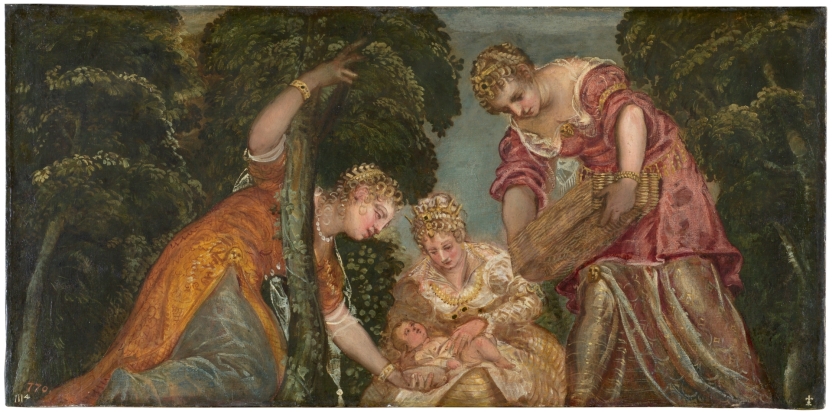

This is one of seven canvases (P00386, P00388, P00389, P00393, P00394, P00395, P00396) in a group linked by the same color scheme, a general accentuation of surface drawing and a rhythm of curved forms that link on painting to another. The scenes were designed to be seen together, at a certain height and laid out on canvases conceived as inclined planes that converged on a central painting (The Purification of the Midianite Virgins, P00393).
Room 044
Section II. Isabella Farnese's collection of paintings in the Museo del Prado
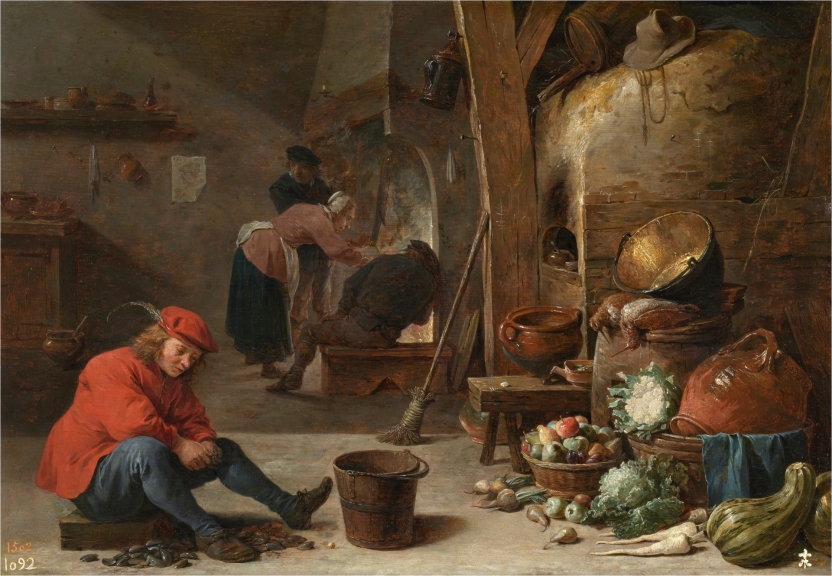

This is a singular example of David Teniers´ indoor scenes. The kitchen or tavern utensils so common in his other works are completed here with a magnificent show of diverse fruit and vegetables. This converts the right part of the composition into a still life. On the left, a character shells mussels, a traditional foodstuff in the Low Countries, while another group works beside the fireplace.
Room 077
Section II. Isabella Farnese's collection of paintings in the Museo del Prado
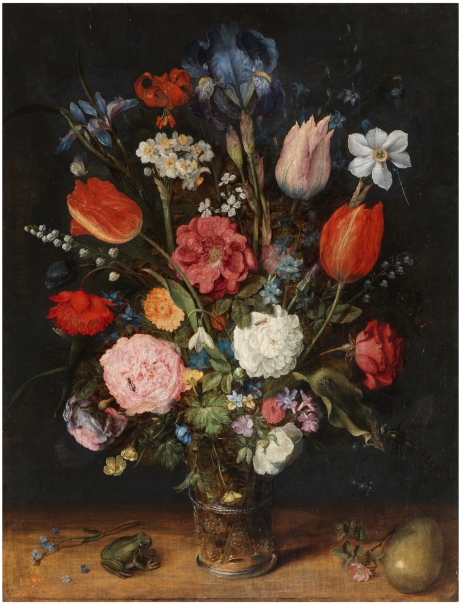

Following the death of Ferdinand VI in 1759, Isabella Farnese acted as governor until the arrival of Charles III. At that date, she decided to establish her residence in Madrid and acquired the Buenavista Palace. In addition to the building, she also purchased a group of forty-six Flemish paintings for the purpose of decorating her new residence: twenty-nine attributed to David Teniers II and seventeen to Jan Brueghel the Elder. Notable among the latter are two depictions of vases of flowers, one featuring a ceramic vessel with a scalloped edge and the other with a frog, both now in the Museo del Prado.
Room 082
Section II. Isabella Farnese's collection of paintings in the Museo del Prado
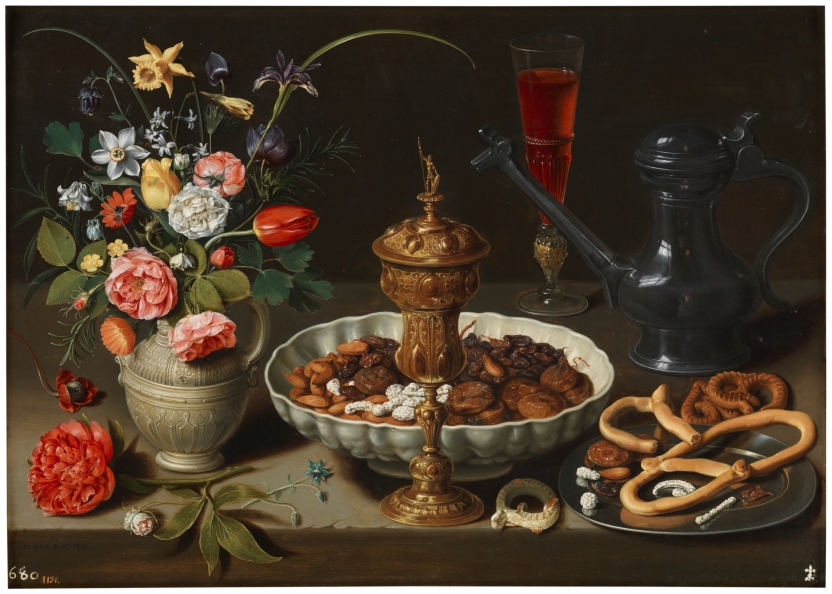
Still Life with Flowers, a Silver-gilt Goblet, Dried Fruit, Sweetmeats, Bread sticks, Wine and a Pewter Pitcher
Oil on panel.
1611
1611
It has often been stated that this painting is part of a series of four, all now in the Prado, but that is probably not the case. The dimensions of all four paintings (P1619, P1620, P1621, P1622) are similar, but their provenance is not. This, and Table with Cloth, Salt Cellar, Gilt Standing Cup, Pie, Jug, Porcelain Plate with Olives and Cooked Fowl (P1622), are first documented when they were inventoried in 1746 in the Spanish royal collection.
Room 082
Section II. Isabella Farnese's collection of paintings in the Museo del Prado
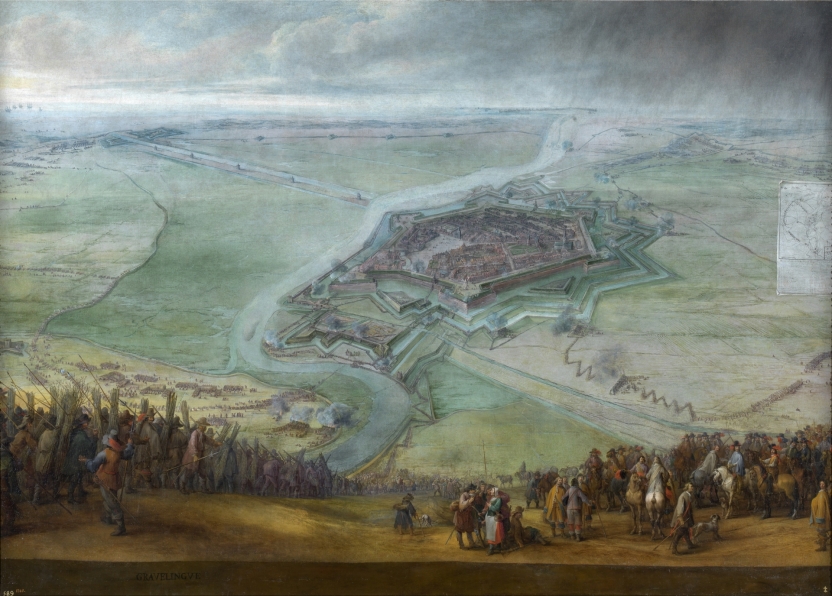

Snayers specialised in panoramic views of military actions. Here he offers a topographical presentation of the siege of Gravelines (France) by the Spanish troops in 1652. On the right Snayers shows the rain falling on the area and also includes a map which functions to emphasise the illusion of depth in the scene.
Room 080
Section II. Isabella Farnese's collection of paintings in the Museo del Prado
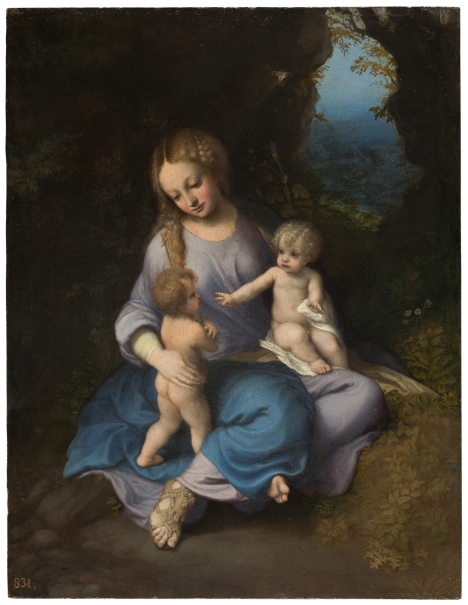

Outside of Rome and Florence, no painter was as decisive in the formulation of painting´s classical language as Corregio. His youth, before his stay in Rome in 1518 and 1519, cannot be understood without Mantegna and Leonardo da Vinci, whose influence can be seen in the present work, painted in Parma between 1515 and 1517. The classical appearance of the Virgin´s sandals comes from Mantegna, while Leonardo is the source of the setting in a cavern, as well as the exactitude in the treatment of the plants, and the sfumato.
Room 049
Section II. Isabella Farnese's collection of paintings in the Museo del Prado
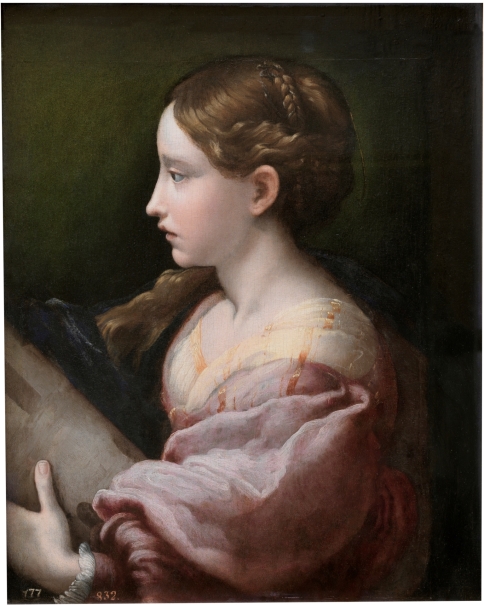
A portrait of Saint Barbara in profile on a black background. In her hands, she holds a tower, which was her symbol. A third-century Christian martyr, Saint Barbara was shut up in a tower and later decapitated by her father, Dioscoro, as punishment for neither marrying nor professing paganism. She is generally depicted with a sword and the palm leaf of martyrdom, as well as her tower. Here, however, the artist portrays her almost without symbols, and dressed in sixteenth-century style.
Room 049
Section II. Isabella Farnese's collection of paintings in the Museo del Prado
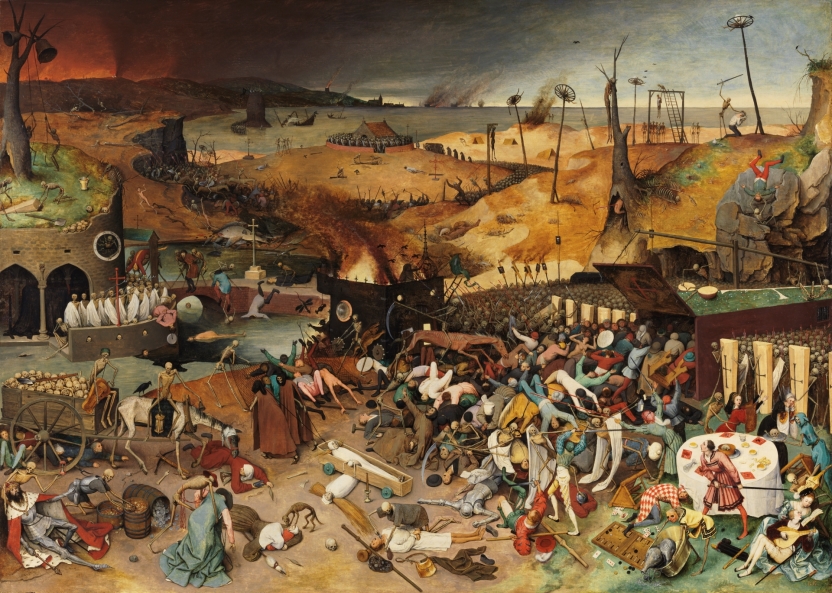

In this moral work, the triumph of Death over mundane things is symbolized by a large army of skeletons razing the Earth. The background is a barren landscape in which scenes of destruction are still taking place. In the foreground, Death leads his armies from his reddish horse, destroying the world of the living. The latter are led to an enormous coffin with no hope for salvation. All of the social institutions are included in this composition and neither power nor devotion can save them. Some attempt to struggle against their dark destiny while others are resigned to their fate. Only a pair of lovers, at the lower right, remains outside the future they too will have to suffer.
Room 055A
Section II. Isabella Farnese's collection of paintings in the Museo del Prado
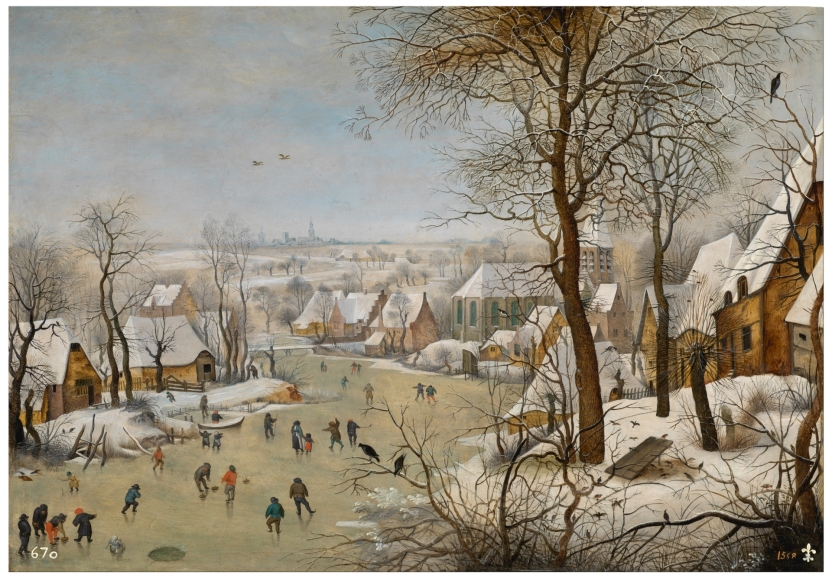
Pieter Bruegel the Elder’s paintings were often copied by his son Pieter, as in this case. The original, dated 1565, was extremely popular to judge from the nearly 130 known copies of it. This success probably derives from the work’s subject, an everyday winter scene that would have been familiar to northern European viewers.
Room 055A
Section III. Isabella Farnese’s Sculpture Collection in the Museo del Prado
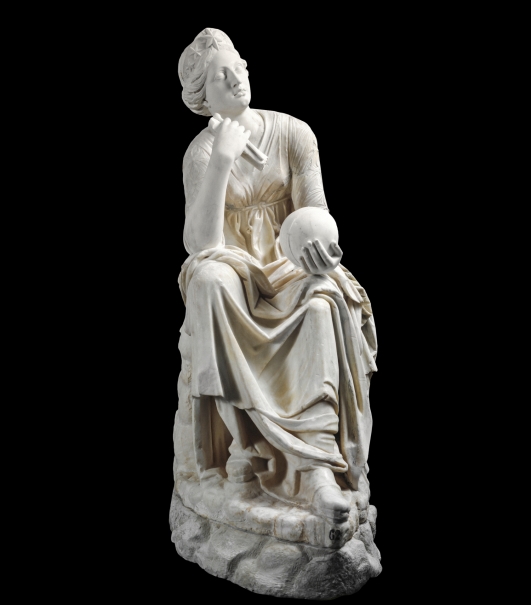

This marble statue and other seven more (E000068, E000041, E000040, E000061, E000038, E000069, E000037) were unearthed in about 1500 in Hadrian´s Villa at Tivoli, where the decorated the stage of the Academy Theatre or Odeon. They were made at the end of the reign of Emperor Hadrian (c. 130 AD), by two Roman worshops, reproducing Greek models from the second century BC. In about 1670, they were acquired by Queen Cristina of Sweden (1626-1689) and exhibited in her palace in Rome. They were later acquired by Philip V and reached the Palace of La Granja de San Ildefonso (Segovia) in 1725.
Ábside
Section III. Isabella Farnese’s Sculpture Collection in the Museo del Prado
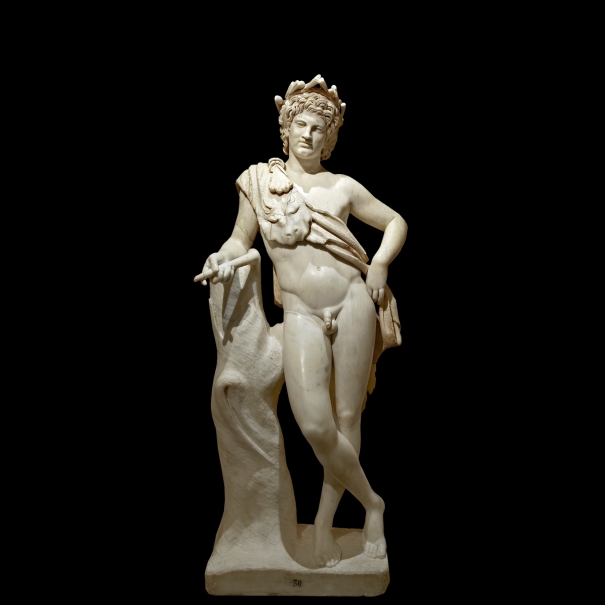

This is a Roman replica of an original by Praxiteles of 340-330 BC. In contrast to the traditionally wild image of satyrs, here we see a beardless youth with a serene demeanour and attributes such as a flute and a panther skin. The figure displays the so-called "Praxitelean curve," an S-shape that gives the body a relaxed appearance. It was restored in Bernini´s studio, where the original arrangement of the legs was altered. An object of inspiration and study for artists, this sculpture belonged to Queen Isabella Farnese, as indicated by the fleur-de-lys on the base.
Room 073
Section III. Isabella Farnese’s Sculpture Collection in the Museo del Prado
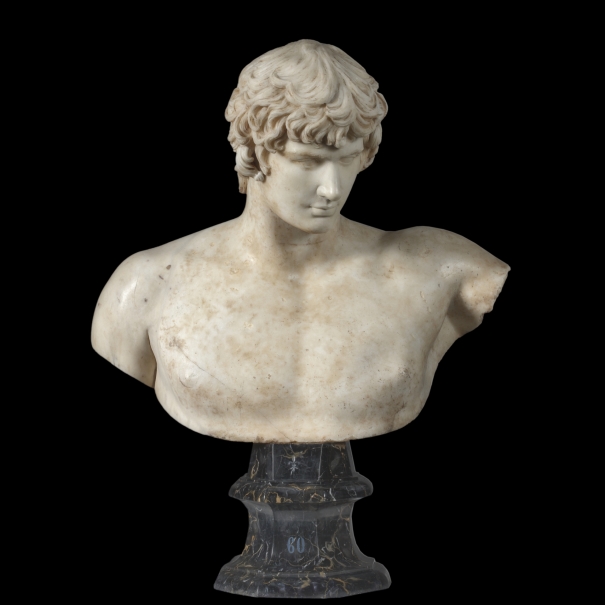

A Roman work datable from just after the death of Antinuous (130 A. D.), when his friend, the Emperor Hadrian, ordered that he be worshiped as a divinity. Thus, portraits of this young favorite became ideal images based on neo-Attic Greek esthetics and characterized by a peculiar melancholy. With his abundant curly hair, ideal facial features and silent, melancholy beauty, the work lies between a portrait and the image of a Greek god. The large size of the bust is a distinctive feature of portraits of this era.
Room 072
Section III. Isabella Farnese’s Sculpture Collection in the Museo del Prado
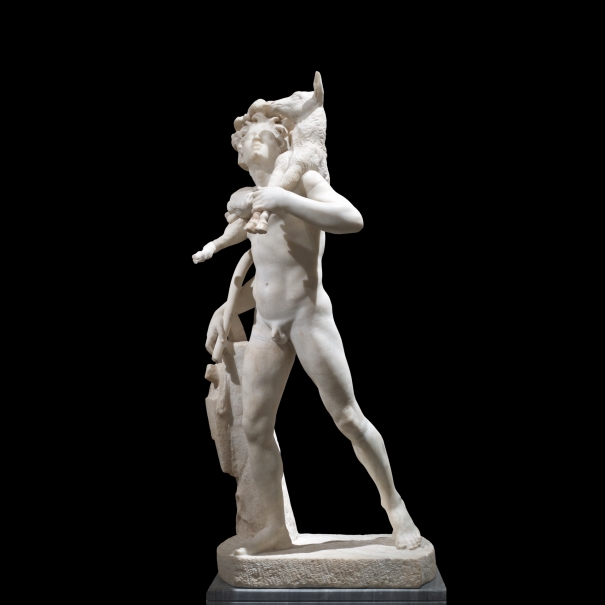
The satyr, whose half-animal nature is manifested in his pointed ears, horns and the tail on his back, bears a kid to a Dionysian festival. The sculpture is a Roman copy of a Hellenistic piece and the torsion in the torso and the diagonal axes of the limbs are characteristic of the style employed in the third century B. C. However, its style suggests a date of around 150 A. D. It was found in 1675 in Rome during the excavation of an ancient sculpture workshop which explains the unfinished appearance of the surface.
Room 072
Section III. Isabella Farnese’s Sculpture Collection in the Museo del Prado
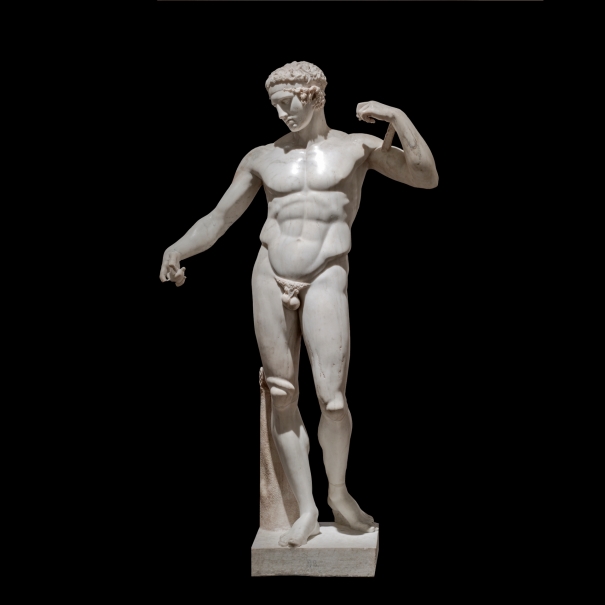
This is a Roman copy of Polyclitus´s Diadumenos (ca. 420 B.C.). Polyclitus of Argos (active ca. 460-420 B.C.) was quite far along in his career when he conceived this figure —probably Apollo— tying a ribbon ("diadoumenos") around his temples as a symbol of victory. At that time, his idea of a canon of ideal proportions had been enriched by his experience of Athenian art, as can clearly be seen in his taste for the profile and his plastic development of the hair. This is one of the best-conserved copies.
Room 073
Section III. Isabella Farnese’s Sculpture Collection in the Museo del Prado
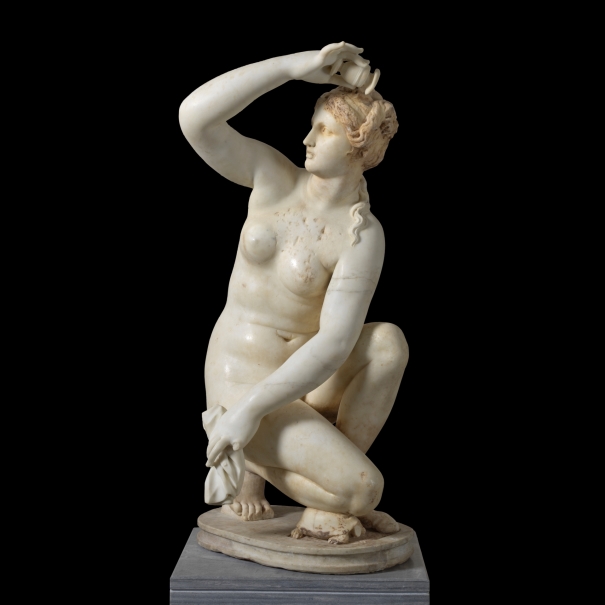
In the fertile history of western art forms, a number of models gradually achieved canonical status; repeated over time, their endurance defied the passing centuries and fleeting fashions. We are not referring, here, to the standardisation of specific iconographical schemes as a means of conveying a given message, but rather to the lasting success of certain forms, certain gestural archetypes, certain compositions conveying an idea readily intelligible to the viewer, which – sanctioned by their use in classical antiquity – came to enjoy unchallenged primacy.
Room 072
Section III. Isabella Farnese’s Sculpture Collection in the Museo del Prado
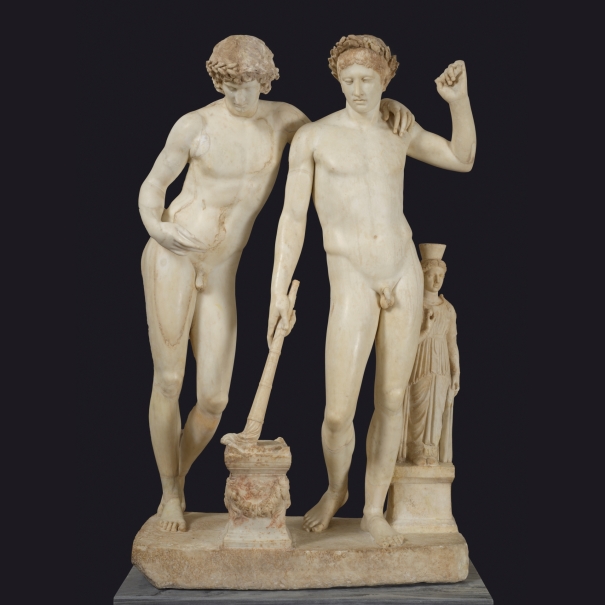

The work known as San Ildefonso Group–after San Ildefonso, Segovia, Spain, where, in the palace of La Granja, the work was kept during the 18th century– has been subject to many interpretations. Most researchers have not had access to precise knowledge of the modern restorative additions, there were also no known replicas, and the work includes only a few iconographic references and attributes with which to draw upon. Modern observers attracted by the embrace of the two ephebe (young men undergoing military training), unusual in ancient sculpture, interpreted it as a representation of friendship and brotherly love.
Room 071
Works from the itinerary not on display
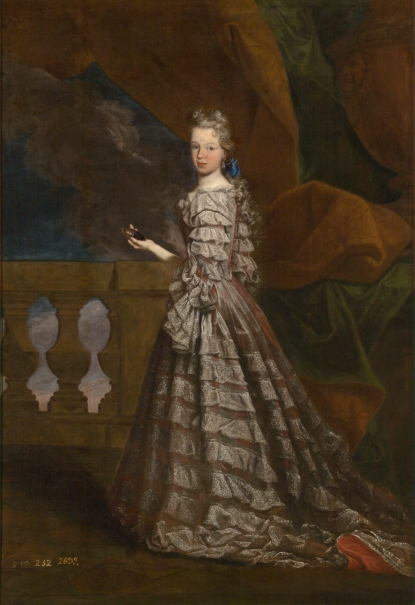
The first wife of Philip V and mother of the future Louis I and Ferdinand VI, Maria Luisa Gabriella of Savoy (1688–1714) played a prominent and recognised political role, not only as queen consort but also as governor in the king’s absence (1702, 1704, and 1710). Her marriage, celebrated in 1701, was sponsored by Louis XIV and interpreted as an opportunity to strengthen the alliance between the Bourbon and Savoy dynasties in the context of the War of the Spanish Succession. During the period of the pre-nuptial negotiations, Le Vey depicted her in this image holding a miniature of her future husband, a work inspired by Hyacinthe Rigaud’s portrait of 1700 (Versailles, château de Versailles).
Zaragoza - Universidad de Zaragoza
Works from the itinerary not on display
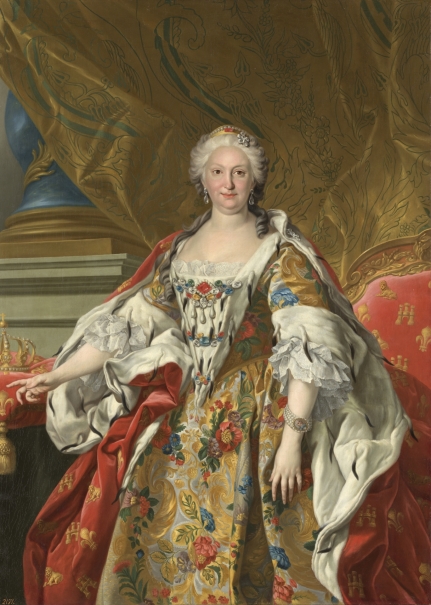
Shortly after his arrival in Spain in 1737 to take up the position of court painter, Louis-Michel van Loo was commissioned to paint two large-format portraits of the sovereigns. While Philip V opted for an equestrian image (Madrid, Galería de las Colecciones Reales), Isabella Farnese (1692–1766) chose to present herself in court dress in a splendid palace interior.The painter made several versions of this portrait, including the present one, in which the queen is depicted threequarter length and wearing an elaborate silk gown supported by panniers and embellished with a spectacular jewel of precious stones and pearls.
Londres - Embajada de España en Londres
Works from the itinerary not on display
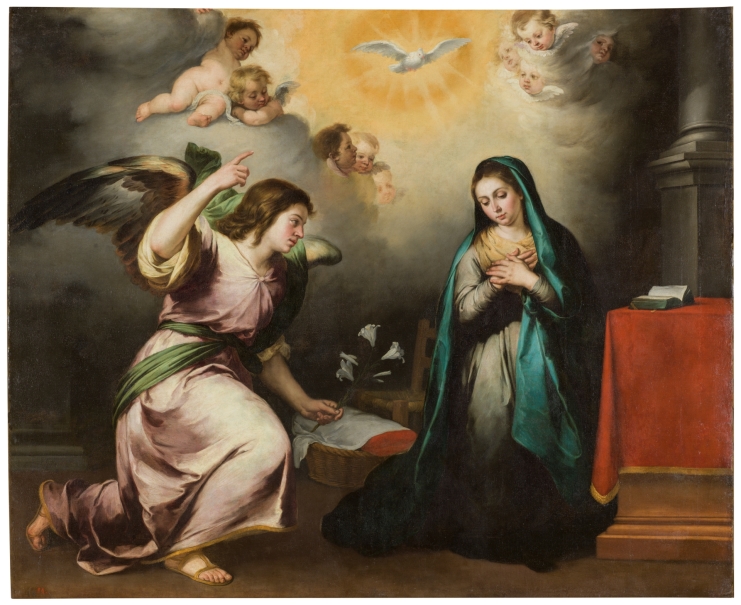
The Archangel Gabriel has descended from the heavens and kneels before Mary to announce the birth of Christ. The Angel holds some white lilies symbolising purity in his left hand while with the right he points to the Holy Spirit. Mary kneels in prayer, her hands crossed on her breast in a gesture of acceptance. The use of chiaroscuro suggests that this is an early work.
Section I. Constructing the image of the queen
Artworks (6)
Queen Isabella Farnese
Oil on canvas.
1723. Room 020
1723. Room 020
Queen Louise Elizabeth of Orleáns
Oil on canvas.
1724. Room 022
1724. Room 022
Queen Barbara of Portugal
Oil on canvas.
1725. Room 022
1725. Room 022
Queen Maria Amalia of Saxony
Oil on canvas.
1738. Room 022
1738. Room 022
The Family of Philip V
Oil on canvas.
Ca. 1723. Room 079B
Ca. 1723. Room 079B
The Family of Philip V
Oil on canvas.
1743. Room 039
1743. Room 039
Section II. Isabella Farnese's collection of paintings in the Museo del Prado
Artworks (28)
The Infant Saint John the Baptist
Oil on canvas.
Ca. 1670. Room 017
Ca. 1670. Room 017
The Infant Christ and Saint John the Baptist with a Shell
Oil on canvas.
Ca. 1670. Room 017
Ca. 1670. Room 017
The Good Shepherd
Oil on canvas.
Ca. 1660. Room 017
Ca. 1660. Room 017
The Holy Family with a Little Bird
Oil on canvas.
Ca. 1650. Room 017
Ca. 1650. Room 017
Rebecca and Eliezer
Oil on canvas.
Ca. 1660. Room 017
Ca. 1660. Room 017
Saint Anne teaching the Virgin to read
Oil on canvas.
Ca. 1655. Room 017
Ca. 1655. Room 017
The Immaculate Conception
Oil on canvas.
Ca. 1665. Room 017
Ca. 1665. Room 017
Ecce Homo
Oil on canvas.
1660 - 1670. Room 017
1660 - 1670. Room 017
Mater Dolorosa
Oil on canvas.
1660 - 1670. Room 017
1660 - 1670. Room 017
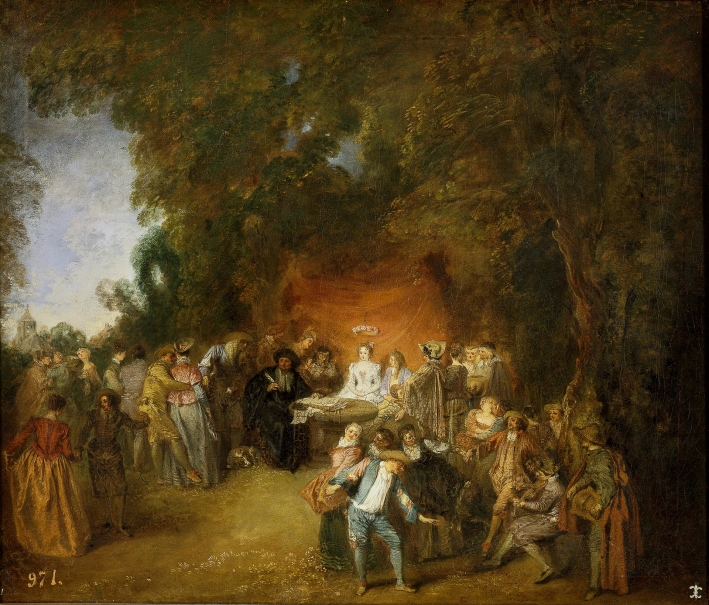
Marriage Contract and Country Dance
Oil on canvas.
Ca. 1711. Room 022
Ca. 1711. Room 022
Saint John the Baptist
Oil on canvas.
Ca. 1730. Room 021
Ca. 1730. Room 021
The Calling of Saint Matthew
Oil on canvas.
1661. Room 016A
1661. Room 016A
A Sybil
Oil on canvas.
Ca. 1632. Room 014
Ca. 1632. Room 014
Meleager and Atalanta
Oil on canvas.
1620 - 1623. Room 029
1620 - 1623. Room 029
Saint Paul
Oil on panel.
1610 - 1612. Room 028
1610 - 1612. Room 028
The Holy Family with Saint Catherine
Oil on canvas.
1617 - 1619. Room 026
1617 - 1619. Room 026
Jacob’s Dream
Oil on canvas.
1639. Room 009
1639. Room 009
Saint Sebastian
Oil on canvas.
Ca. 1619. Room 004
Ca. 1619. Room 004
Saint Rosalia
Oil on canvas.
Ca. 1697. Room 004
Ca. 1697. Room 004
Moses rescued from the Nile
Oil on canvas.
Ca. 1555. Room 044
Ca. 1555. Room 044
The Kitchen
Oil on panel.
1643. Room 077
1643. Room 077
Vase of Flowers
Oil on panel.
First quarter of the XVII century. Room 082
First quarter of the XVII century. Room 082
The Siege of Gravelines
Oil on canvas.
1652. Room 080
1652. Room 080
The Virgin and Child with Saint John
Oil on panel.
1515 - 1517. Room 049
1515 - 1517. Room 049
Saint Barbara
Oil on panel.
Ca. 1522. Room 049
Ca. 1522. Room 049
The Triumph of Death
Oil on panel.
1562 - 1563. Room 055A
1562 - 1563. Room 055A
Snowy Landscape with Skaters and a Bird Trap
Oil on panel.
Ca. 1601. Room 055A
Ca. 1601. Room 055A
Section III. Isabella Farnese’s Sculpture Collection in the Museo del Prado
Artworks (7)
The Muse Urania
Sculpted.
130 - 150. Ábside
130 - 150. Ábside
Resting Satyr
Sculpted.
150 - 175. Room 073
150 - 175. Room 073
Antinous
Sculpted.
131 - 132. Room 072
131 - 132. Room 072
Faun with kid
Sculpted.
130 - 150. Room 072
130 - 150. Room 072
Diadumenus
Sculpted.
140 - 150. Room 073
140 - 150. Room 073
Crouching Aphrodite
Sculpted.
Mid-IIcentury. Room 072
Mid-IIcentury. Room 072
Orestes and Pylades or The San Ildefonso Group
Sculpted.
Ca. 10 a.C.. Room 071
Ca. 10 a.C.. Room 071
Floor 0 and -1
Floor 1
Floor 2
Works from the itinerary not on display
The following works were also included in the original exhibition itinerary. You can find more information here.
Queen Maria Luisa Gabriella of Savoy
Oil on canvas.
1700 - 1701. Zaragoza - Universidad de Zaragoza
1700 - 1701. Zaragoza - Universidad de Zaragoza
Queen Isabella Farnese
Oil on canvas.
Ca. 1739. Londres - Embajada de España en Londres
Ca. 1739. Londres - Embajada de España en Londres
The Annunciation
Oil on canvas.
Ca. 1650
Ca. 1650