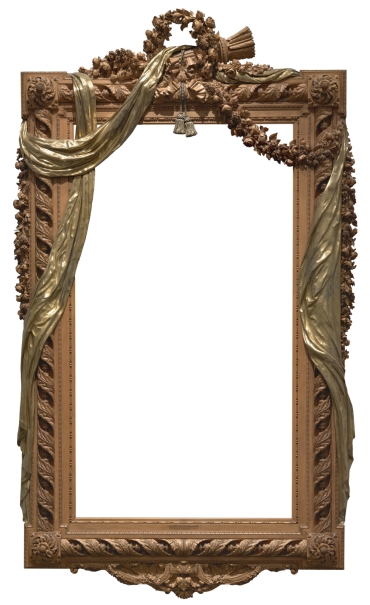
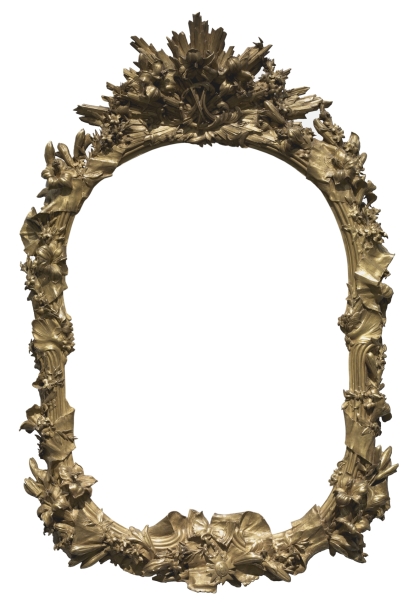
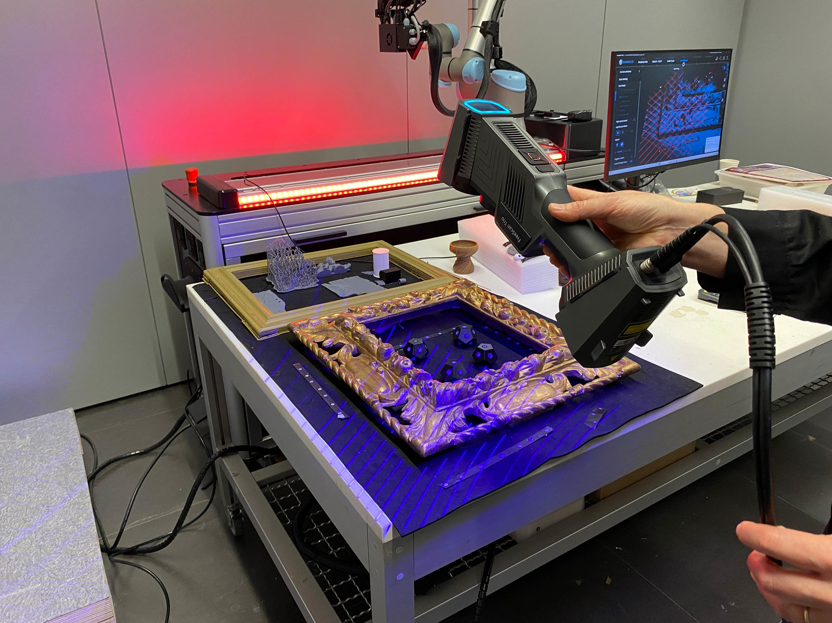
The Museo del Prado’s frame collection is closely linked to the history of the works it frames. On the one hand, it stems from the Royal Collection—the founding pieces of the institution—but also from later donations, bequests and acquisitions. The result is a large and heterogeneous group, both in styles and in artistic techniques.
It comprises around 8,000 pieces with artistic value in their own right, spanning the history of art from the 13th to the 21st centuries.
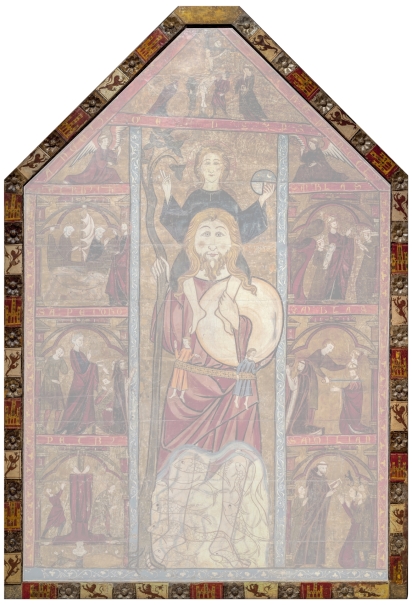
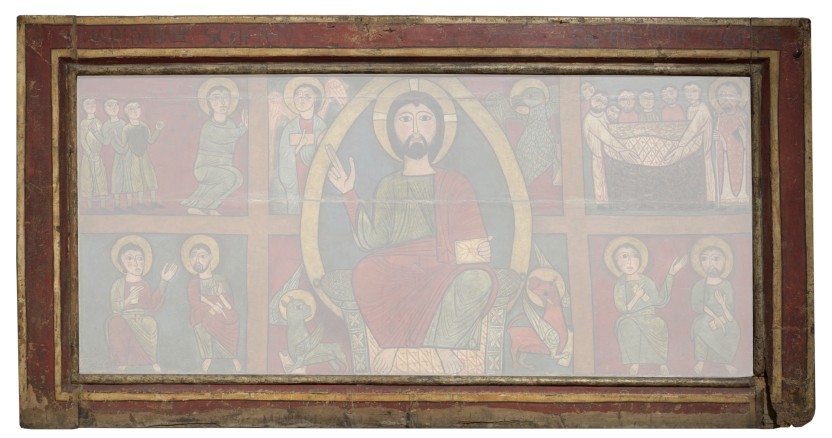
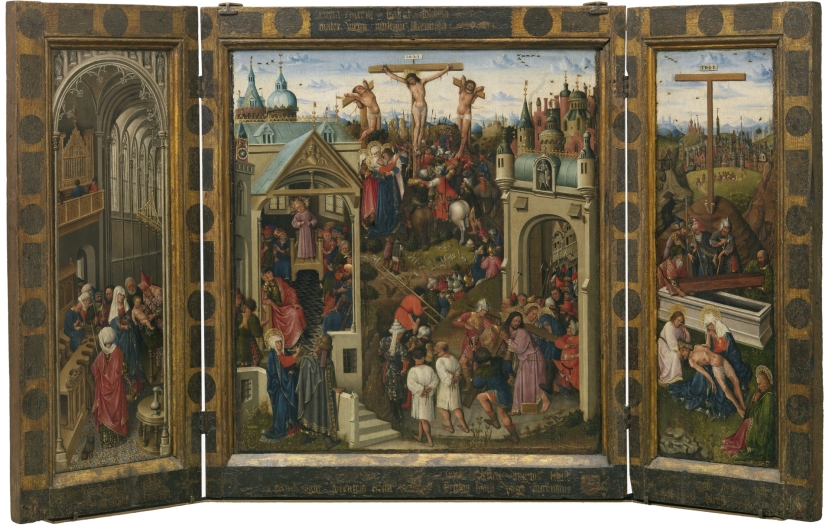
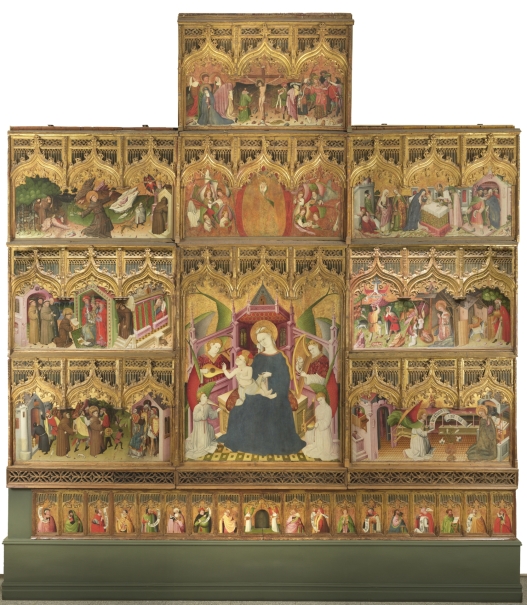
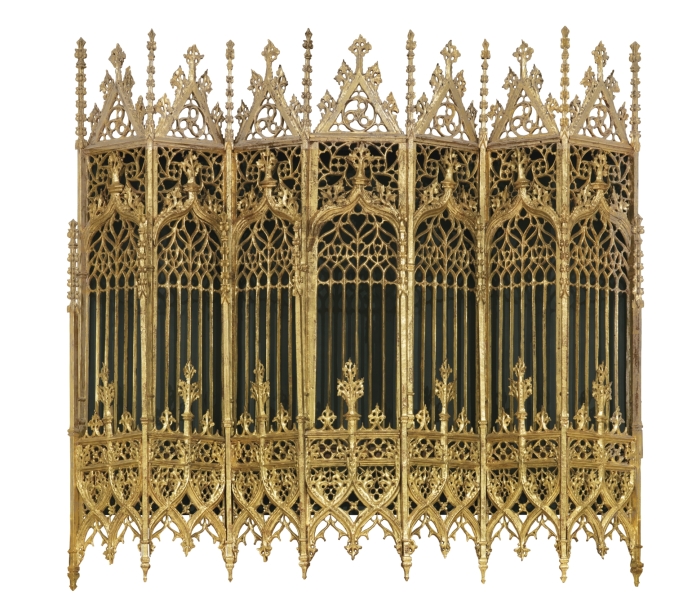
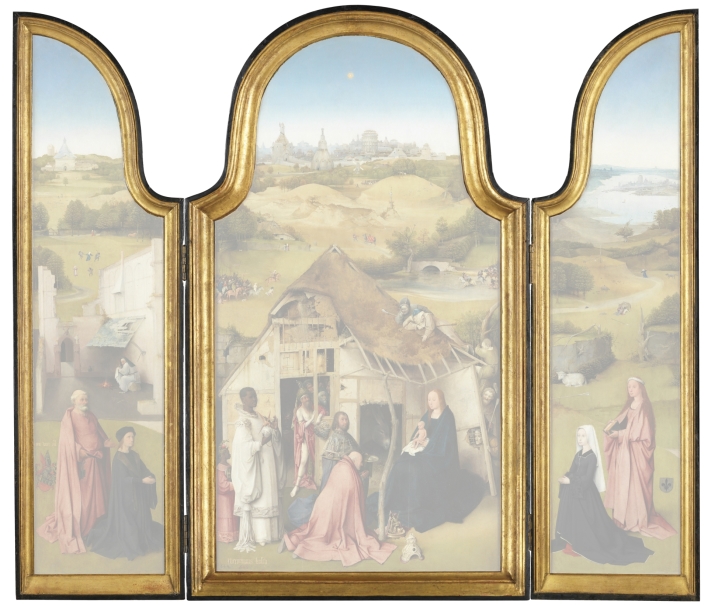
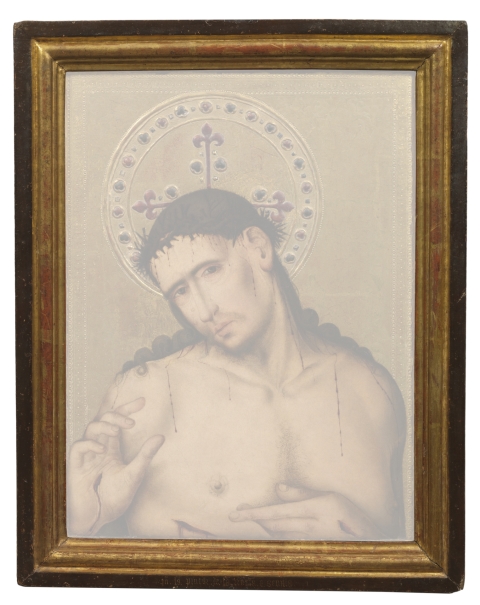
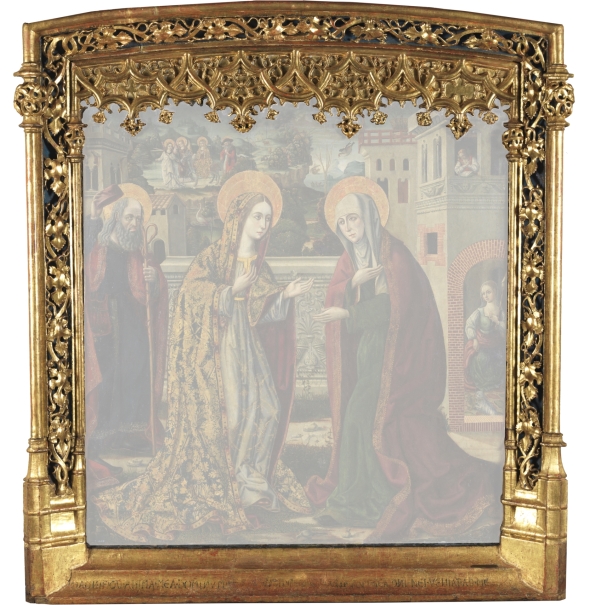
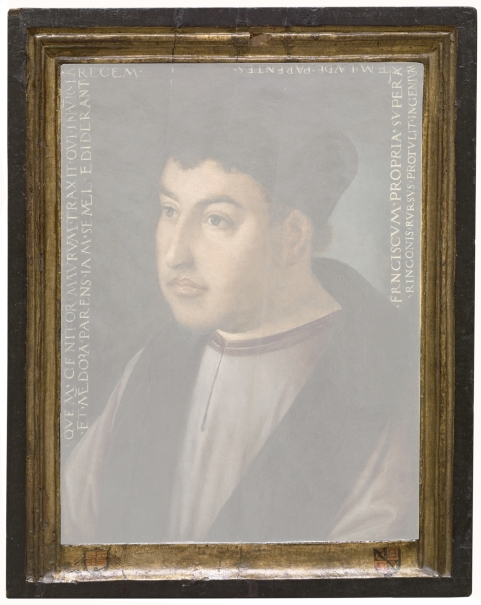
The medieval galleries house Romanesque frames, such as the Frontal of Guils, and Gothic frames belonging to altarpieces, complete or fragmentary, such as the magnificent Altarpiece of the Life of the Virgin and Saint Francis by Nicolás Francés, or the painting Saint Dominic of Silos Enthroned by Bartolomé Bermejo. Alongside them are small devotional works with fine gilded mouldings, generally decorated with epigraphic inscriptions or coats of arms, such as the Christ as the Man of Sorrows by Juan Sánchez de San Román. The diptychs and triptychs of Flemish painting, with harmonious narrow black-and-gold mouldings, can be clearly seen in the Bosch room, for example in The Adoration of the Magi. All of these are physically bound to their paintings, which makes them unique and singular within the Collection.
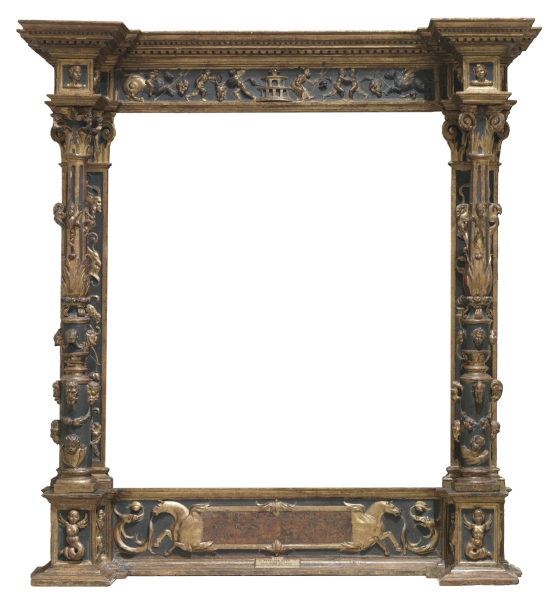
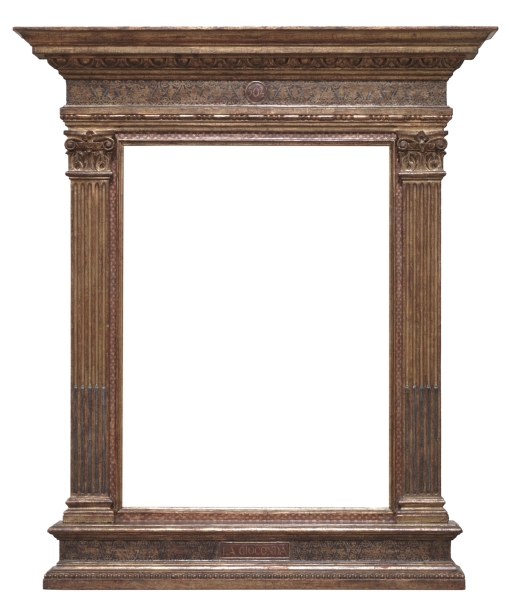
The Renaissance brought a physical and stylistic change in frames. They became independent pieces separate from the painting and gave rise to numerous moulded examples with strong Italian influence. This is the case of tabernacle frames such as The Descent from the Cross by Pedro Machuca, or cassetta frames such as the elegant setting of Caravaggio’s David with the Head of Goliath.
The 17th century is represented by a distinctly Spanish frame style, characterised by carved fleshy leaves at the centres and corners, which enhance volume and create focal points of perception. Good examples are the frames of El Greco’s The Fable and Murillo’s The Children of the Shell.
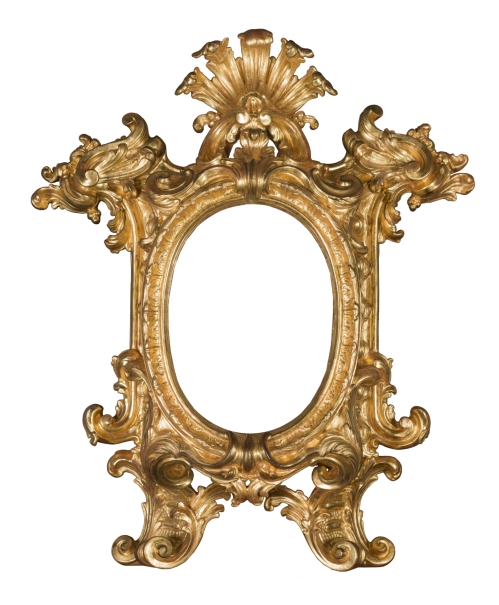
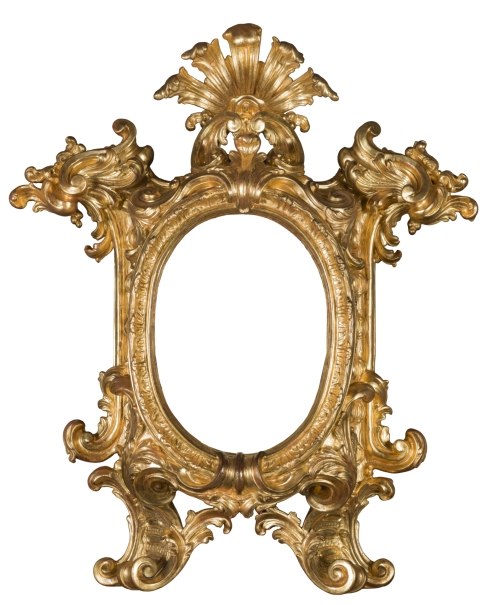
With the arrival of the 18th century, the change in taste becomes evident and serially produced frames were made to standardise the works. The kings’ collections filled with French taste through imposing frames such as that of Callet’s Portrait of Louis XVI, and with Italian-influenced frames interpreted in a local manner and represented under a single profile, the salvator rosa. The great Central Gallery displays many examples in works by Rubens, including Saint George Fighting the Dragon with Calleja models, or The Apostolate with Charles IV as Prince models. The 18th-century painting rooms are well represented with frames of the Mengs model, and Luis Meléndez’s still lifes with the Embarcadero model. Lastly, within this Royal Collection series is the Labrador model, used in many of Teniers’ singeries. Rococo appears in a number of examples of great technical interest, such as the frames of Filippo Scandellari’s wax busts.
The 19th century at the Museo del Prado encompasses diverse styles, such as Empire, Fernandine, Isabeline or Alfonsine. Goya’s The Family of Charles IV, Vicente López Portaña’s The Painter Francisco de Goya, and several paintings by Esquivel represent these typologies. During the second half of the century, the frames for history paintings—bulky and highly prominent—surround works by Carbonero, Rosales, Pradilla or Gisbert, among others. By contrast, frames for portraiture feature complex and delicate carving, with plays of glossy and matte finishes that create depth and light. A key example is Federico de Madrazo’s portrait of Josefa del Águila Ceballos, Marchioness of Espeja.
Some of them complement the iconography of the framed work, as in A Workers’ Strike in Biscay by Vicente Cutanda, or The Slave by Antonio María Fabrés y Costa. The remaining pieces found in the 19th-century galleries are characterised by an eclectic style in techniques and artistic materials. This can be seen in the frame of Raimundo de Madrazo’s portrait of Josefa Manzanedo e Intentas de Mitjans, 2nd Marchioness of Manzanedo.
At the end of the 19th century and the beginning of the 20th, programmes were undertaken to improve the framing of major works, with proposals from well-known framing workshops such as Casa Marquina at the end of the 19th century, with frames like that of Velázquez’s The Triumph of Bacchus or Titian’s Danaë Receiving the Golden Rain; and Casa Cano in the 20th century, with examples such as the frame of La Gioconda or that of Las Meninas.