Loading...
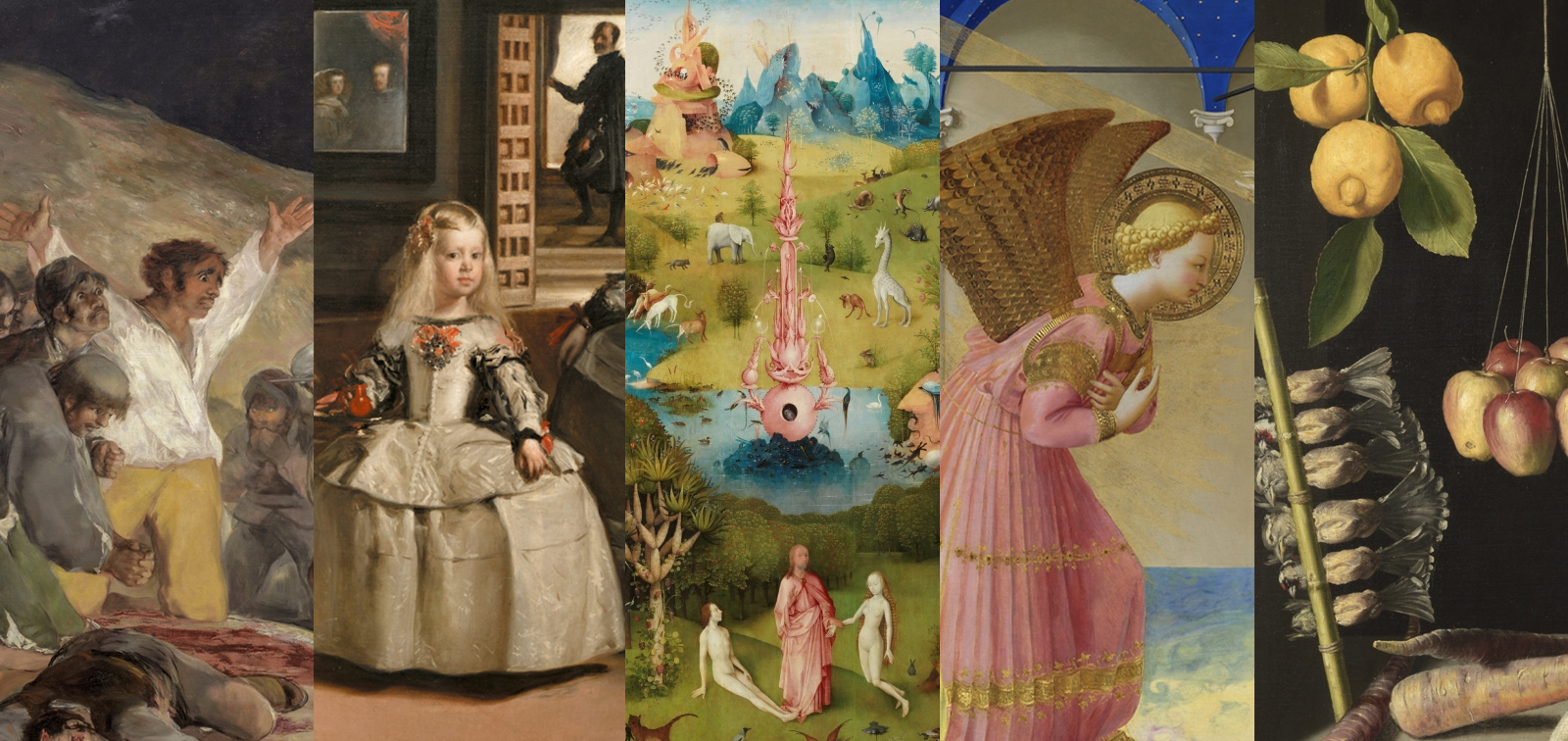
This tree‑hour itinerary includes a selection of 54 masterpieces from the Prado’s Collection, spanning different historical and artistic periods. The visit begins with The Crucifixion by Juan de Flandes, an example of early sixteenth‑century Flemish spirituality. It continues with The Nobleman with his Hand on his Chest, one of El Greco’s most celebrated portraits. The route then moves on to one of the Museum’s absolute icons: Las Meninas, where Velázquez devoted exceptional effort to creating a composition that is both complex and convincing. After this, works such as Jusepe de Ribera lo Spagnoletto’s Jacob’s Dream and Goya’s The 3rd of May 1808 in Madrid bring dramatic intensity and historical depth. The itinerary also highlights key pieces from the Renaissance and the Baroque, including Fra Angelico’s The Annunciation, Raphael’s The Cardinal, and Titian’s Emperor Charles V at Mühlberg. Equally notable are works of great symbolic power, such as Tiepolo’s The Immaculate Conception and the The Garden of Earthly Delights Triptych, Bosch’s most intricate and enigmatic creation. This brief itinerary offers an in‑depth look at some of the most significant works in the Museum’s permanent collection.
Composition featuring details from Goya’s The 3rd of May 1808 in Madrid, Velázquez’s Las Meninas, the Paradise of Bosch’s The Garden of Earthly Delights Triptych, Fra Angelico’s The Annunciation and em>Still Life with Game, Vegetables and Fruit's Juan Sánchez Cotán.
Collection
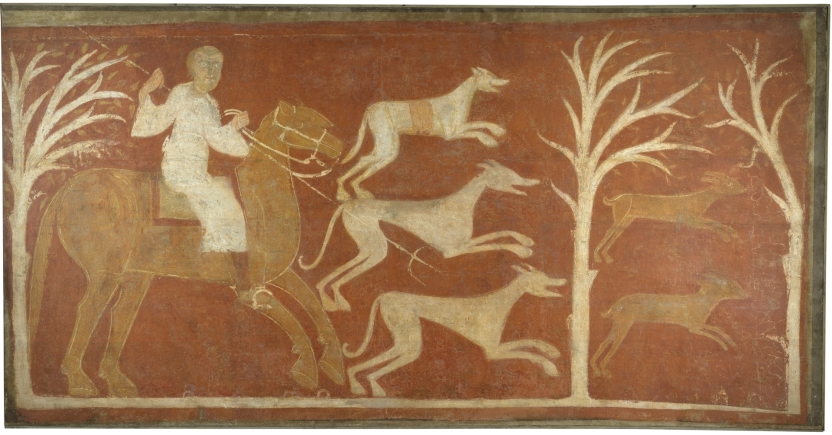

Hare Hunt, Hermitage of San Baudelio, Casillas de Berlanga (Soria)
Fresco painting on mural transferred to canvas.
Ca. 1125
Ca. 1125
In this Hare Hunt, the hunter, on horseback and with a trident in his hand, whips three dogs towards the hares –a symbol of concupiscence– to lead them to the trap he has set for them. It is part of a set of six paintings originally intended to decorate the walls of the 11th-century Mozarabic chapel of San Baudelio, whose interior architecture is evoked in the rooms of the Museum where they are exhibited.
These pieces were part of the twenty-three fragments removed from the building in 1926 and transferred to canvas to be taken to the United States, where they were distributed among the museums of Boston, Indianapolis, Cincinnati, and The Cloisters in New York.
Room 051C
Collection
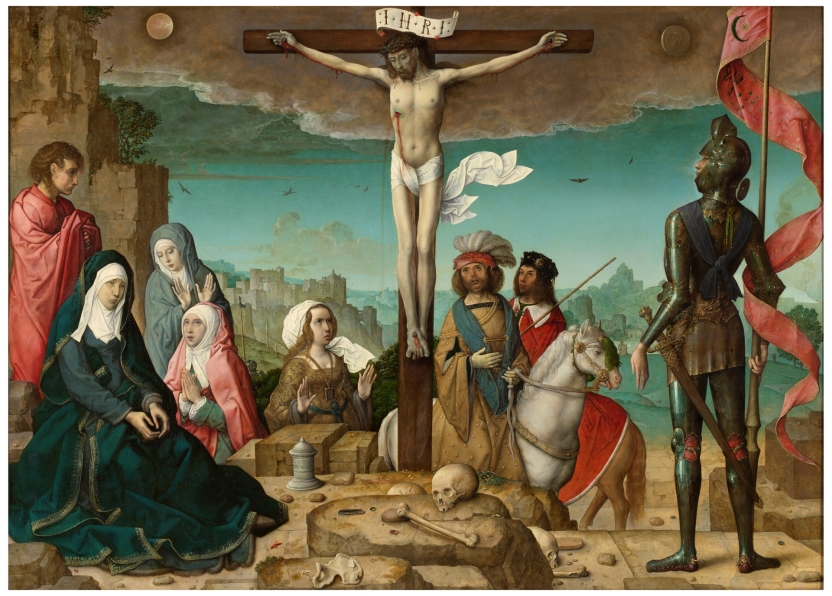

Documents at Palencia Cathedral cast light on this Crucifixion’s original location -the central row of the main altarpiece at that cathedral- and its author: Juan de Flandes (doc. 1496-1519). They also offer information about this panel between 1509, when that Flemish painter was commissioned to paint it, and 1944, when the Cathedral management sold it. Those same documents indicate that Palencia Cathedral’s current main altarpiece, which bears carvings and paintings, was commissioned by Bishop Diego de Deza (1443-1524) for what was then the main chapel and is now the Tabernacle chapel. At that time, it was not supposed to have any paintings, but instead, carvings by sculptor Felipe Bigarny (doc. 1498-1524) and architectural elements by Pedro de Guadalupe.
Room C
Collection
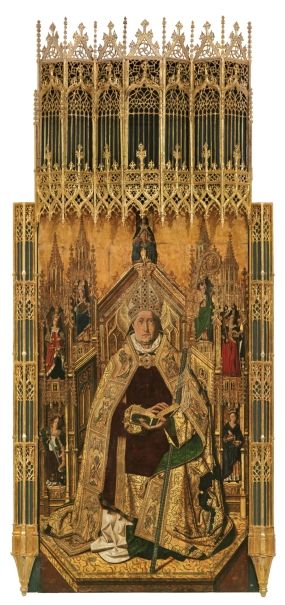

This iconic image was intended as the central panel of the church of Santo Domingo de Silos (Daroca). While the face and bodily posture are dominantly and hypnotically hieratic, the minute rendering of the rich episcopal vestments (pluvial cope, mitre, book and crozier) and the gilded microarchitecture of the monumental throne reflect a pictorial illusionism of Flemish inspiration. This surprising juxtaposition of fiction and realism is repeated in the confrontation between the painted architecture of the throne and the free-standing traceries and pinnacles of the altarpiece. Flanking the saint are some colourful female figures representing allegories of the theological and cardinal virtues.
Room 051A
Collection
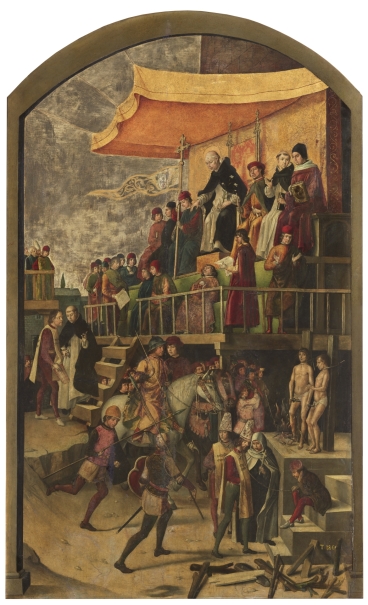

On a portable rostrum, Saint Dominic and six other judges preside over the auto-da-fe in which some Albigensian heretics are being judged, representing a well-known episode in his biography. Beside him, another figure holds the banner with the floral cross, an attribute of Saint Dominic. Some of the accused are already being burned, while two others, in the foreground, await their turn, wearing the "sanbenito" [a cloak worn by those condemned by the Inquisition] and cuirass with a sign reading: “condemned heretic”. In the background, still others await the judgment of Saint Dominic.
Room 057B
Collection
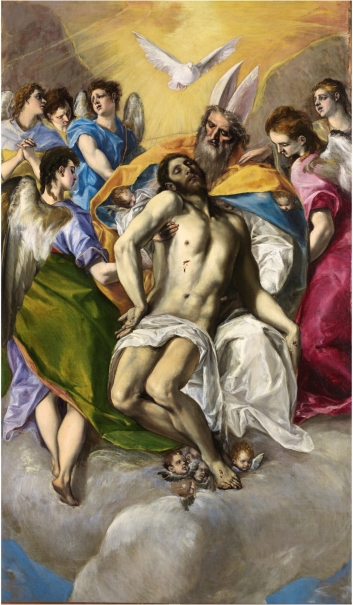

This work used to crown the main altarpiece of the convent of Santo Domingo el Antiguo (Toledo). It was the first commission El Greco received on his arrival in Spain, together with the Assumption of the Virgin on the lower floor (now in Chicago, Art Institute) and four smaller canvases: the full-length images of Saint John the Baptist and Saint John the Evangelist, and two long bust portraits of Saint Bernard (Saint Petersburg, State Hermitage Museum) and Saint Benedict (P000817). Above the Trinity was a Holy Face painted on wood (private collection). The Trinity had to be seen at a significant height, which partly explains the perspective, monumentality, and sculptural sense of the figures, typical of El Greco´s early period in Toledo.
Room 008B
Collection
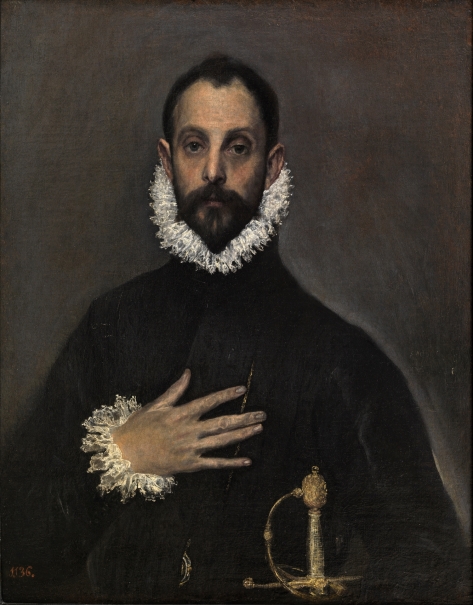
This bust-length portrait entered the royal collections as a donation by the widow of the Duke of Arco, gentlemanin- waiting, Equerry and Master of the Horse to Philip V. In his recreational estate at El Pardo, De Arco possessed a group of six portraits of gentlemen by El Greco whose provenance is now unknown.This group would come to constitute the principal holdings of portraits by the artist now in the Museo del Prado.The present canvas is one of the earliest works by El Greco painted in Spain, and the most distinctive of the six.
Room 008B
Collection
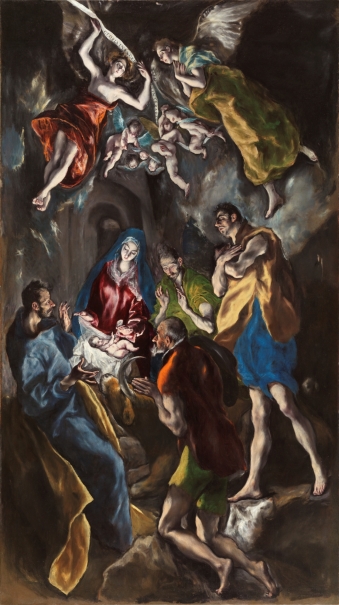

This night scene is set in a narrow, irregular space -a sort of grotto with a gabled opening in the back, consisting of two semi-circular arches. Mary holds her newborn Son, naked on her lap, while Saint Joseph and three shepherds surround them, expressing their fervent devotion to the child. A kneeling ox also contemplates the baby. The compositional ellipse is closed at the top by a group of angels very close to the holy family. They express Heaven’s pleasure at the birth of the Redeemer, bearing a banner that reads GLORIA IN EXCEL[SIS DEO E]T IN TERRA PAX [HOMINIBUS].
Room 009B
Collection
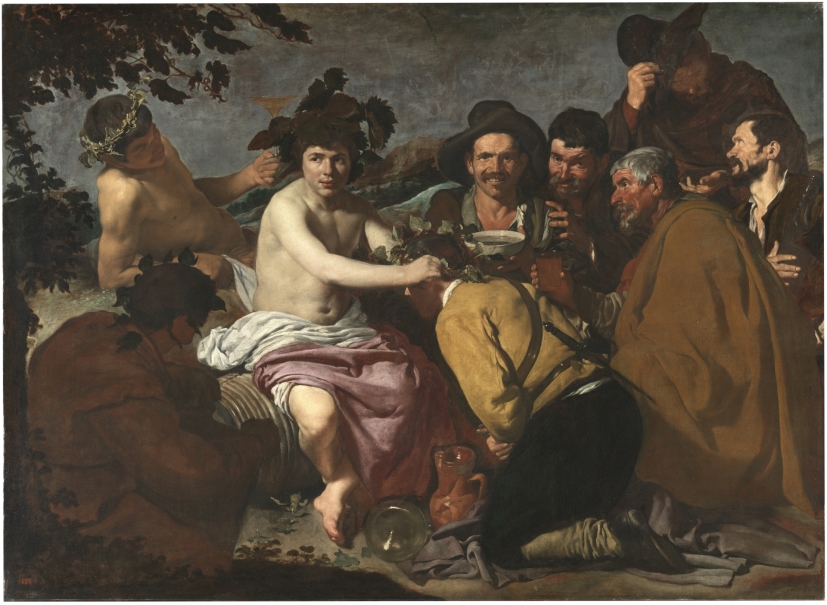

Documentation of payment received by Velázquez in July 1629 for an image of Bacchus painted at the king`s behest informs us of the work`s approximate date and identifies its intended recipient. This was shortly before the artist`s first visit to Italy, barely five years after he began working for the king and at a time when he had just met Rubens. During this period, he was specialized in portraiture, although he had recently completed a renowned history painting -The Expulsion of the Moors- and had considerable experience with religious and costumbrista scenes.
Room 010
Collection
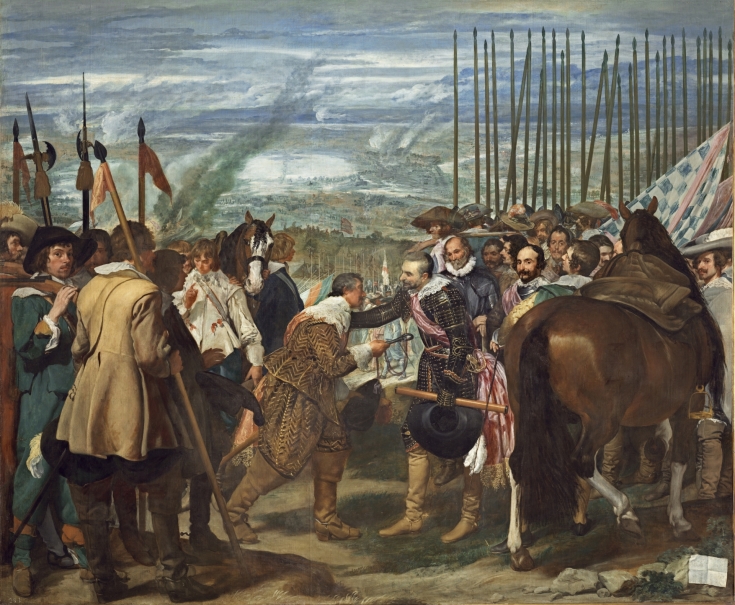

On June 5, 1625 the Dutch governor of Breda, Justinus van Nassau, surrendered the keys of that city to Ambrosio Spínola, the Genoese general commanding the Spanish tercios (a group of soldiers that included pikemen, swordsmen and musketeers) of Flanders. Breda`s extraordinary strategic importance made it one of the most disputed cities in the Spanish monarchy`s prolonged war against the United Provinces of the North. Its conquest after a lengthy siege was considered a military accomplishment of the first order, generating a plethora of texts and images intended to exalt the winners.
Room 009A
Collection
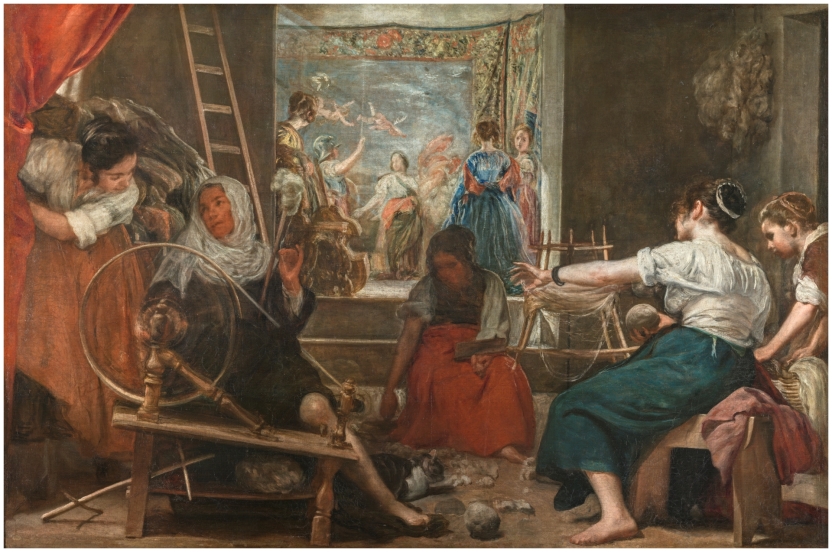

This painting is the result of two acts carried out in different periods. First, Velázquez painted the surface occupied by the figures and the tapestry in the background. Later, in the 18th century, a wide strip (with the arch and oculus) was added to the top, along with narrower ones on the left, right and bottom (these additions are not visible in the current presentation of this work). Those alterations affected the reading of the work`s content, making what occurs in front of the tapestry appear farther away. Consequently, viewers have long seen it as a representation of an everyday scene in a tapestry workshop, with spinning activities represented by Velázquez in the foreground and ladies standing before a tapestry in the background.
Room 015A
Collection
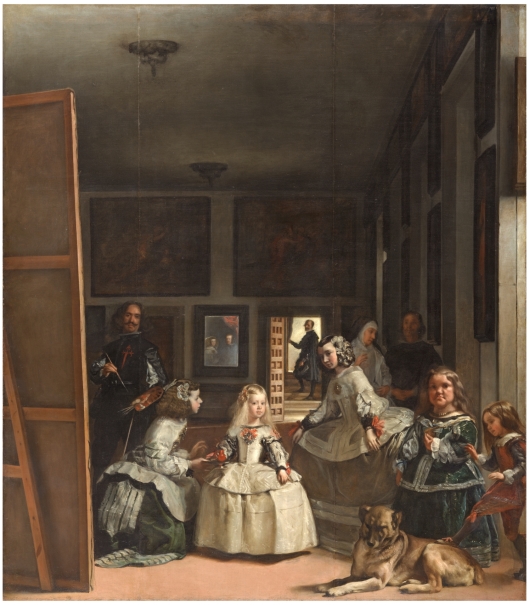

This is one of Velázquez`s largest paintings and among those in which he made most effort to create a complex and credible composition that would convey a sense of life and reality while enclosing a dense network of meanings. The artist achieved his intentions and Las Meninas became the only work to which the writer on art Antonio Palomino devoted a separate section in his history of Spanish painters of 1724, entitling it In which the most illustrious work by Don Diego Velázquez is described. Since then the painting has never lost its status as a masterpiece.
Room 012
Collection
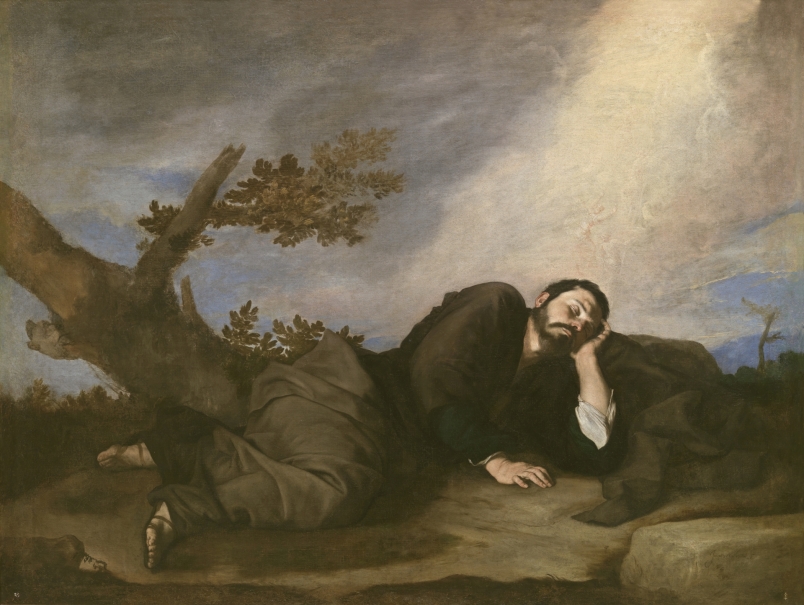

This painting tells of Jacob the Patriarch´s mysterious dream, as told in Genesis. He appears asleep, lying on his left shoulder with a tree behind him. On the other side is the ladder of light, by which the angels ascend and descend. This subject demonstrates Ribera´s skill at constructing metaphoric discourse. He uses the image of a shepherd resting in the countryside to describe one of the best-known Bible stories. The foreground view of the solidly constructed figure and the scene´s realistic features bring realism to the miraculous dream described in a ray of light under a blue and gray sky.
Room 009
Collection
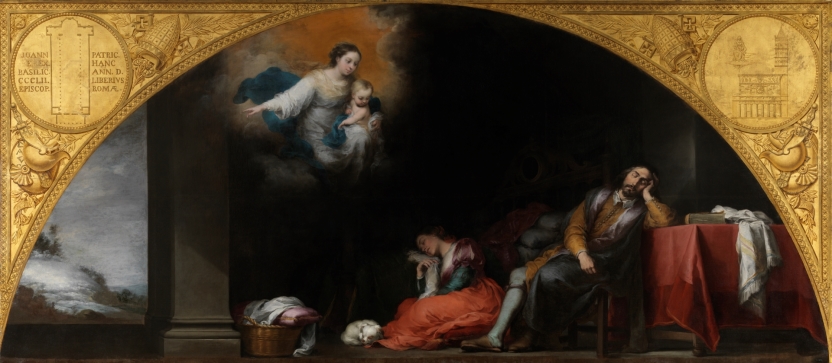

This painting and its companion, The Patrician Reveals his Dream to the Pope (P995), are among Murillo’s most renowned works. The two arched works were intended to hang beneath a small dome in the recently remodeled Sevillian church of Santa María la Blanca in 1665, and they narrate the story of the founding of the Roman basilica of Santa Maria Maggiore as succinctly set out in the Roman Breviary’s information about the feast of Sancta Mariae ad Nives, held on August 5 (lectio 5, 6 and 7).
Room 016
Collection
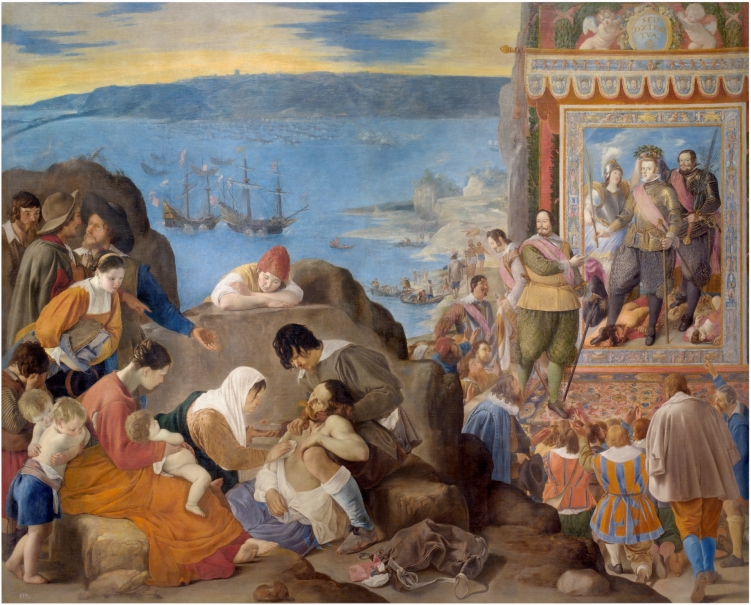
The Recapture of Bahía de Todos los Santos was commissioned from Maíno towards the end of 1634. The artist was still working on it on 24 March 1635, date on which he received the first 18,600 maravedíes on account, corresponding to an order of payment from the Chief Notary of the Council of Aragon, Jerónimo de Villanueva (died 1653). Maíno completed the painting and delivered it on 16 June 1635, when he received the 200 ducats at which it was valued, money that came from the private expenditure of Philip IV. The canvas was intended to decorate the Hall of Realms in the Palacio del Buen Retiro, together with a further eleven works that were commissioned from various painters to commemorate the land and naval victories of the Spanish forces during the first part of the Thirty Years War, from 1621 to 1630.
Room 009A
Collection
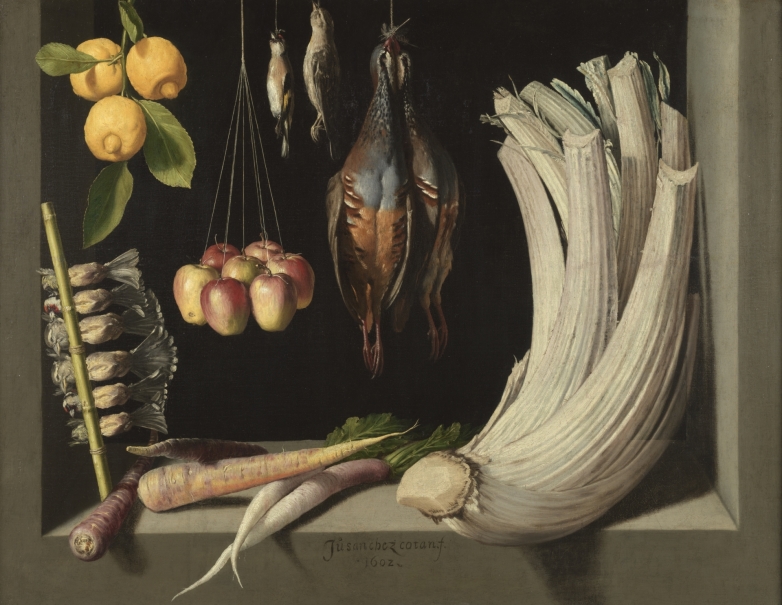

Although Juan Sánchez Cotán pursued different genres of painting, portraits, and religious compositions, his main contribution to Spanish painting was the establishment of the still life, considered the most characteristically Spanish genre. However, such a statement is extremely reductive and does not take into account the variety of possibilities realised in this genre in Spain. Sobriety, intimacy, magical purity, mysterious intensity, elegance in simplicity or symbolic humility are the characteristics that have been used to describe the Spanish still life of the early 17th century. It is known that Sánchez Cotán was a disciple of Blas de Prado, once a distinguished painter, particularly well-known for his still lives.
Room 008A
Collection
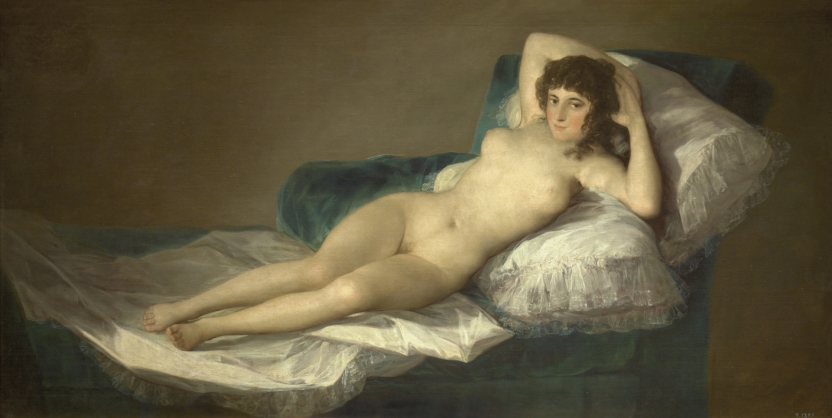

This painting follows the traditional typology of the goddess Venus reclining on a bed. The first mention of this work dates from November 1800, in the description of Godoy´s palace by the engraver Pedro González de Sepúlveda, during the visit he made alongside Juan Agustín Ceán Bermúdez and the architect Pedro de Arnal. It was hung in an ‘interior cabinet’ with other Venuses, although he did not think highly of this work in his Diary: ‘A naked [Venus] by Goya but without drawing and dull in the colouring’. It presence in Godoy´s palace also seems to be documented in one of the Ajipedobes – savage early 19th-century caricatures of Godoy, the Prince of Peace– in which this painting appears as a decoration on the door of his working cabinet.
Room 038
Collection
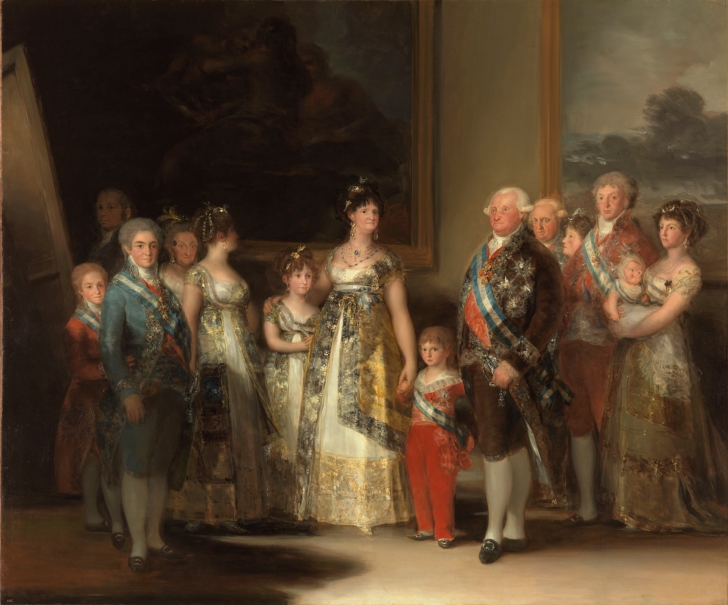

This portrait of the family of King Carlos IV (1748-1819) was painted in Aranjuez and Madrid in the spring and summer of 1800, shortly after Goya was named First Chamber Painter. It clearly show´s the artist´s mastery at individualizing characters. The forerunners to this complex composition are Louis-Michel van Loo´s Portrait of Felipe V and his Family (P02283) and Velázquez´s Las Meninas (P01174), both of which are in the Prado Museum Collection. The scene is presided over by Queen María Luisa de Parma (1751-1818) and King Carlos IV, at the center. Beside them are their children, the infante Francisco de Paula (1794-1865) and the infanta María Isabel (1789-1848).
Room 032
Collection
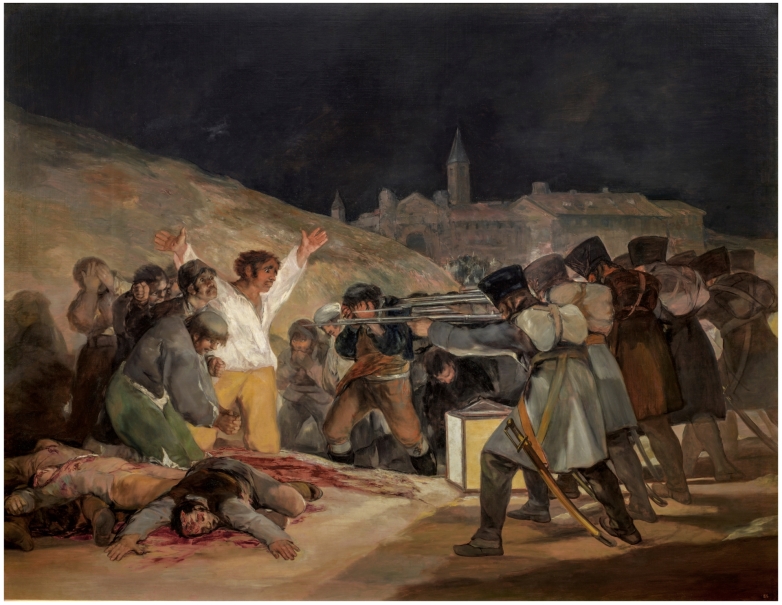

In the December of 1813, King Ferdinand VII’s return to Spain and his entry into Madrid were announced in by the Treaty of Valençay, which that year ended the Peninsular War Fernando who had been a prisoner of Napoleon in France since his own abdication in 1808, the absent king commenced his return to Spain in February of 1814, his pledge to the 1812 Constitution being the condition of his restoration to the throne. His arrival in Madrid would coincide with the first commemoration of the uprising of the people of the city against the occupying French on the 2nd of May 1808.
Room 064
Collection
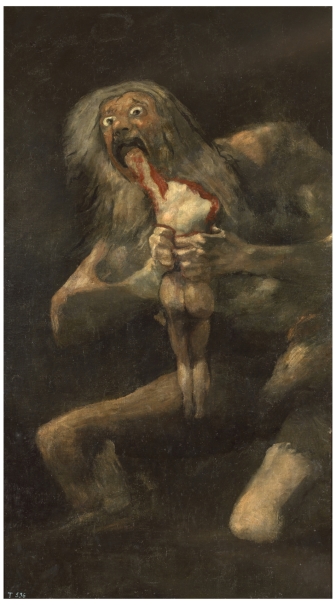

The mural paintings that decorated the house known as “la Quinta del Sordo,” where Goya lived have come to be known as the Black Paintings, because he used so many dark pigments and blacks in them, and also because of their somber subject matter. The private and intimate character of that house allowed the artist to express himself with great liberty. He painted directly on the walls in what must have been mixed technique, as chemical analysis reveals the use of oils in these works. The Baron Émile d´Erlanger acquired “la Quinta” in 1873 and had the paintings transferred to canvas. The works suffered enormously in the process, losing a large amount of paint. Finally, the Baron donated these paintings to the State, and they were sent to the Prado Museum, where they have been on view since 1889.
Room 067
Collection
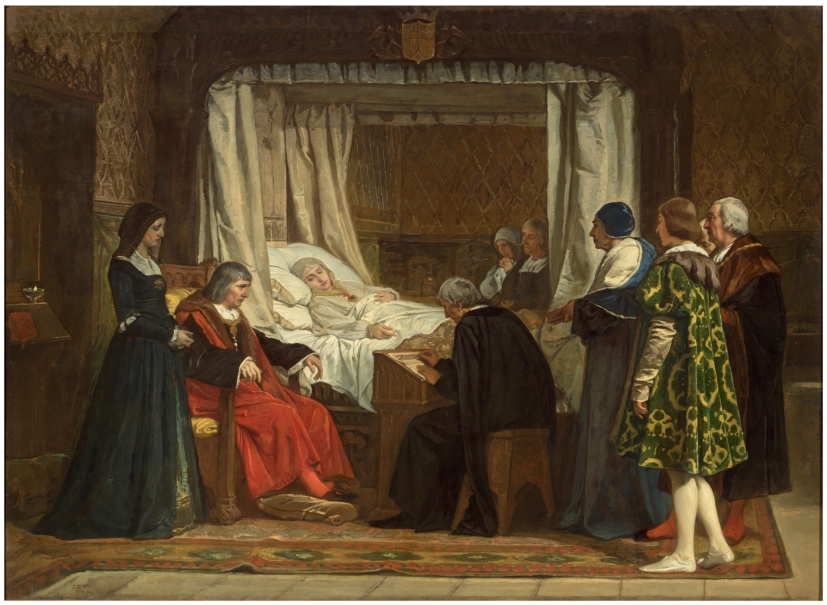

This is a masterpiece of the 19th-century history painting that paved the way for the crucial transformation of this genre in Spain. The acclaimed work was submitted by Rosales to the National Exhibition of 1868, where he was awarded the first medal, thus gaining recognition in official artistic circles and causing a great upheaval among the Spanish painters of his generation.
The dying Queen Isabella (1451-1504) is portrayed lying on her bed, which is covered with a canopy and adorned with the coat of arms of Castile, in the dimly lit royal bedchamber of the Castillo de la Mota.
Room 061B
Collection
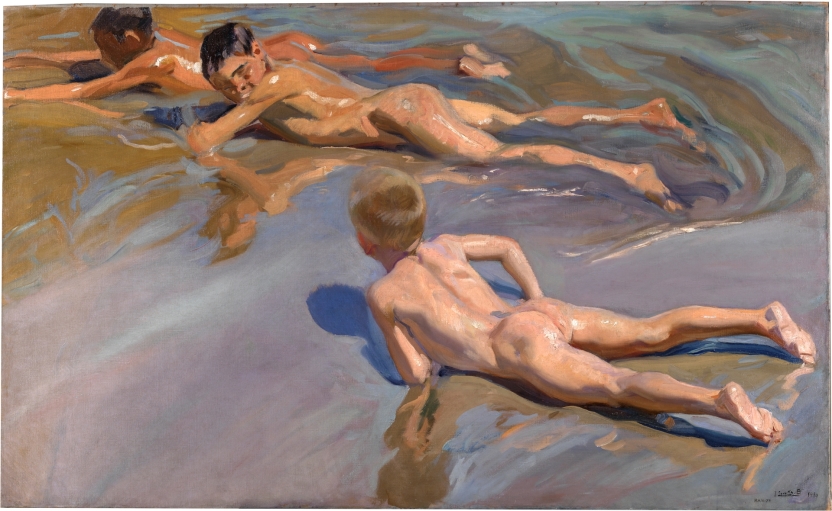

The series of paintings featuring the ‘children in the water’ motif culminates in this work, in which nude boys play a greater part in the composition than in other pictures by Sorolla. While it is signed in 1910 and this chronology has been followed by almost everyone, the artist must have painted it in the summer of 1909, as the image was already reproduced in a book by Rafael Doménech the colophon of which states that it was printed on 19 December 1909. The work would thus coincide with Sorolla’s long and fruitful three-month stay in Valencia between late June and late September. During those months he painted various masterworks, including The Horse’s Bath.
Room 060A
Collection


This altarpiece was painted for the monastery of Santo Domenico in Fiesole, near Florence. The central panel shows the Archangel Gabriel’s Annunciation to Mary under a portico. On the left, Adam and Eve are being expelled from Paradise. The damnation and salvation of Humanity. The predella has scenes from the life of the Virgin; Mary’s Birth, Her Wedding with Saint Joseph, Mary’s Visit to her cousin Saint Elisabeth, the Birth of the Christ Child, the Presentation of Jesus in the Temple and the Dormition of the Virgin with Christ receiving her soul. Fra Angelico, also known as Blessed Angelico, dedicated his work exclusively to religious subjects as he understood art to be an aspect of religious devotion.
Room 056B
Collection
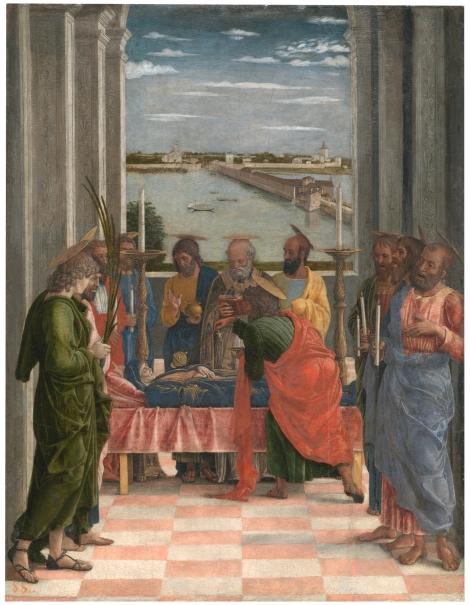
Andrea Mantegna, one of the great figures of the Quattrocento, trained in Padua with the painter and antiquarian Francesco Squarzione, who instilled an interest in antiquity in the young Mantegna subsequently strengthened by his contact with the humanists of the University of Padua. This fascination for classical art –which was unparalleled amongst his peers–, his knowledge of Donatello´s work in Padua and his connexion with Venetian painting (in 1453, he married Jacopo Bellini´s daughter) encompasses Mantegna´s training and early professional career. In 1459, Mantegna left Padua and moved to Mantua, where he remained until his death under the service of the Gonzaga family.
Room 056B
Collection
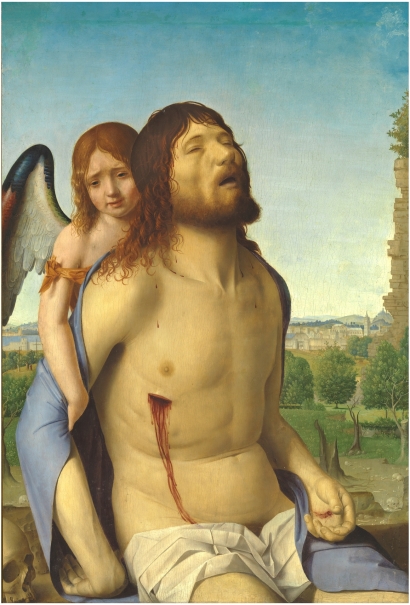

Antonello da Messina was trained in Naples, the Italian city where the influence of Flemish painting was greatest. He later worked in Sicily and mainland Italy. In 1475, he travelled to Venice. Although he painted this work after returning to Messina –the city visible in the background– it would have been inconceivable without the Venetian painter Giovanni Bellini, whose versions of the Pietà provided Antonello with a compositional (Christ in the foreground) and iconographic (the inclusion of angels) reference point. Antonello’s highly virtuosic work combines meticulous brushstrokes of Nordic origin –perceptible in the landscape and Christ’s hair– with excellent treatment of the anatomy and care towards the volume and perspective which are clearly southern in origin.
Room 058
Collection
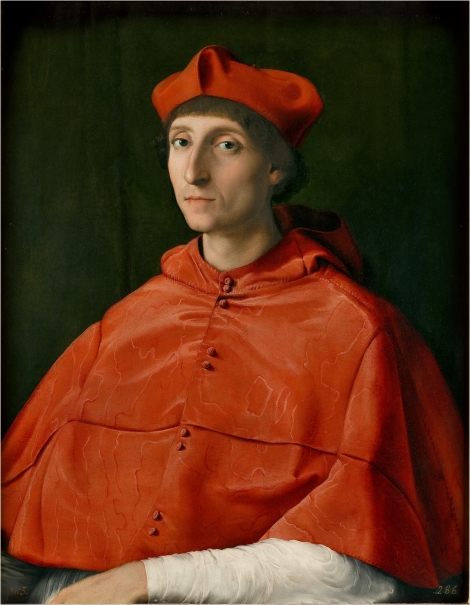

Since the moment when it was decided that the present work is by Raphael but that the sitter is not Antonio Granvela, art historians have expended considerable efforts on identifying the sitter.The most credible candidates would seem to be Cardinal Bendinello Suardi (painted by Del Piombo,Washington, National Gallery of Art), and even more probably Cardinal Giovanni Alidosi (depicted on a medal and also in the Disputa in the Stanza della Segnatura), due to the latter’s clear resemblance to the present sitter. However, neither can be clearly identified with the features of this cardinal. Aside from the high quality of the execution, the most striking aspect of this portrait is Raphael’s astonishing natural perceptiveness which results in the definitive and universal image of a Renaissance cardinal.
Room 049
Collection
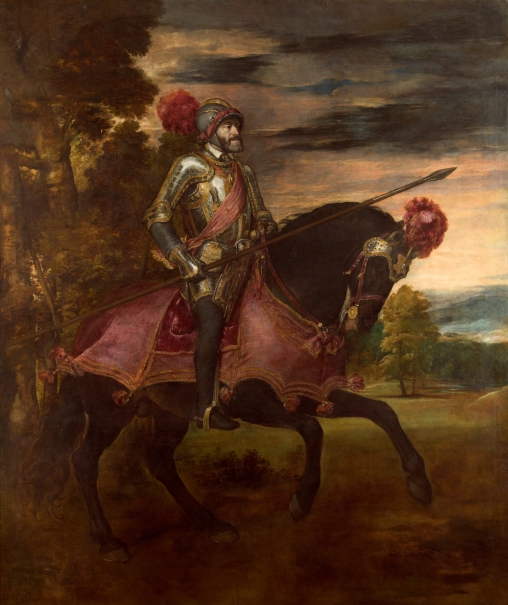

This portrait commemorates Charles V’s victory over the Schmalkaldic League at Mühlberg on 24 April 1547. The Emperor is equipped in the manner of the light cavalry with a half pike and wheel-lock pistol. His suit of armour was made around 1545 by Desiderius Helmschmid and has an image of the Virgin and Child on the breastplate, as was customary with Charles’ armour from 1531. Panofsky pointed to the combination of two non-exclusive concepts to be found in this image, which depicts Charles as the heir to the Roman tradition and also as the incarnation of the miles christianus, as he was described by Erasmus in the Enchiridion (1503).
Room 027
Collection
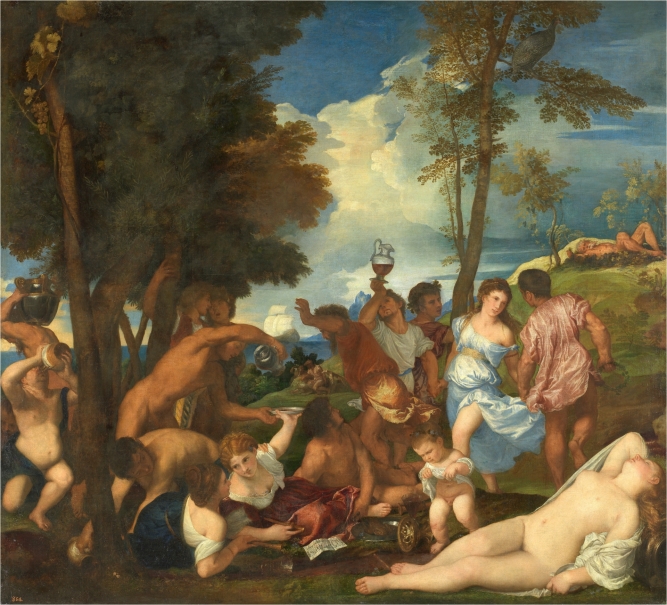

Having delivered the Bacchus and Ariadne in 1523 Titian then painted The Andrians, also inspired by Philostratus (Imagines I, 25). The scene is set on the island of Andros, a place so favoured by Bacchus that a stream flows with wine. Gods, men and children unite in the celebration of the effects of wine, whose consumption, in Philostratus´ words, makes men rich, dominant, generous to their friends, handsome and four cubits high. The musical score in the foreground is related to this concept: the canon Chi boyt et ne reboyt il ne seet que boyre soit (who drinks and does not drink again does not know what drinking is), is attributed to Adriaen Willaert (about 1480-1567), a Flemish musician in the service of the Ferrarese court.
Room 042
Collection
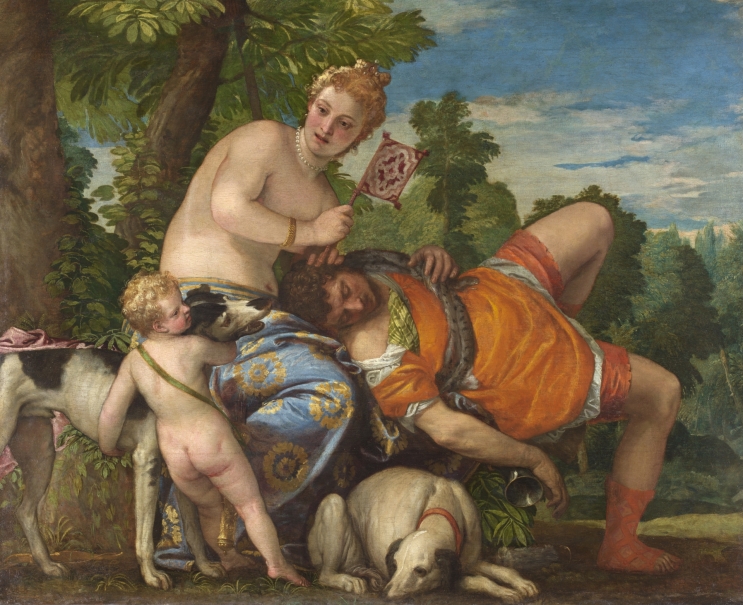

Like its pair, Cephalus and Procris (Strasbourg Museum, inv. 634, oil on canvas, 162 x 185 cm), this canvas illustrates a passage from the Metamorphoses by the Roman poet Ovid. Both stories involve love cut short by death, in this case that of Adonis. Veronese conveys the grief of Venus, goddess of love, as she presages the death of her lover at the hunt. Painted after a period in Rome, Veronese used the Hellenistic sculpture The Boy with the Goose for the figure of Cupid, while Adonis recalls the Endymion figure on a Roman sarcophagus in San Giovanni Laterano.
Room 026
Collection
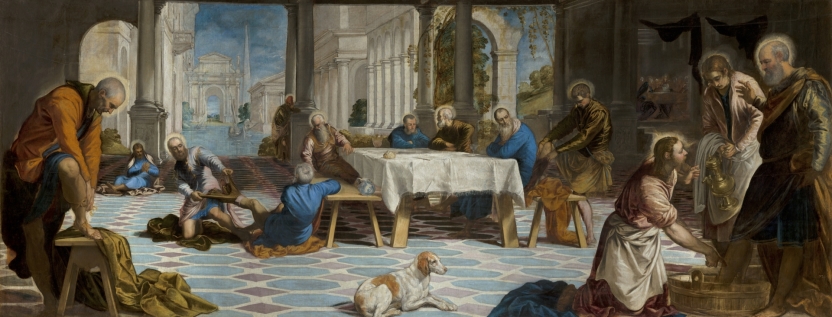

This scene from the New Testament (John 13, 1-20) shows the moment just before the Last Supper, when Jesus washed Saint Peter´s feet as an example of humility and service to others. The displacement of the main characters, Christ and Saint Peter, to one end of the composition is due to the original location of this work on the right wall of the presbytery of San Marcuola, where the image of Christ washing Saint Peter´s feet was on the part of the canvas closest to the congregation. When seen from the right, the painting is extraordinarily coherent.
Room 025
Collection
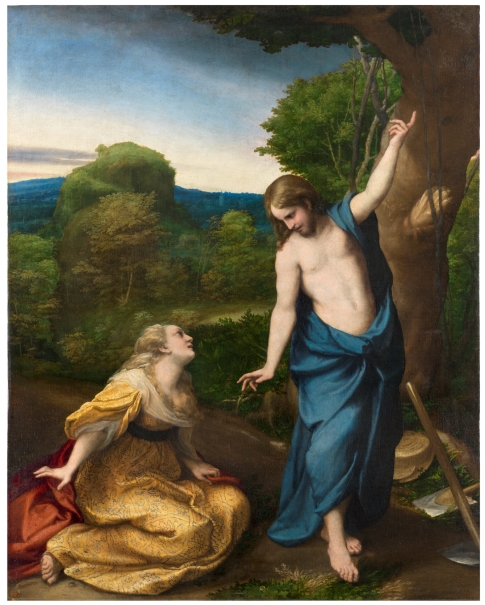
Antonio Correggio’s stay in Rome between 1518 and 1519 powerfully affected his late work, which reflects that of late Raphael and the Michelangelo of the Sistine Chapel. Without ever abandoning Andrea Mantegna, and especially Leonardo, Correggio drew on those influences to shape his personal and decisive contribution to the classical style. After returning to his native Parma in 1520 he focused on frescoes and large altarpieces, painting few religious works for private use.
Noli me tangere, c.1525, constitutes one of Correggio’s first mature paintings. It was first mentioned in print in Pietro Lamo’s Graticola di Bologna, c.1560, after the author saw it at the Hercolani house in Bologna.
Room 049
Collection
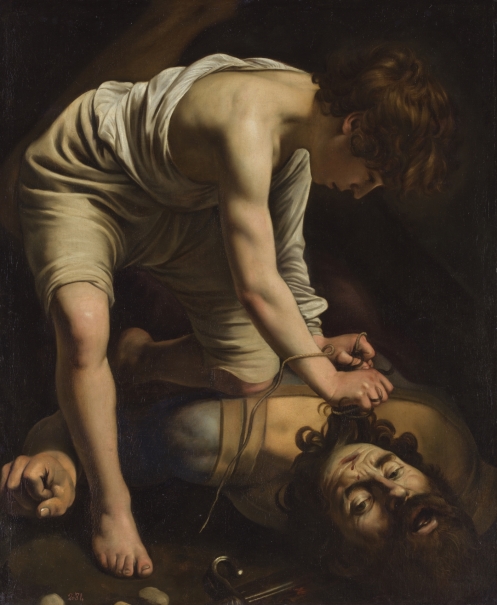

Compared with the many other treatments of this well-known biblical episode, the scene depicted in the Prado picture is somewhat unusual. It captures the moment when the young David, having felled the giant Goliath by striking him on the forehead with a stone hurled from his sling, “ran and stood upon the Philistine, and took his sword, and drew it out of the sheath thereof, and slew him, and cut off his head therewith. … And David took the head of the Philistine, and brought it to Jerusalem” (1 Samuel 17:51 and 54).
Room 007A
Collection
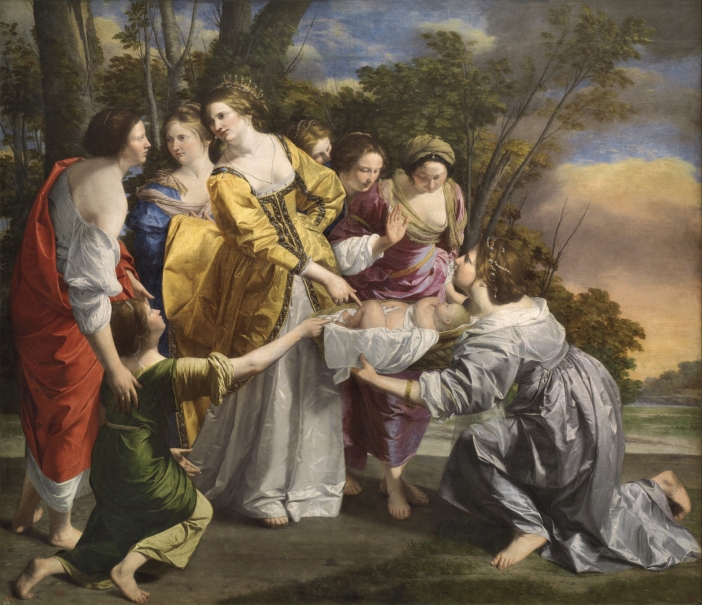
Painted in London when the artist was nearly seventy years old, Moses Rescued from the Nile is undoubtedly the finest work from Orazio Gentileschi’s final period. Exquisitely refined and subtle in its emotions, it was conceived to please that most informed and demanding connoisseur of painting, King Philip IV of Spain. The artist sent it to him as a gift in the summer of 1633, and his son Francesco delivered it to him personally in Madrid. In October of that same year, English ambassador Arthur Hopton wrote that the monarch had been pleased by it and had ordered it to be hung at the Salón Nuevo in Madrid’s Alcázar Palace, alongside some of the finest paintings in the Royal Collection.
Room 026
Collection
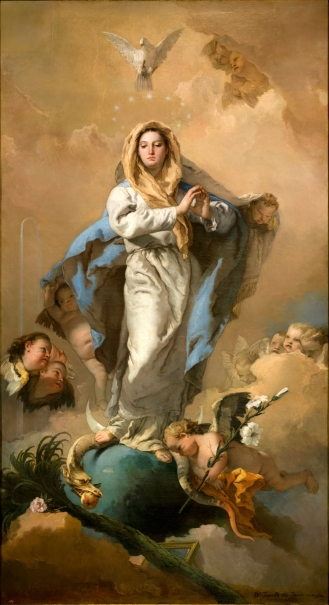

This majestic image was part of a cycle of seven altarpieces commissioned in 1767 for the new royal church of San Pascual Bailón at Aranjuez, founded by Charles III in the same year. The altarpieces comprised the entire pictorial decoration of this Alcantarine Franciscan church, which was built in an austere classical style. The subjects of the altarpieces reflected some of the most important devotional practices of the Franciscan Order: devotion to the Eucharist, to the Christ Child and to the purity of the Virgin Mary.
Room 023
Collection
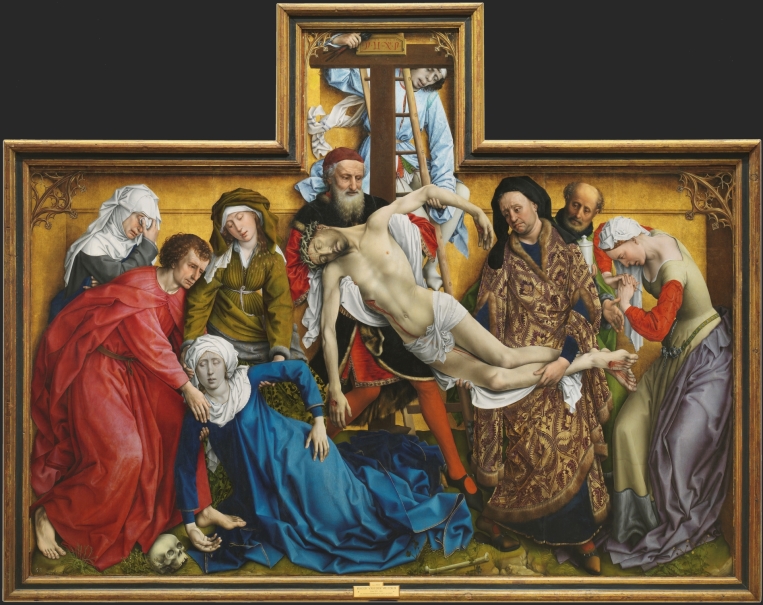
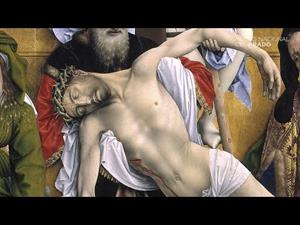
The painting represents an altarpiece of carved polychrome figures with the iconography of the deposition of Christ from the cross. The shape of the support with its projecting upper part and figures set inside a box with a gold background and sides, as well as the painted tracery in the corners, make it a depiction of a characteristic fifteenth-century sculpted altarpiece shrine.
There are accounts of Christ’s descent from the cross in the gospels. According to these texts, after Jesus died on the cross – in the exact spot where tradition had it that Adam was buried, as indicated by the skull and thighbone in the foreground – his body was lowered by his followers and interred in the tomb that a rich Jewish merchant, Joseph of Arimathea, had reserved for himself.
Room 058
Collection
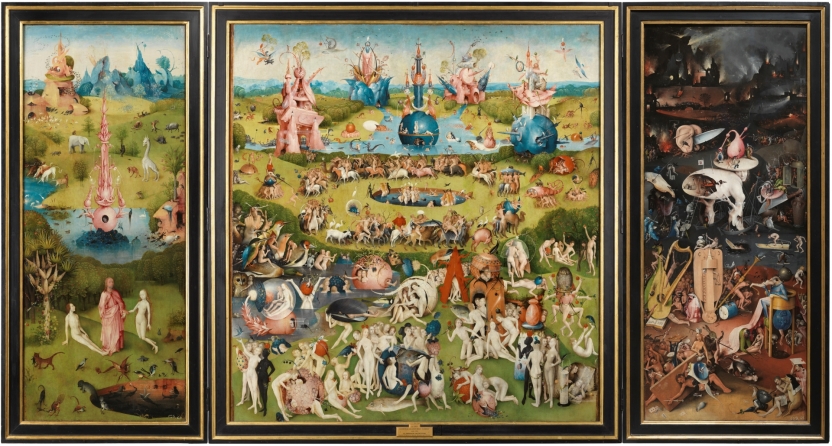

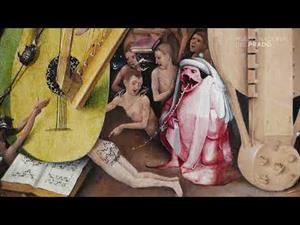
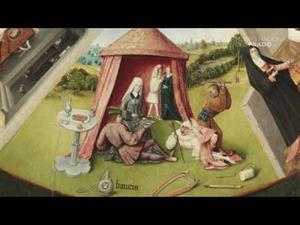
The Garden of Earthly Delights is Bosch’s most complex and enigmatic creation. For Falkenburg the overall theme of The Garden of Earthly Delights is the fate of humanity, as in The Haywain (P02052), although Bosch visualizes this concept very differently and in a much more explicit manner in the centre panel of that triptych than in The Garden of Earthly Delights. In order to analyse the work’s meaning the content of each panel must be identified. On the outer faces of the triptych Bosch depicted in grisaille the Third Day of the Creation of the World, when the waters were separated from the earth and the earthly Paradise (Eden) created.
Room 056A
Collection
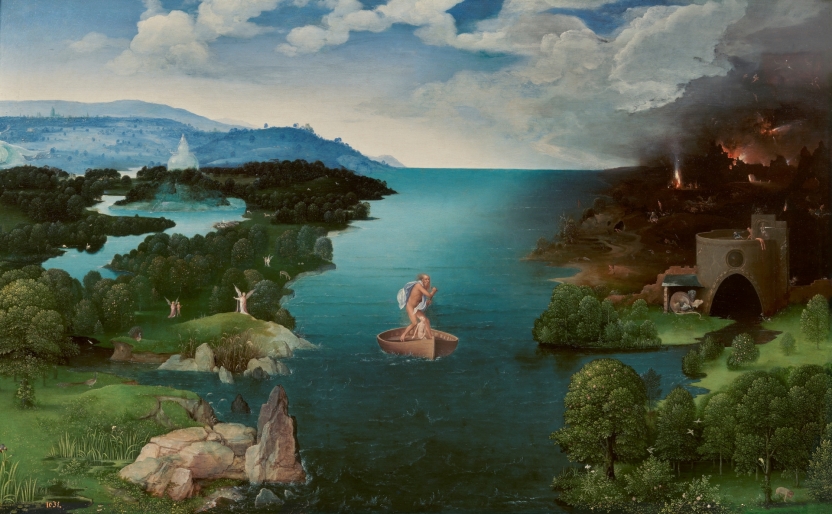

In addition to the originality of its subject, this painting by Patinir is also remarkable for its unusual composition within Patinir`s oeuvre. The artist has divided the space vertically into three zones, one on either side and the third occupied by the broad river in the centre, on whose opaque and mirror-like surface Charon steers his boat. For the iconography of this subject, Patinir draws together biblical images and classical sources. An angel on the promontory, another two accompanying the souls not far away, and a few more with other tiny souls in the background allow us to recognize the paradise on the left as a Christian heaven, not the Elysean Fields.
Room 055A
Collection
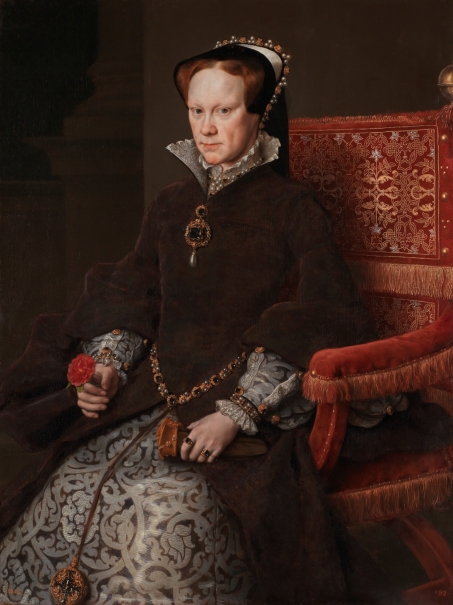

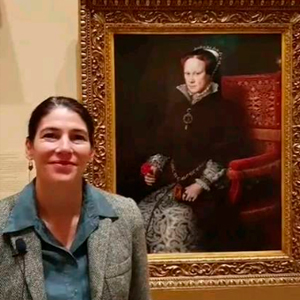
The daughter of Henry VIII and of Catherine of Aragon, Mary (1516-1558) was proclaimed Queen of England in 1553 and restored the Catholic faith in England. Given the advantages to Spain of a union with England and in the light of the Emperor’s refusal to marry her (despite having been betrothed to her for some years), Mary of Hungary convinced Mary Tudor to marry Prince Philip, who was eleven years her junior. They married at Winchester in July 1554. Mary Tudor died in November 1558 while Philip was fighting in France, bringing Spanish hopes in this affair to an end.
Room 056
Collection
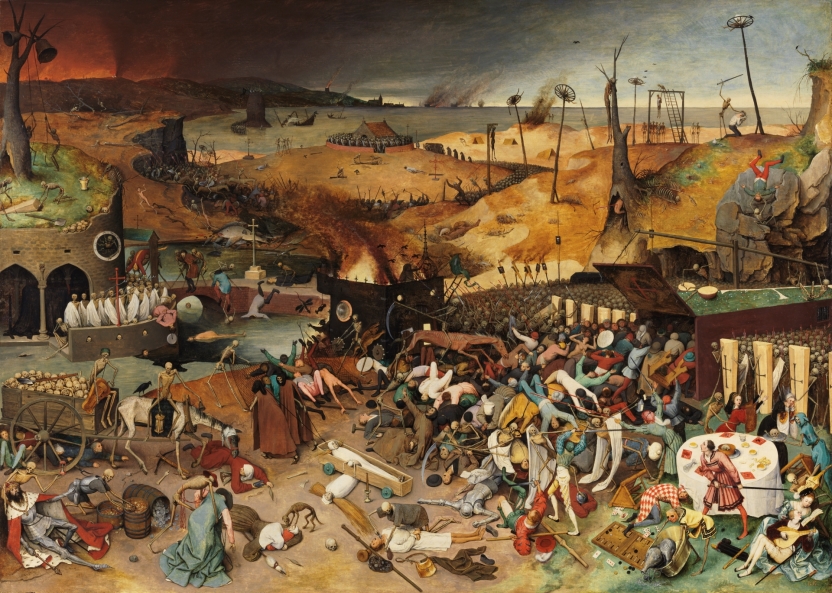
In this moral work, the triumph of Death over mundane things is symbolized by a large army of skeletons razing the Earth. The background is a barren landscape in which scenes of destruction are still taking place. In the foreground, Death leads his armies from his reddish horse, destroying the world of the living. The latter are led to an enormous coffin with no hope for salvation. All of the social institutions are included in this composition and neither power nor devotion can save them. Some attempt to struggle against their dark destiny while others are resigned to their fate.
Room 055A
Collection
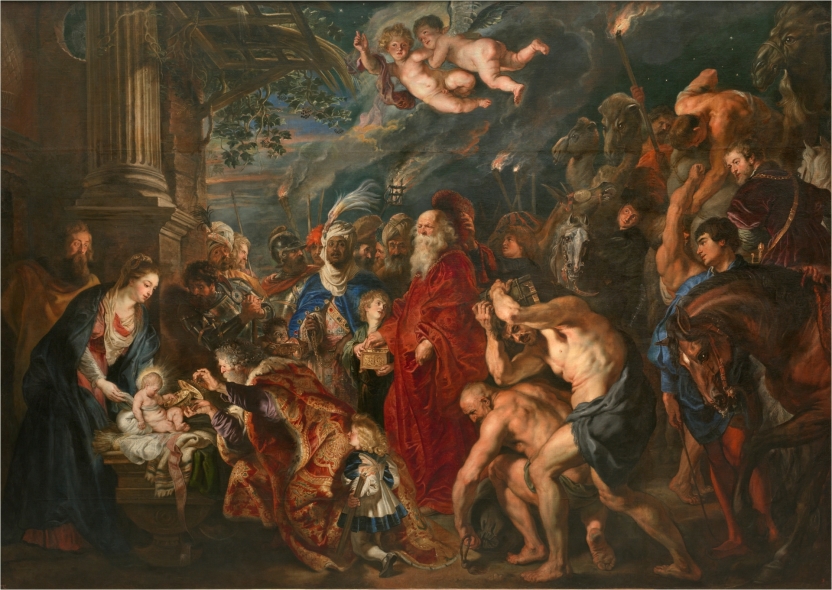

The Adoration of the Magi is one of the most important works within the Rubens collection in the Museo del Prado, not only because it is the largest but also because of its historical and technical importance. Iconographically, it depicts the moment when the three kings, accompanied by a large entourage, present their gifts to the infant Jesus. The child, in his mother´s arms, seems to be playing with the incense presented to him by Gaspar, who is kneeling before him. The scene is set outside, with a reference to the manger on the left, transformed into classical architecture.
Room 028
Collection
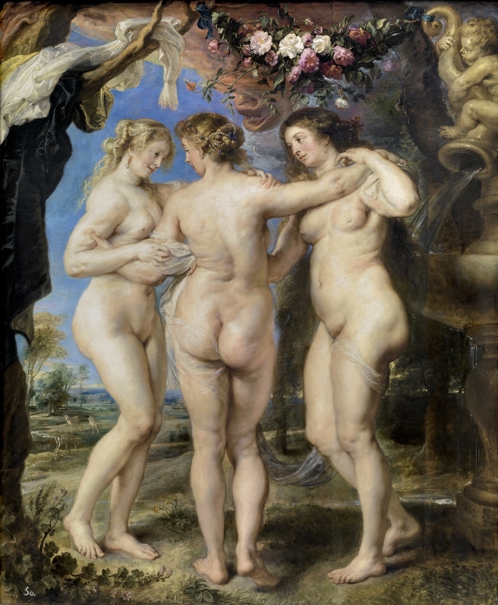

The Graces were minor deities but in this splendid work Peter Paul Rubens devotes his best effort to them. The three goddesses embrace each other forming a circle. The positioning of their feet suggests movement; they seem to dance gently. The setting is as luscious as the nude bodies of the goddesses. A field illuminated by sunlight filtered through dense trees stretches to a distant blue. The shadows cast by the figures show that they are lit from a source placed opposite the sun; Rubens is not a realist, he strives for effect. All is watered by a fountain crowned by a child with a cornucopia, the horn of abundance.
Room 029
Collection
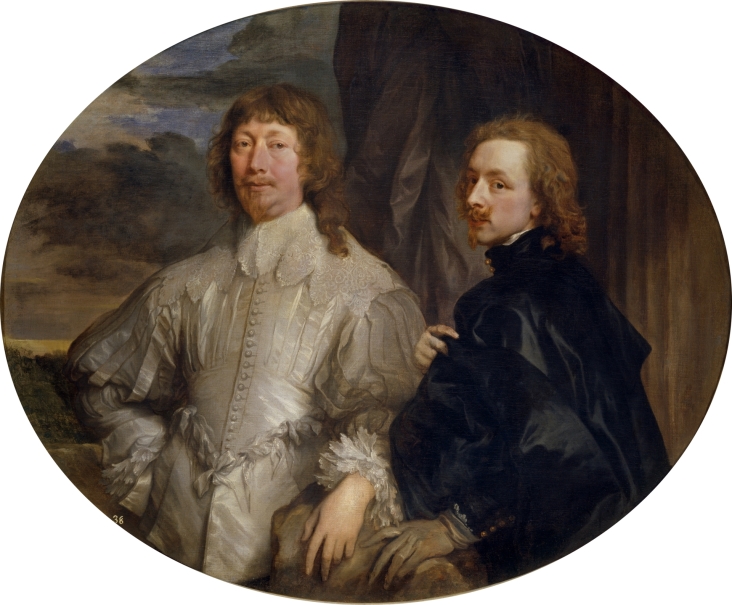

A protector and friend of Van Dyck, Endymion Porter (1587–1649) was secretary to the Duke of Buckingham and an important diplomat in the English Court. A great lover of the arts, he was in charge of acquiring works for the collection of King Charles I, and was one of Van Dyck´s greatest supporters during the latter´s stay in London.
The aristocrat is shown from the front, wearing white satin, while the painter, dressed in black, is shown in profile and shorter, so as not to stand out over a member of the aristocracy.
Room 016B
Collection
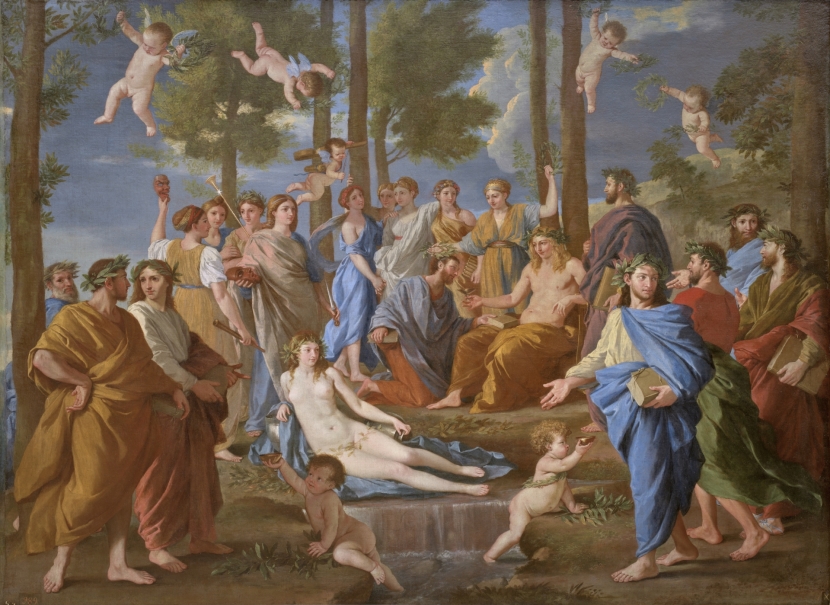

Parnassus, the mythological mountain of Apollo and the Muses is the scene for a celebration of the Arts, especially Poetry. Apollo offers the nectar of the gods to a poet, probably Homer, who is crowned with a laurel wreath by Calliope, the muse of epic poetry. The putti in the foreground offer the poets the water of inspiration that flows from the spring of Castalia, personified by the nude woman. This work is based on a fresco by Raphael at the Vatican and may pay homage to the Italian poet, Giovanni Battista Marino (1569-1625), who was Poussin´s patron. A preparatory drawing for this work is in the G. Wildenstein collection. There is also an engraving of it, made by Jean Dughet before 1667.
Room 003
Collection
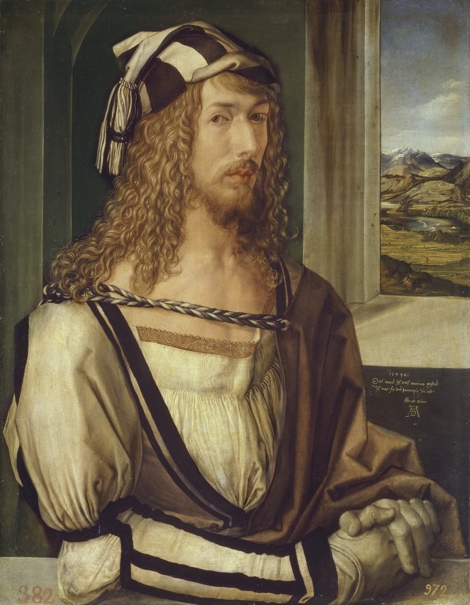

In the same year that he published the Apocalipsis cum figuris, Dürer painted himself as a gentleman, dressed in light toned clothes and looking his best. He wears an open black and white doublet with a striped cap in the same colours, an undershirt trimmed with gold and a silk cord of blue and white threads holding up a grey-brown cloak that falls over his right shoulder. Dürer has sheathed the hands that he uses to paint in grey kidskin gloves indicative of high rank with the aim of elevating his social status from that of craftsman to artist and of locating painting among the liberal arts, as in Italy.The artist chose a half-length, three-quarter format with two focuses of attention: the face and hands.
Room 055B
Collection
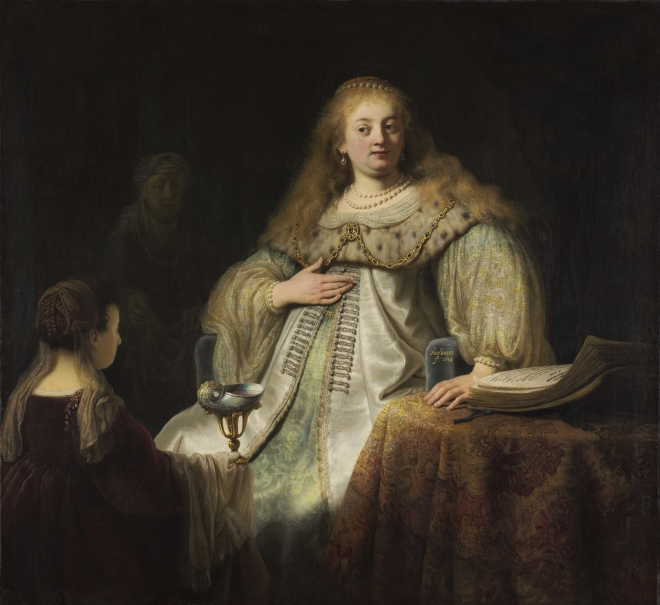

In the past various authors have expressed their scepticism about the attribution of the painting to Rembrandt. However, the Rembrandt Research Project includes it in the Corpus of 1986 as an original work, and this is supported by the technical study conducted at the Museo del Prado that year. As for the signature, the unsteadiness of the stroke and, above all, the yellow colour make it dubious. Nevertheless, the signature Rembrant without the d is found in various paintings dated 1633, in some engravings from 1632-33, and in the earliest documents signed by the painter.
Room 076
Collection
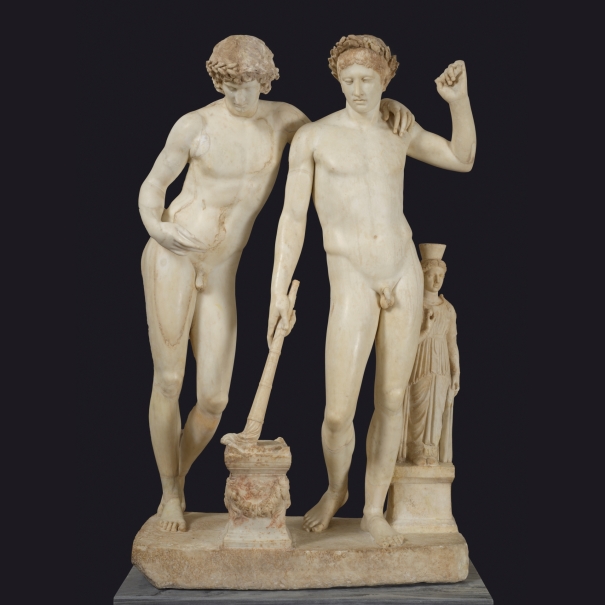

The work known as San Ildefonso Group–after San Ildefonso, Segovia, Spain, where, in the palace of La Granja, the work was kept during the 18th century– has been subject to many interpretations. Most researchers have not had access to precise knowledge of the modern restorative additions, there were also no known replicas, and the work includes only a few iconographic references and attributes with which to draw upon. Modern observers attracted by the embrace of the two ephebe (young men undergoing military training), unusual in ancient sculpture, interpreted it as a representation of friendship and brotherly love.
Room 071
Collection
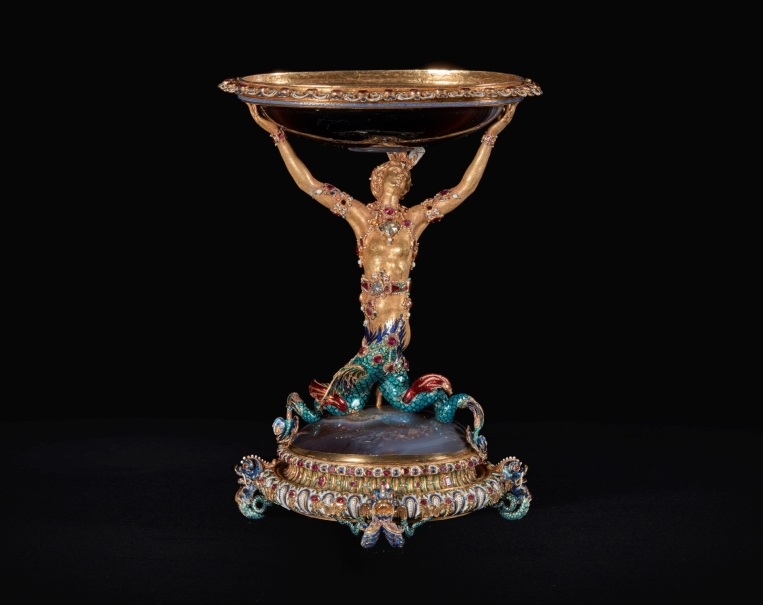

Cup, possibly a saltcellar, comprising a gold-enamelled sculpture, studded with rubies and diamonds, and two pieces of agate. The figure is a double-tailed mermaid, with a natural-coloured gold torso and a greenish-blue, red and translucent green enamelled tail. She wears a headdress of enamelled feathers and her open arms hold aloft an agate vessel with a mount of fretted and enamelled leaves, adorned with rubies. She rests on a base formed by another piece of agate, also richly adorned. The cup is borne by four enamelled fish, possibly dolphins, with double tails, whiskers and fearsome-looking teeth.
Room 079B
Collection
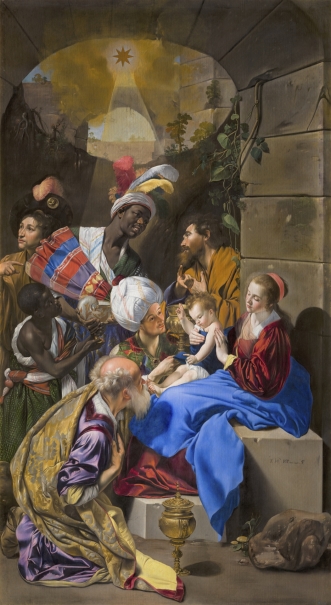
On 14 February 1612 Juan Bautista Maíno signed the contract to execute the paintings for the monastery church of San Pedro Mártir in Toledo. Maíno agreed to a period of eight months to make the paintings, which had to portray the scenes and episodes specified by the prior of the monastery. Despite the agreement reached in the contract, the paintings were not completed until December 1614. In the meantime Maíno entered the monastery, becoming a member of the Dominican Order on 27 July 1613.
Room 009B
Collection
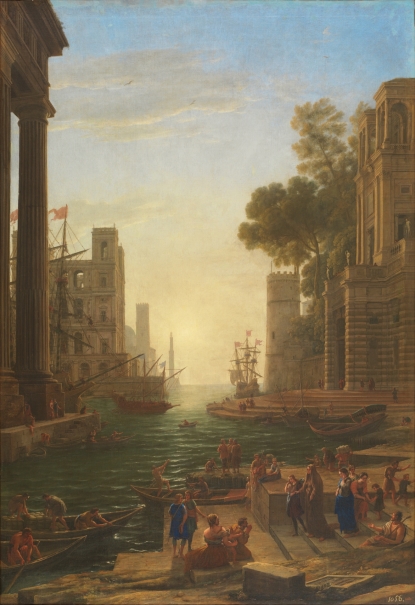

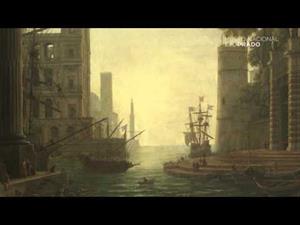
A noble Roman widow and mother of five children, Saint Paula decided to retreat to the desert and abandon her worldly ways in favour of a life of prayer and penitence. In 285 AD she abandoned Rome with her son, Eustace, and moved to Antioch, where she joined Saint Jerome to share a hermit’s life. Claude Lorrain’s painting depicts her departure, offering an imaginary recreation of the port of Ostia. The canvas includes an inscription clarifying the subject, as it was not a common one and could therefore have been difficult to identify.
Room 002
Collection
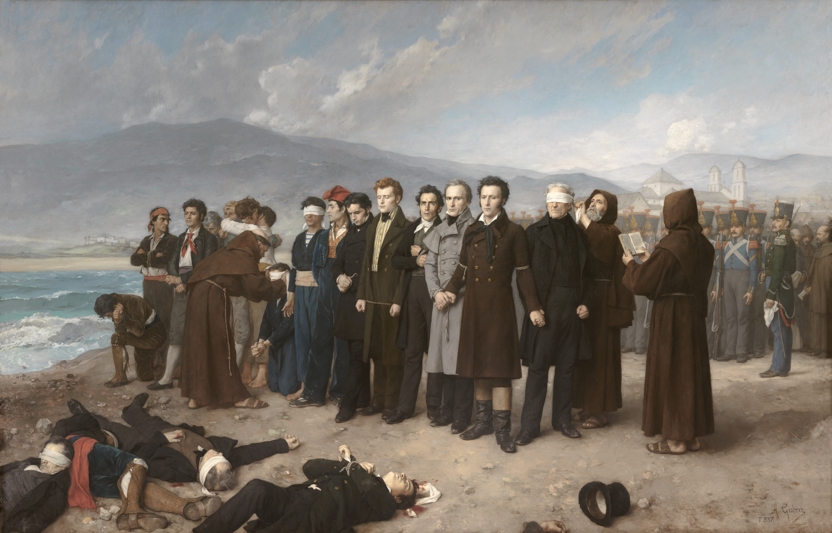

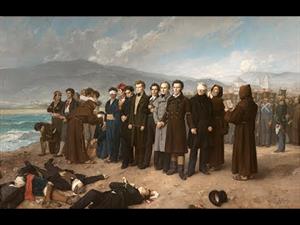
The finest work of all Gisbert’s production, this impressive painting is also unarguably one of the most beautiful of all 19th-century Spanish history paintings. Moreover, it is one of the greatest political manifestos of all Spanish painting in defense of human freedom crushed by authoritarianism and one of the very few cases in which a clear propagandistic message was directly inspired by government officialdom. In fact, it did not enter the Museo del Prado after being shown at the National Fine Arts Exhibitions, which would normally have been the case. Instead, it was directly commissioned for the museum by the liberal government of Práxedes Mateo Sagasta (1825-1903) during the Regency of María Cristina de Habsburgo-Lorena.
Room 075
Collection
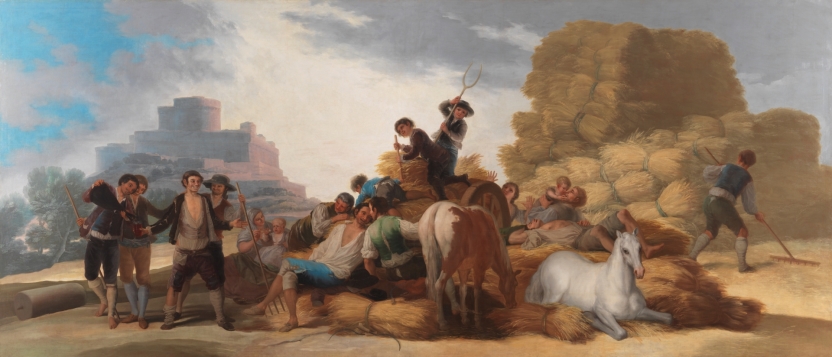

Goya depicts this season with a scene of harvesters recovering from the summer heat by sitting beside a pile of recently harvested wheat sheafs. Some, like the figure on the right, continue their laborious work, while on the left a group of peasants try to inebriate another character whose clothing and stance define him as a typical character: the village idiot. Goya uses popular types for his representation, avoiding the customary depiction of the goddess Ceres crowned with wheat ears, which is the traditional emblem of summer. The feeling of siesta time masterfully captured by the artist completes the wise composition of this enormous painting. This is the largest cartoon for the tapestries intended to decorate the Prince of Asturias´ dining room at the El Pardo Palace.
Room 085
Collection
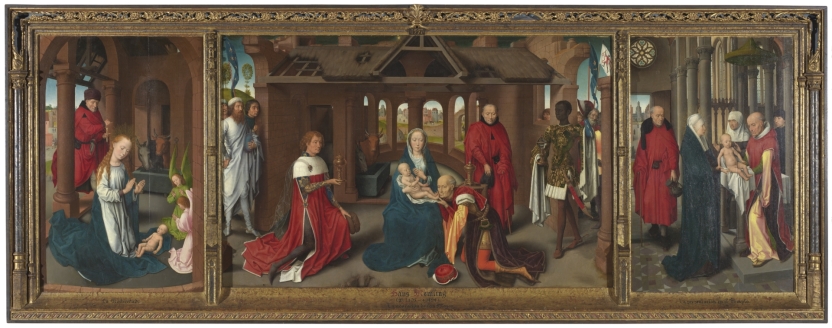

When open, the triptych displays three scenes: the Nativity, the Adoration of the Magi and the Presentation in the Temple. The first two share the same setting, the biblical manger. Some details reveals the artist’s interest in achieving a correct depiction of the setting and architecture that was common to both images, a fondness for exquisite trueness to life that led him to leave small, almost imperceptible gaps in the architecture through which the blue of the sky is visible, helping create a sense of depth. The Nativity is also the Adoration of the Child. Mary is shown kneeling with raised hands in a gesture of adoration of her son, who lies naked on the ground on a fold in his mother’s mantle.
Room 058A
Works from the itinerary not on display
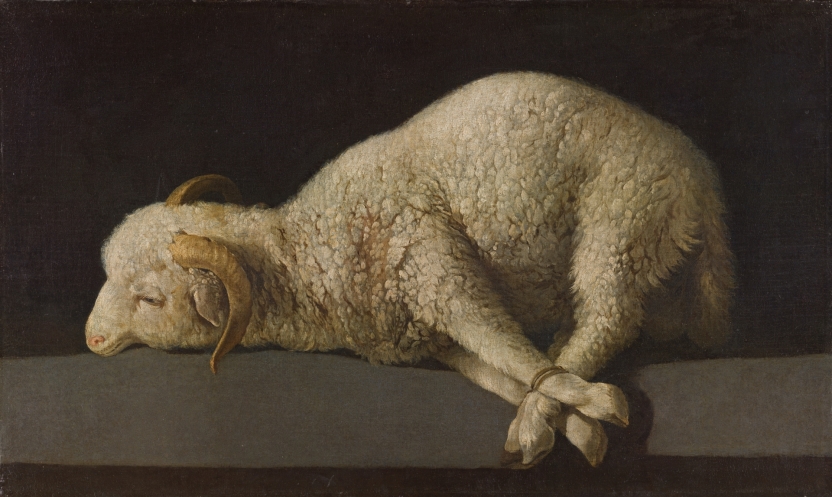
A dark background and a gray table are the setting for this painting’s only motive: a merino lamb between eight and twelve months old. Still alive, it lies with bound feet in an unmistakably sacrificial posture curiously reminiscent of famous images of martyred saints like Stefano Maderno’s moving sculpture of Saint Cecilia at the basilica of Santa Cecilia in Rome. The painter draws on Zurbarán’s peerless capacity to reproduce textures, a very calculated and directed light that creates broad areas of shadow, and a meticulous technique to concentrate the viewer’s attention on a lamb that seems to meekly accept its fatal destiny.
Londres - National Gallery
Works from the itinerary not on display
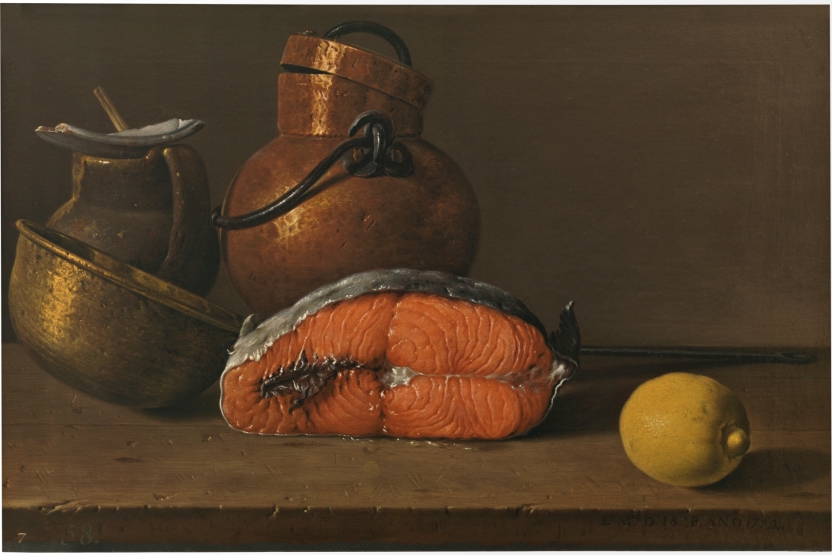
This superb example of the artist´s virtuosity at capturing elements with a direct and realistic language can be considered a work from late in his career. A sole lemon in the foreground offsets the group of elements consisting of a slice of fresh salmon and various cooking utensils, including a copper vessel, a pot of the same material and an Alcorcón style jug with a bit of crockery as a lid. A handle in the background might belong to a ladle. The surface on which these items sit disappears into the background. Its edge is emphasized by a spoon with a very long handle.
Works from the itinerary not on display
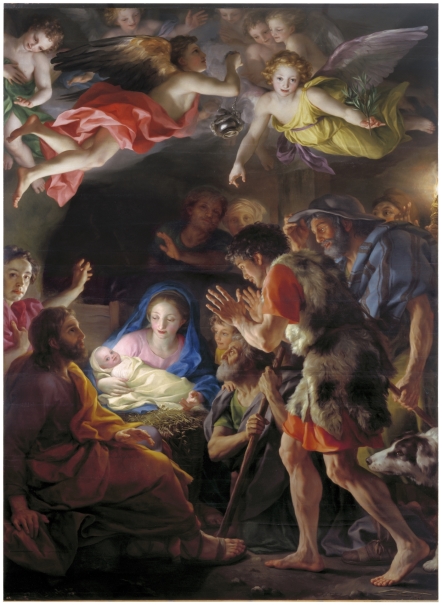
A group of shepherds surround the Virgin and Child with different expressions of adoration, defining a broad semicircle which includes Saint Joseph, who is seated, and the painter himself, who appears at the left, pointing out the miraculous event. This work is directly inspired by La Notte (Dresden, Gemäldegalerie), a painting on the same subject by Correggio (1493-1534) that was very influential among eighteenth-century painters. The composition reveals a profound study of perspective and of illumination. It uses a strong play of lights and shadows marked by the light emitted by the Christ Child, which defines the other volumes.
Collection
Artworks (51)
Hare Hunt, Hermitage of San Baudelio, Casillas de Berlanga (Soria)
Fresco painting on mural transferred to canvas.
Ca. 1125. Room 051C
Ca. 1125. Room 051C
The Crucifixion
Oil on panel.
1509 - 1519. Room C
1509 - 1519. Room C
Saint Dominic of Silos enthroned as a Bishop
Oil on panel.
1474 - 1477. Room 051A
1474 - 1477. Room 051A
Saint Dominic presiding over an Auto-da-fe
Oil on panel.
1491 - 1499. Room 057B
1491 - 1499. Room 057B
The Holy Trinity
Oil on canvas.
1577 - 1579. Room 008B
1577 - 1579. Room 008B
The Nobleman with his Hand on his Chest
Oil on canvas.
Ca. 1580. Room 008B
Ca. 1580. Room 008B
The Adoration of the Shepherds
Oil on canvas.
1612 - 1614. Room 009B
1612 - 1614. Room 009B
The Feast of Bacchus
Oil on canvas.
1628 - 1629. Room 010
1628 - 1629. Room 010
The Surrender of Breda
Oil on canvas.
Ca. 1635. Room 009A
Ca. 1635. Room 009A
The Spinners, or the Fable of Arachne
Oil on canvas.
1655 - 1660. Room 015A
1655 - 1660. Room 015A
Las Meninas
Oil on canvas.
1656. Room 012
1656. Room 012
Jacob’s Dream
Oil on canvas.
1639. Room 009
1639. Room 009
The Foundation of Santa Maria Maggiore in Rome. The Patrician's Dream
Oil on canvas.
1664 - 1665. Room 016
1664 - 1665. Room 016
The Recapture of Bahía de Todos los Santos
Oil on canvas.
1634 - 1635. Room 009A
1634 - 1635. Room 009A
Still Life with Game, Vegetables and Fruit
Oil on canvas.
1602. Room 008A
1602. Room 008A
The Naked Maja
Oil on canvas.
1795 - 1800. Room 038
1795 - 1800. Room 038
The Family of Carlos IV
Oil on canvas.
1800. Room 032
1800. Room 032
The 3rd of May 1808 in Madrid, or “The Executions”
Oil on canvas.
1814. Room 064
1814. Room 064
Saturn
Mixed method on mural transferred to canvas.
1820 - 1823. Room 067
1820 - 1823. Room 067
Queen Isabella the Catholic dictating her Will
Oil on canvas.
1864. Room 061B
1864. Room 061B
Boys on the Beach
Oil on canvas.
1909. Room 060A
1909. Room 060A
The Annunciation
Tempera on poplar panel.
1425 - 1426. Room 056B
1425 - 1426. Room 056B
The Death of the Virgin
Mixed method on panel.
Ca. 1462. Room 056B
Ca. 1462. Room 056B
The Dead Christ supported by an Angel
Mixed method on panel.
1475 - 1476. Room 058
1475 - 1476. Room 058
The Cardinal
Oil on panel.
1510 - 1511. Room 049
1510 - 1511. Room 049
Emperor Charles V at Mühlberg
Oil on canvas.
1548. Room 027
1548. Room 027
The Andrians
Oil on canvas.
1523 - 1526. Room 042
1523 - 1526. Room 042
Venus and Adonis
Oil on canvas.
Ca. 1580. Room 026
Ca. 1580. Room 026
The Washing of the Feet
Oil on canvas.
1548 - 1549. Room 025
1548 - 1549. Room 025
Noli me tangere
Oil on panel transferred to canvas.
Ca. 1525. Room 049
Ca. 1525. Room 049
David with the Head of Goliath
Oil on canvas.
Ca. 1600. Room 007A
Ca. 1600. Room 007A
The Finding of Moses
Oil on canvas.
1633. Room 026
1633. Room 026
The Immaculate Conception
Oil on canvas.
1767 - 1769. Room 023
1767 - 1769. Room 023
The Descent from the Cross
Oil on panel.
Before 1443. Room 058
Before 1443. Room 058
The Garden of Earthly Delights Triptych
Grisaille, Oil on oak panel.
1490 - 1500. Room 056A
1490 - 1500. Room 056A
Charon crossing the Styx
Oil on panel.
1520 - 1524. Room 055A
1520 - 1524. Room 055A
Mary Tudor, Queen of England
Oil on panel.
1554. Room 056
1554. Room 056
The Triumph of Death
Oil on panel.
1562 - 1563. Room 055A
1562 - 1563. Room 055A
The Adoration of the Magi
Oil on canvas.
1609. Room 028
1609. Room 028
The Three Graces
Oil on oak panel.
1630 - 1635. Room 029
1630 - 1635. Room 029
Endymion Porter and Anthony van Dyck
Oil on canvas.
Ca. 1633. Room 016B
Ca. 1633. Room 016B
Parnassus
Oil on canvas.
1630 - 1631. Room 003
1630 - 1631. Room 003
Self-portrait
Oil on panel.
1498. Room 055B
1498. Room 055B
Judith at the Banquet of Holofernes
Oil on canvas.
1634. Room 076
1634. Room 076
Orestes and Pylades or The San Ildefonso Group
Sculpted.
Ca. 10 a.C.. Room 071
Ca. 10 a.C.. Room 071
Cup with a gold mermaid
Sculpted, Enamelled, Repoussé.
1550 - 1575. Room 079B
1550 - 1575. Room 079B
The Adoration of the Magi
Oil on canvas.
1612 - 1614. Room 009B
1612 - 1614. Room 009B
The Embarkation of Saint Paula
Oil on canvas.
Ca. 1639. Room 002
Ca. 1639. Room 002
Execution of Torrijos and his Companions on the Beach at Málaga
Oil on canvas.
1888. Room 075
1888. Room 075
The Threshing Ground or Summer
Oil on canvas.
1786. Room 085
1786. Room 085
Triptych of the Adoration of the Magi
Oil on baltic oak planks.
1470 - 1472. Room 058A
1470 - 1472. Room 058A
Floor 0 and -1
Floor 1
Floor 2
Works from the itinerary not on display
The following works were also included in the original exhibition itinerary. You can find more information here.
A lamb
Oil on canvas.
1635 - 1640. Londres - National Gallery
1635 - 1640. Londres - National Gallery
Still Life with a Salmon, a Lemon and three Vessels
Oil on canvas.
1772
1772
The Adoration of the Shepherds
Oil on oak panel.
1770
1770
Related content